In This Guide
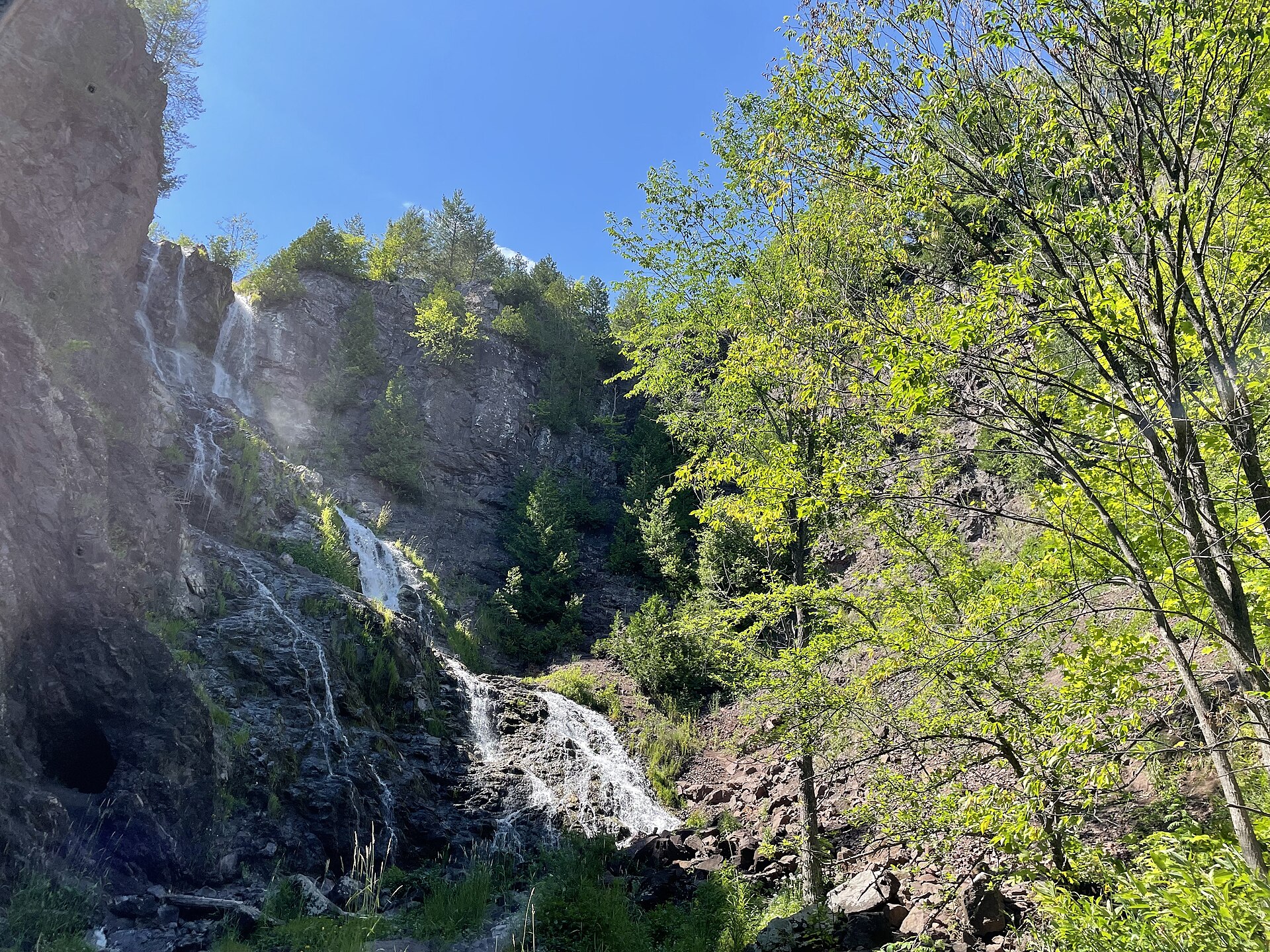
Michigan's Tallest Waterfall, Finally Within Reach Visiting the Falls: Parking, Trail, and Safety Why Autumn Is the Moment to Go Nearby: Laurium, Calumet, and Hungarian Falls Planning Your VisitFor decades, the tallest waterfall in Michigan was something most travelers drove past without knowing it was there. Houghton-Douglass Falls drops roughly 110 feet from top to base into a deep, rocky gorge just off M-26 between the old copper towns of Laurium and Lake Linden, on the Keweenaw Peninsula of the Upper Peninsula. Until recently, reaching it meant a pull-off on the highway shoulder and a scramble along unmarked paths at the edge of a dangerous cliff. That changed this year: after a first phase of state improvements, the site opened for the 2026 season with a developed parking area, a bridge over Hammell Creek, and a defined trail to the viewing area, as UPword Michigan reported in May. The timing could hardly be better, because autumn is when the Keweenaw puts on its most spectacular show of color. This guide covers the falls' history, how to visit safely, and how to build a fall day around it in the heart of Copper Country.
Michigan's Tallest Waterfall, Finally Within Reach
The falls take their name from two men who helped open the Keweenaw to the world: Douglass Houghton, Michigan's first state geologist, and his cousin and assistant Columbus Christopher Douglass. Houghton's surveys of the region's copper deposits helped set off the copper boom that built towns like Calumet and Laurium, and he is often called the father of copper mining in the United States. He drowned in Lake Superior near Eagle River in 1845 when his small boat capsized in a storm, at just 36 years old. The waterfall bearing his name spills over layers of ancient volcanic rock that have been folded over younger, softer sandstone, a geologic sandwich that helps explain the dramatic gorge. At 110 feet, it is generally recognized as Michigan's tallest waterfall, a distinction Michigan Public explored years before the site was developed. For a state with hundreds of waterfalls, that is no small claim.
For much of the twentieth century, the land around the falls was privately owned. The Kuusisto family bought the property in 1949, and in 2018 Jim Kuusisto, a Vietnam War veteran, sold it to the state on the condition that it be preserved as a veterans memorial, as recounted on Wikipedia. The Michigan Department of Natural Resources paid $300,000 for roughly 115 acres along Hammell Creek and began planning a state scenic site, a process WLUC's Upper Michigan's Source covered in 2023. The first phase of construction, completed in 2025, added an access road and parking, a seasonal vault toilet, and a pedestrian bridge across the creek. A second phase, projected for 2027, is planned to bring further trail and safety work, observation platforms, and the veterans memorial itself. For now, visitors can enjoy the falls with far more ease and safety than ever before.
Visiting the Falls: Parking, Trail, and Safety
The new parking lot sits directly off M-26, so finding the falls no longer requires local knowledge. From the trailhead, a mostly flat, gravel-packed path leads to the bridge over Hammell Creek, then becomes a more natural footpath to the viewing area, for a round trip of about half a mile, according to UPword Michigan. The walk is short enough for most families, though sturdy shoes are wise because roots and rocks appear once the gravel ends. A seasonal vault toilet near the parking area is a welcome addition for road-tripping travelers. The Mining Gazette's coverage of the reopening captured the falls running high with spring snowmelt, when Hammell Creek carries its heaviest flow. In autumn the volume is usually gentler, but the gorge and the surrounding hardwoods make up for it in color.
Safety deserves real attention here. The falls plunge into a steep gorge with unprotected cliff edges and loose, broken rock, and multiple deaths have been reported at the site over the years, including one in 2011, as Wikipedia notes. Stay on the established path, keep well back from the rim, and do not attempt to climb down to the base of the falls. Wet leaves in fall make rock surfaces especially slick, so keep a firm hand on children and leash dogs. Visit Keweenaw, the region's tourism bureau, urges visitors to follow posted signs and avoid wet or loose rock, and its visitor website is a good source for current conditions. Treat the gorge with respect and it will reward you with one of the most impressive views in the Upper Peninsula.
Why Autumn Is the Moment to Go
The Keweenaw is one of the first places in Michigan where autumn color arrives, because the western Upper Peninsula typically begins to turn in late September, ahead of the Lower Peninsula, as Chris Izworski's statewide fall color forecast tracks each year. The hardwood forests around Hammell Creek blaze with sugar maple reds and birch golds against the dark volcanic rock of the gorge. Because the Keweenaw is surrounded by Lake Superior, color near the shore can linger, while inland ridges peak and fade a little sooner. That means a visit in late September or the first half of October has the best odds of catching the falls framed in full color. Cool, crisp air also makes the short walk more pleasant than on a humid summer afternoon. Bring a camera with a wide lens, because the tall, narrow drop is hard to capture in a single frame.
Fall in Copper Country is about more than one waterfall. The scenic drives along M-26 and US-41 northward toward Copper Harbor pass through some of the Midwest's most celebrated autumn landscapes, including the summit road described in our Brockway Mountain Drive guide. The broader peninsula, a spine of ancient lava flows reaching into Lake Superior, is profiled in Wikipedia's Keweenaw Peninsula article. Many visitors combine a morning at the falls with a drive north to Eagle Harbor and Copper Harbor, returning along the Lake Superior shore by late afternoon. The Keweenaw National Historical Park offers context for the mining towns you will pass along the way. Few fall road trips anywhere pack in so much history and scenery per mile.
Nearby: Laurium, Calumet, and Hungarian Falls
Just up M-26, the village of Laurium was founded as a company town for the Laurium copper mine, later part of the Calumet and Hecla operation, and it became home to many of the region's mine owners and captains. Their grand houses still line the streets of the Laurium Historic District, listed on the National Register of Historic Places in 2005, and most of its buildings date from the boom years between 1880 and 1915. Laurium is also the birthplace of the football player George Gipp, remembered as the Gipper, who is honored by a small memorial in town. Next door, Calumet preserves the theater, churches, and sandstone storefronts of the copper era, covered in our Calumet travel guide. Together the two towns make an ideal lunch stop before or after the falls. Walking their quiet streets in autumn, under maples turning orange, is its own small pleasure.
Waterfall collectors have another stop close by. Hungarian Falls, a series of drops on Dover Creek west of Hubbell, totals about 90 feet across three falls, the largest about 50 feet, tumbling over reddish Jacobsville sandstone. To the south, near Hancock, the Quincy Mine offers tours of the historic copper mine above Hancock, preserved by the Quincy Mine Hoist Association. Between them you can easily spend a full day exploring the Keweenaw's industrial past and natural beauty. The Keweenaw's waterfalls also feature in our statewide Upper Peninsula waterfall route. Plan for unhurried driving, since the best views often appear around the next bend.
Planning Your Visit
Houghton-Douglass Falls makes an easy half-day outing from Houghton, Hancock, or Calumet, all within a short drive. Campers can stay at F.J. McLain State Park, a 443-acre park on the Lake Superior shore about midway between Hancock and Calumet, known for its sunsets and its view of the Keweenaw Waterway's upper entrance light, as Wikipedia's McLain State Park article describes. Hotels, inns, and cottages in Houghton and Hancock fill quickly during peak color weekends, so reserve early. Because the falls site is still under development, check for any temporary closures before you go, especially once the second phase of construction begins. Late-season visitors should also remember that Keweenaw weather can turn wintry by late October. Pack layers, rain gear, and a thermos of something warm.
If you are building a longer trip, pair the falls with the driving route described in our Copper Country Trail guide, which follows US-41 from the Portage Lake Lift Bridge to Copper Harbor. The region's tourism office, Visit Keweenaw, publishes lodging, dining, and event listings that help with planning. For deeper background on the towns and mines you will pass, the Keweenaw National Historical Park and its network of heritage sites are invaluable. A long weekend gives you time for the falls, a mine tour, a scenic drive, and a sunset on Lake Superior. However you plan it, put Michigan's tallest waterfall at the top of the list this fall. After years of waiting, it is finally ready for visitors.