In This Guide
Old Reliable and the World's Largest Steam Hoist A Bridge That Also Sinks Finnish Heritage on the Hillside Heikinpäivä: A Festival for the Dead of WinterHancock rises so steeply from the north shore of the Portage Canal that some of its residential streets are functionally impassable in winter without four-wheel drive and a healthy respect for physics, the town stacked up the hillside in tiers like a Great Lakes answer to San Francisco. Founded in 1859 to house the workers of the Quincy Mining Company, Hancock grew into one of Copper Country's most substantial towns, its Finnish immigrant population so significant that the town became, and in many ways remains, the unofficial cultural capital of Finnish America. Crossing the lift bridge from Houghton into Hancock still feels like passing into a distinct place, not merely a suburb of its larger twin.
Old Reliable and the World's Largest Steam Hoist
The Quincy Mine, nicknamed 'Old Reliable' for the remarkable consistency of its copper output across nearly a century of continuous operation, tunneled more than nine thousand feet beneath Hancock's hillside, deep enough that the mine's lower levels ran hotter from geothermal heat than any surface weather ever got. At the surface, the Quincy Mine Hoist still stands as the physical proof of the operation's scale: a steam-powered hoisting engine so large it remains, by most measures, the biggest steam hoist ever built for mining use anywhere in the world, its two massive drums once capable of raising ten-ton skips of rock from the deepest levels in a matter of minutes.
Guided tours today take visitors down into the mine itself aboard a cable tram that descends into the hillside, followed by an underground walking tour through drifts and stopes lit well enough to appreciate the sheer physical difficulty of the work but dim enough to feel, just briefly, like something of what nineteenth-century miners actually experienced. Above ground, the hoist house and its towering headframe remain visible from a considerable distance, a rust-colored landmark punctuating the ridge above the canal.
A Bridge That Also Sinks
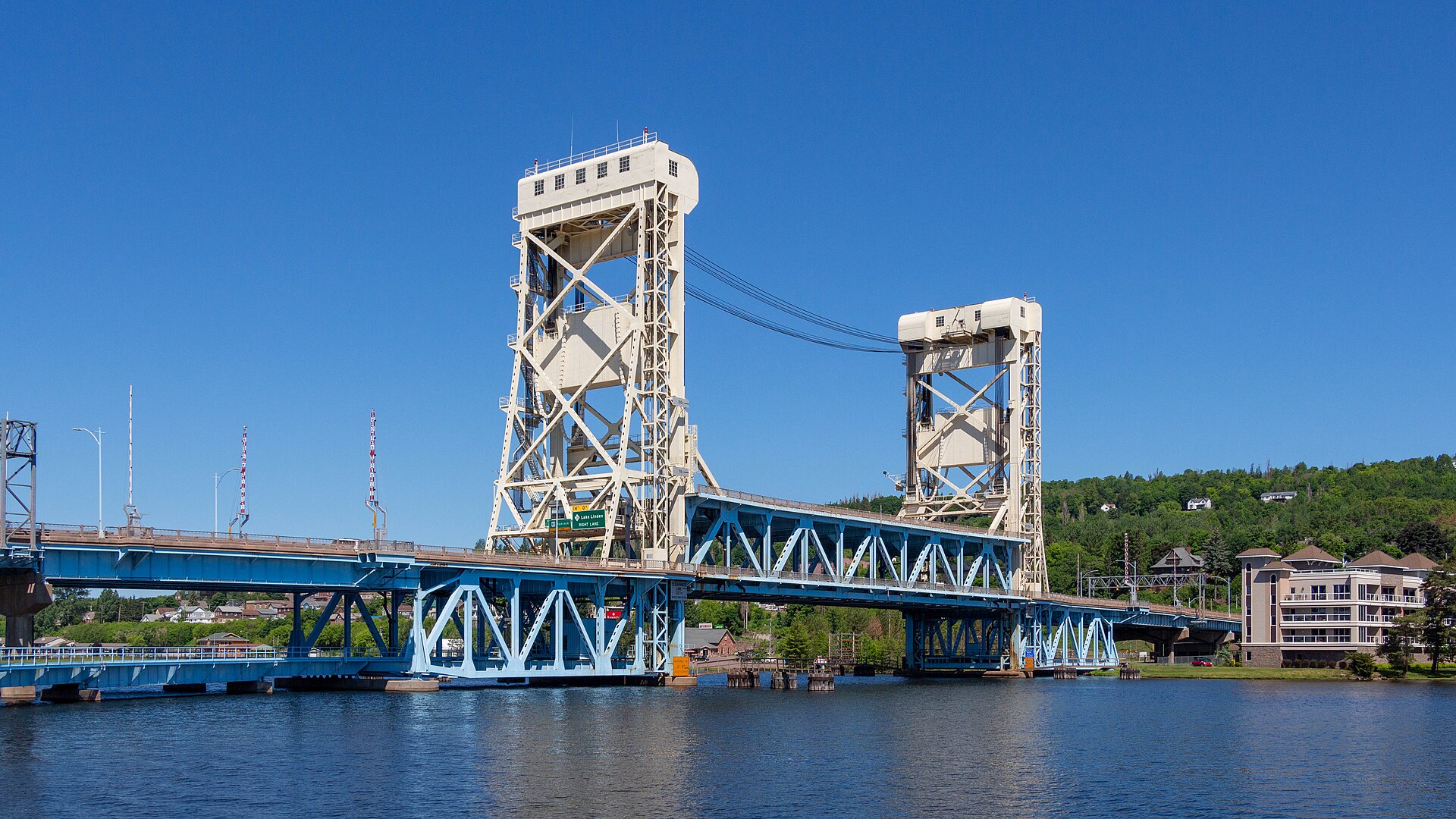
The Portage Lake Lift Bridge connecting Hancock to Houghton is unusual even by the generous standards of Great Lakes drawbridges: rather than simply lifting to let boat traffic through, its center span can also be lowered below its normal roadway position to create a below-grade rail crossing, making it one of very few bridges in the world capable of both raising and lowering its central span depending on what kind of traffic needs to pass. Watching the bridge cycle through its full range of motion, from a train-level low position up through the standard roadway height and finally to its fully raised position for large vessels, tends to be more mesmerizing than a bridge has any right to be.
The canal it spans, technically the Keweenaw Waterway, cuts entirely across the base of the Keweenaw Peninsula, a channel partly natural and partly dredged that allowed nineteenth-century ore boats to avoid the often-treacherous open-water route around the peninsula's tip, and it remains a functioning shortcut for recreational and commercial boat traffic alike.
Finnish Heritage on the Hillside
Finnish immigrants arrived in Copper Country by the thousands in the late nineteenth century, drawn by mining work that felt, to many, at least distantly familiar to the rock-and-forest landscape they had left behind in Finland, and Hancock absorbed more of that population than almost anywhere else in the district. Finnish-language newspapers, cooperative stores, and Lutheran congregations once dotted the hillside streets, and the cultural imprint persists today in ways both formal and casual, from an annual midsummer Juhannus celebration to the sheer number of saunas, both public and backyard, tucked into a town where the tradition never really faded the way it did elsewhere in the country.
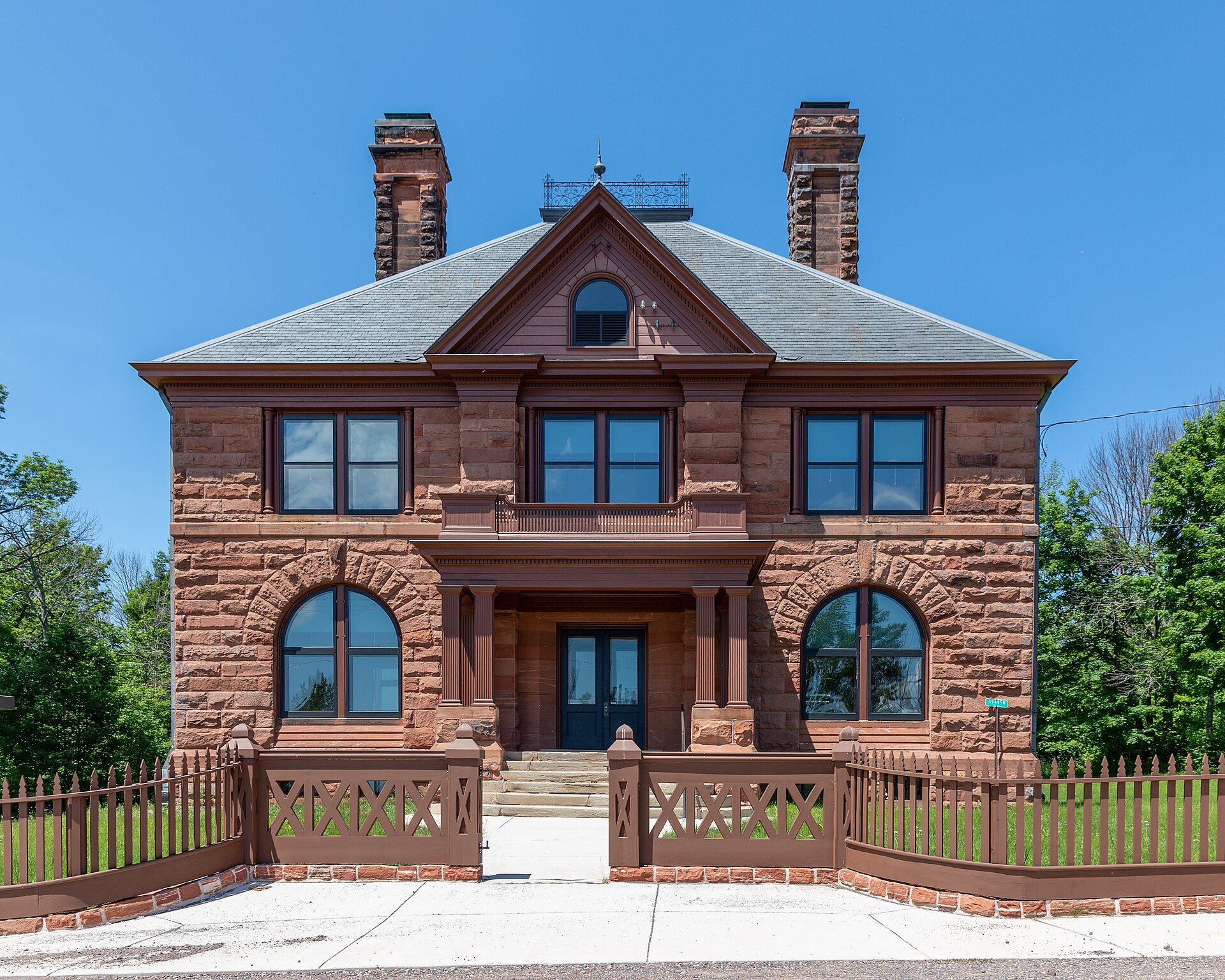
That Finnish civic infrastructure once included a dedicated institution of higher education on the hill above downtown, founded specifically to serve the area's Finnish-American community, and while the landscape of higher education in the Keweenaw has shifted over the years, the buildings and the broader cultural legacy they represent remain a visible part of Hancock's identity, distinguishing it culturally from nearly every other town in the Upper Peninsula.
Heikinpäivä: A Festival for the Dead of Winter
Each January, right around the coldest, darkest stretch of the Keweenaw calendar, Hancock throws itself into Heikinpäivä, a midwinter festival founded in 1999 specifically to celebrate Finnish-American folklore and, more pointedly, to give the town something to look forward to during the bleakest weeks of the year. The festival takes its name from St. Henrik's Day on the Finnish calendar, traditionally treated as the midpoint of winter, and the whole event leans unapologetically into the absurd: a torchlight parade inspired by Finnish legend, kicksled races through downtown, and a polar bear plunge into the frozen waters of the Portage Canal for anyone brave or foolish enough to volunteer.
The festival's signature event, though, is the wife-carrying contest, in which competitors race a spouse, or simply a willing partner of any kind, through an obstacle course styled after old Keweenaw domestic life, the sport itself borrowed from a Finnish folk tradition with origins in old tales of village men absconding with brides from neighboring settlements. Organizers are quick to note that participation has nothing to do with marital status, and the event has become popular enough that costumed spectators line the course several rows deep, cheering on strangers hauling each other through the snow in a display that captures Hancock's particular gift for treating the harshest part of winter as an occasion for festivity rather than mere endurance.