In This Guide
An Opera House for a Mining Town Keweenaw National Historical Park's Calumet Unit A Downtown Built for a Population That LeftAt the height of the copper boom, Calumet was, by some contemporary estimates, on a plausible trajectory to become the capital of a proposed new state carved out of the Upper Peninsula, its population and wealth briefly rivaling far larger Michigan cities before the mines that built it began, decades later, to run dry. What remains is one of the most architecturally intact boomtown downtowns anywhere in the country, a compact grid of sandstone and brick buildings built for a population many times the roughly seven hundred people who live within the village limits today, and the whole district now sits inside the boundaries of Keweenaw National Historical Park, a designation that acknowledges just how singular this place really is.
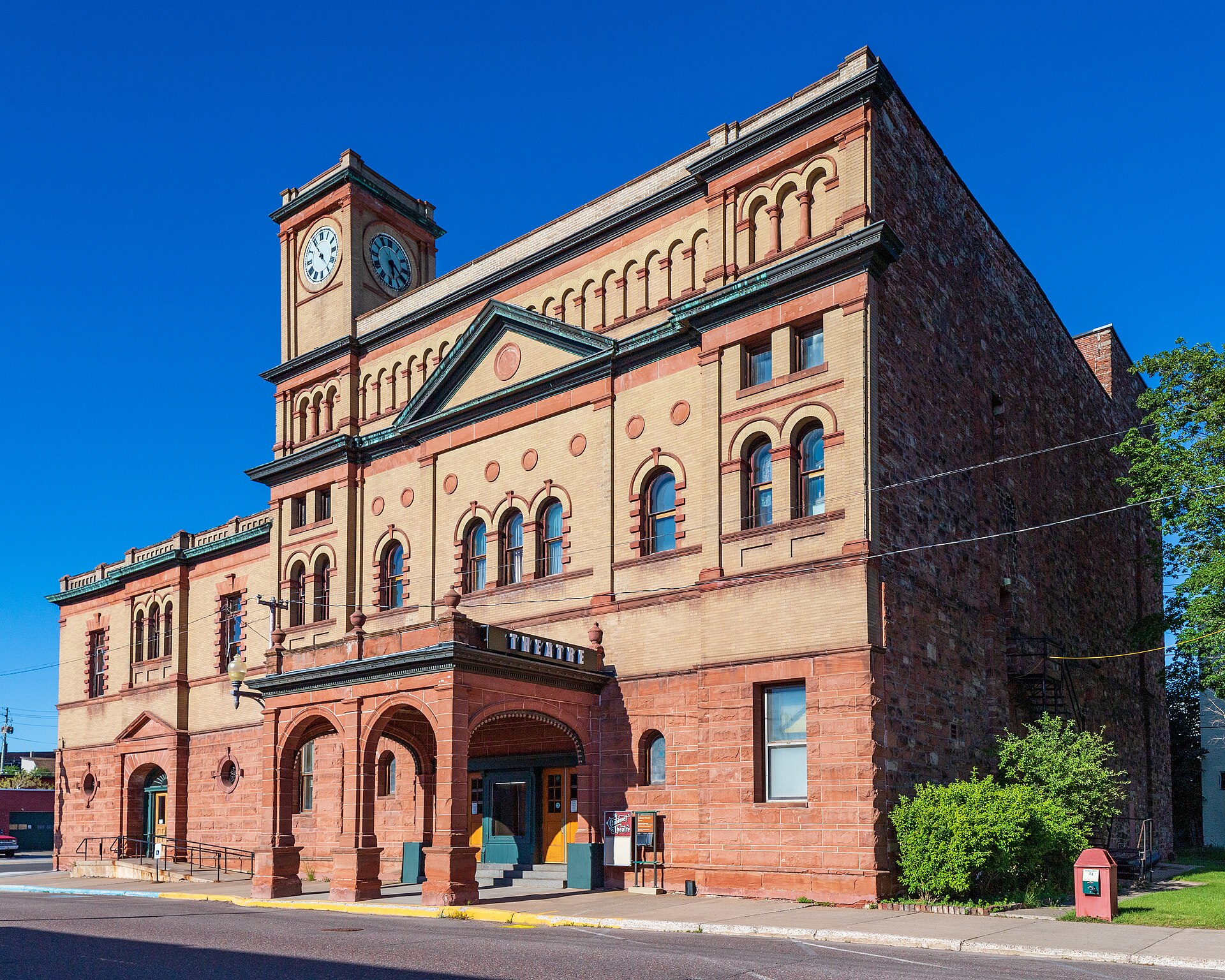
An Opera House for a Mining Town
The Calumet Theatre opened in 1900, and its very existence testifies to just how much money the Calumet and Hecla Mining Company was generating at the time, since the building's ornate plasterwork, painted proscenium arch, and genuinely impressive acoustics would not have looked out of place in a city many times Calumet's size. Sarah Bernhardt performed on its stage, along with a steady stream of touring vaudeville and opera companies who found it worth the considerable trek into the Upper Peninsula, and the theater still hosts live performances today, a working cultural institution rather than a static museum piece.
Restoration efforts over the decades have kept the building's Romanesque exterior and lavish interior details intact, and a walk through the auditorium alone is usually enough to recalibrate most visitors' assumptions about what a turn-of-the-century mining town was actually capable of building for itself when the ore kept flowing.
Keweenaw National Historical Park's Calumet Unit
Rather than preserving a single roped-off historic site, Keweenaw National Historical Park takes an unusual cooperative approach, weaving together federal land, state and local properties, and privately owned heritage sites across the peninsula, and Calumet forms one of its two primary units. Walking the downtown core with the park's interpretive materials in hand transforms an ordinary stroll into something closer to reading a book laid out in three dimensions: former company stores, union halls, and the site of the 1913 Italian Hall tragedy, where a false fire alarm during a strikers' Christmas party caused a crush that killed seventy-three people, most of them children, are all within a few blocks of each other, each marked with enough historical context to convey both the prosperity and the very real human cost of the copper era.
The National Park Service visitor center, housed in a former company drugstore, is a sensible starting point for anyone hoping to understand how a town this size ended up with an opera house, a bathhouse, and a network of company housing that once stretched for miles into the surrounding countryside.
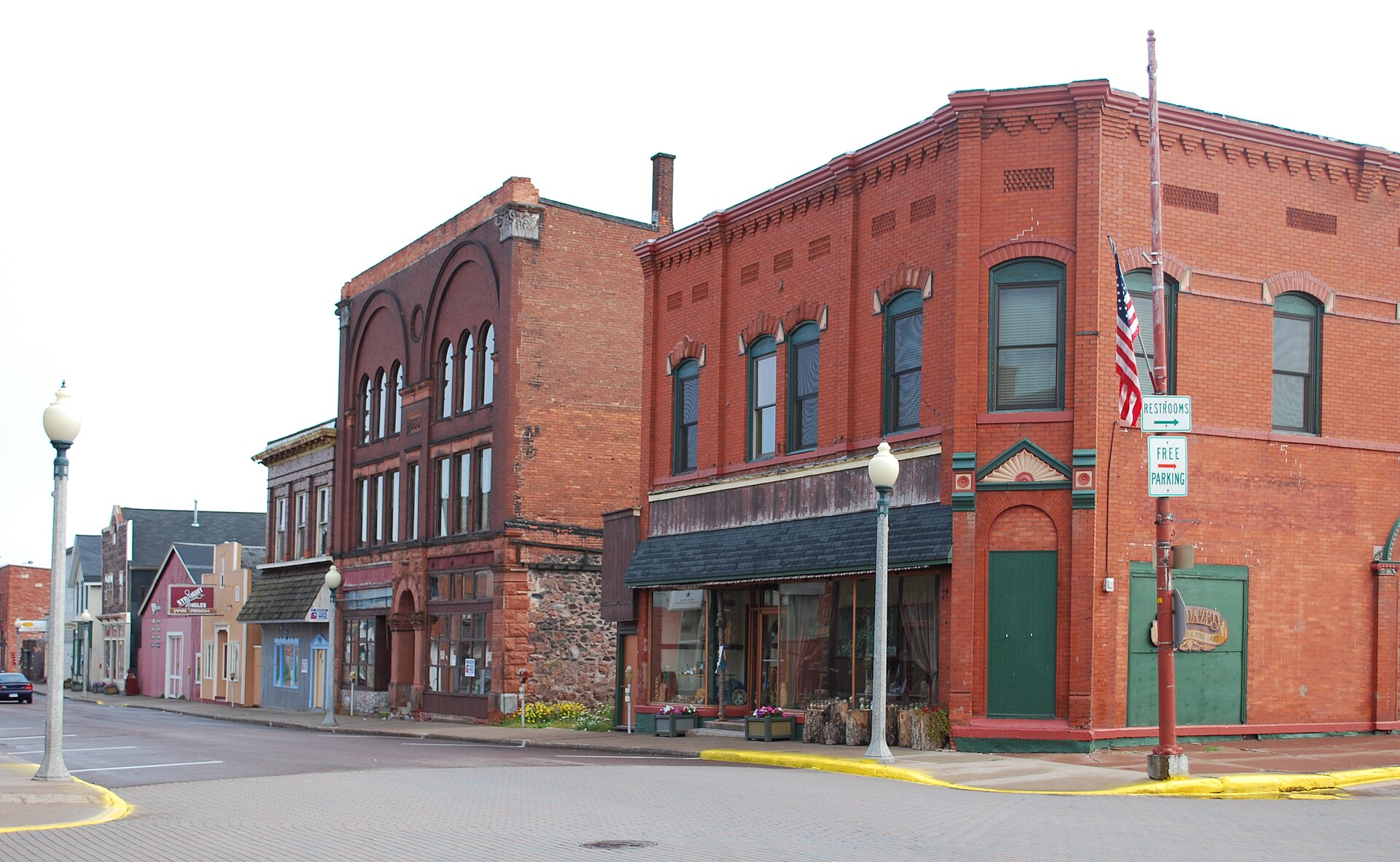
A Downtown Built for a Population That Left
Calumet's downtown streets are lined with sandstone commercial buildings whose scale and ornamentation seem almost comically oversized for the current population, a mismatch that is really the whole point: this was a downtown built during the boom years to serve tens of thousands of residents and mine workers, and it never quite emptied out so much as it settled into a smaller, quieter version of itself once the ore ran out. Antique shops, a handful of restaurants, and a slowly growing community of artists and remote workers have moved into storefronts that once housed dry goods emporiums and saloons, giving the downtown a lived-in quality that avoids feeling like a preserved museum diorama even as it remains, almost accidentally, one of the best-preserved boomtown cores in the country.