In This Guide
The Edmund Fitzgerald's Bell Superior's Oldest Active Light Tahquamenon Falls, Just Down the RoadBest Time to Go
Late April – early May (spring hawks) or Aug 15 – Nov 15 (fall waterbirds)
Whitefish Point Bird Observatory runs spring raptor counts March 15 through May 31, with the heaviest hawk flights typically arriving in the last two weeks of April. A separate fall waterbird count runs mid-August through mid-November, watching a different migration entirely.
The stretch of Lake Superior shoreline running from the tiny outpost of Paradise out to Whitefish Point has earned, over centuries of maritime disaster, the nickname 'the graveyard of the Great Lakes,' a stretch of water where sudden storms, dangerous shoals, and one of the busiest shipping lanes on Superior combined to sink hundreds of vessels, the most famous of which went down close enough to these shores that its story has become the region's defining legend. It is also, somewhat improbably, one of the best bird-watching sites in the Midwest, a coincidence of geography that gives this remote corner of the eastern Upper Peninsula two entirely different reasons to justify the long drive north.
The Edmund Fitzgerald's Bell
The Great Lakes Shipwreck Museum sits directly beside the Whitefish Point Light, and its collection centers on the SS Edmund Fitzgerald, the 729-foot freighter that sank in a November 1975 gale roughly seventeen miles from where the museum now stands, taking all twenty-nine crew members down with it in a disaster immortalized by Gordon Lightfoot's ballad and still, decades later, the subject of genuine debate among maritime historians about exactly what doomed the ship. The Fitzgerald's actual bronze bell, recovered from the wreck in a 1995 expedition and replaced on the sunken hull with a memorial bell inscribed with all twenty-nine names, forms the emotional centerpiece of the museum, rung annually each November in a ceremony that draws visitors from well beyond the immediate region.
Beyond the Fitzgerald exhibit, the museum's broader collection of recovered artifacts, ship's wheels, and salvaged bells documents just how many other vessels never made it past this stretch of shoreline, reinforcing that the Fitzgerald, however famous, was really just the most recent chapter in a much longer and considerably darker maritime history.
Superior's Oldest Active Light
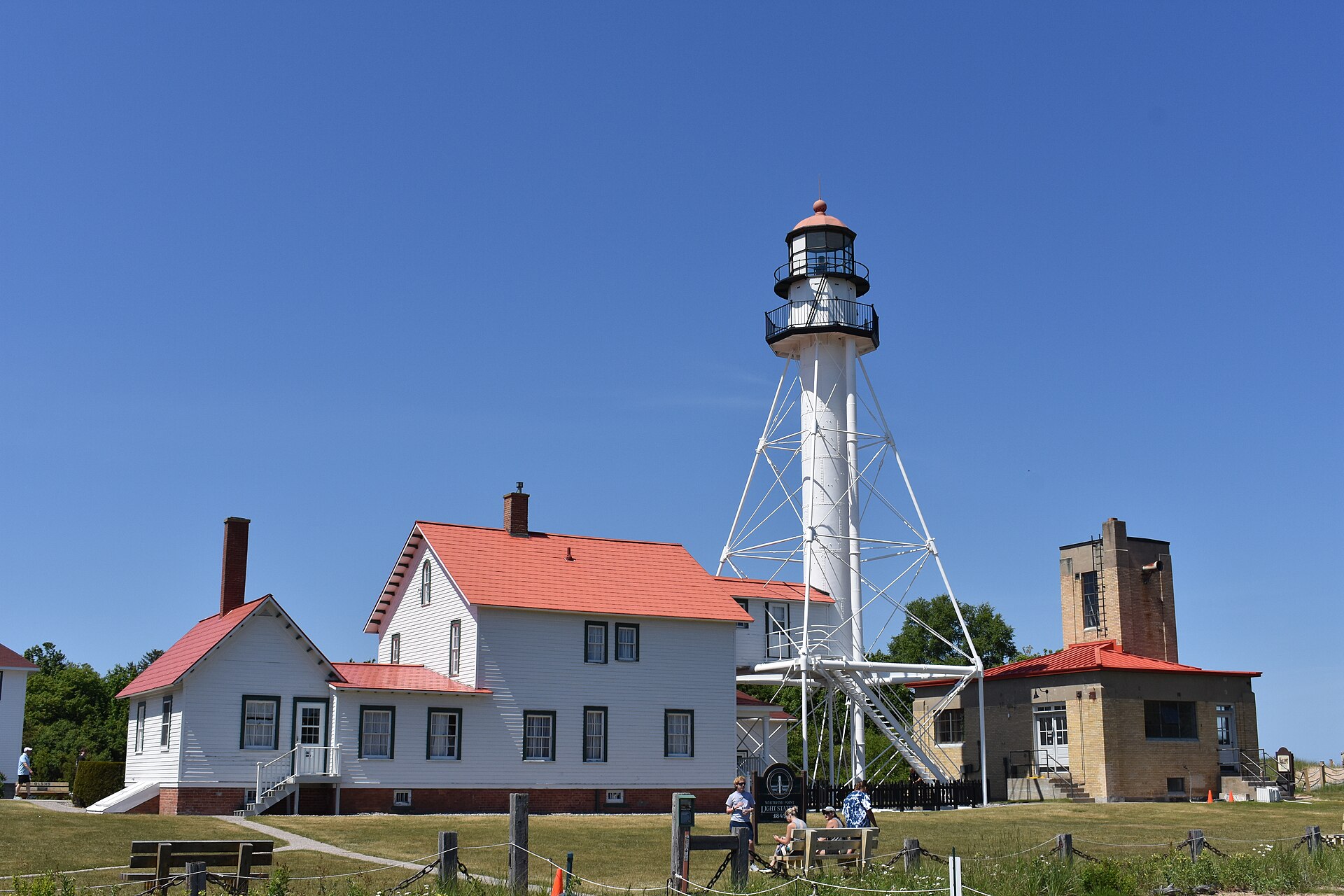
Whitefish Point Light has guided ships since 1849, making it the oldest operating lighthouse on Lake Superior, and its squat, functional iron-skeleton tower design, quite different from the more romantic brick towers found elsewhere on the Great Lakes, was specifically engineered to withstand the punishing wind loads this exposed point regularly experiences. Standing at the point on a blustery day, watching whitecapped Superior roll in seemingly without interruption toward the horizon, makes the lighthouse's utilitarian engineering feel considerably less like an aesthetic choice and considerably more like a matter of basic survival.
The point's isolation, useful for keeping ships off the shoals, turns out to be equally useful for an entirely different purpose: it funnels an enormous concentration of migrating hawks, owls, and waterbirds along the shoreline each spring and fall, since birds crossing the eastern Upper Peninsula tend to follow the coast rather than strike out across open water, and the Whitefish Point Bird Observatory has tracked and counted these migrations for decades, making the point a genuine destination for birders well beyond the shipwreck-history crowd.
Tahquamenon Falls, Just Down the Road
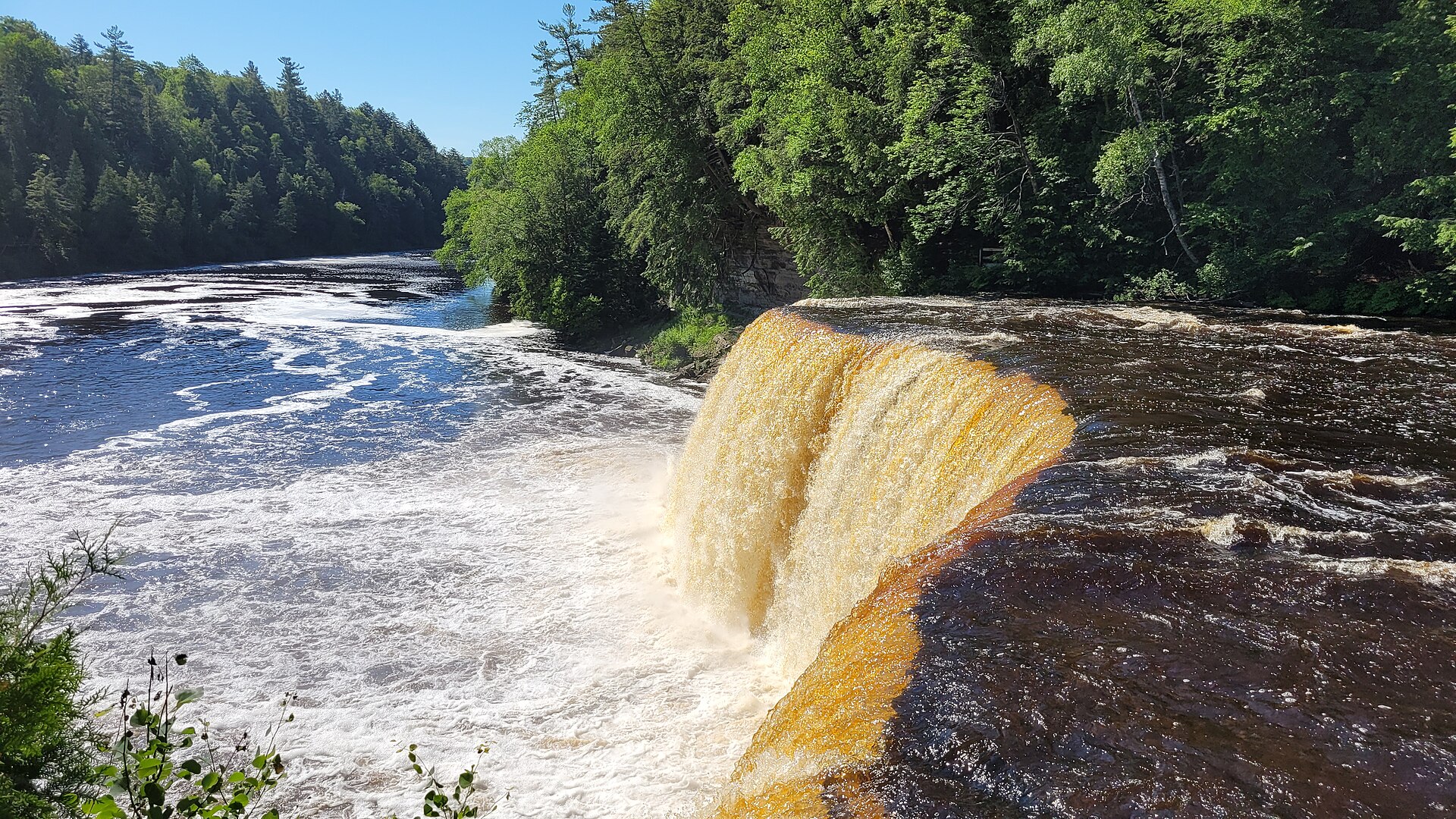
Paradise, the small community serving as the gateway to Whitefish Point, sits close enough to Tahquamenon Falls State Park that most visitors combine both stops into a single trip, and the falls themselves are worth the detour on their own merits: the Upper Falls drop nearly fifty feet across a wall of rock more than two hundred feet wide, making them among the largest waterfalls east of the Mississippi by water volume, their churning amber-brown water colored by tannins leached from the cedar swamps upstream, giving them the enduring local nickname of the 'root beer falls.'
A network of boardwalks and viewing platforms lets visitors take in the Upper Falls' full width without much physical effort, while the quieter Lower Falls, a few miles downstream, invites a more leisurely approach via rental rowboat out to a small island positioned in the middle of the cascading, braided rapids, a considerably gentler and more contemplative waterfall experience than its thunderous upstream counterpart.