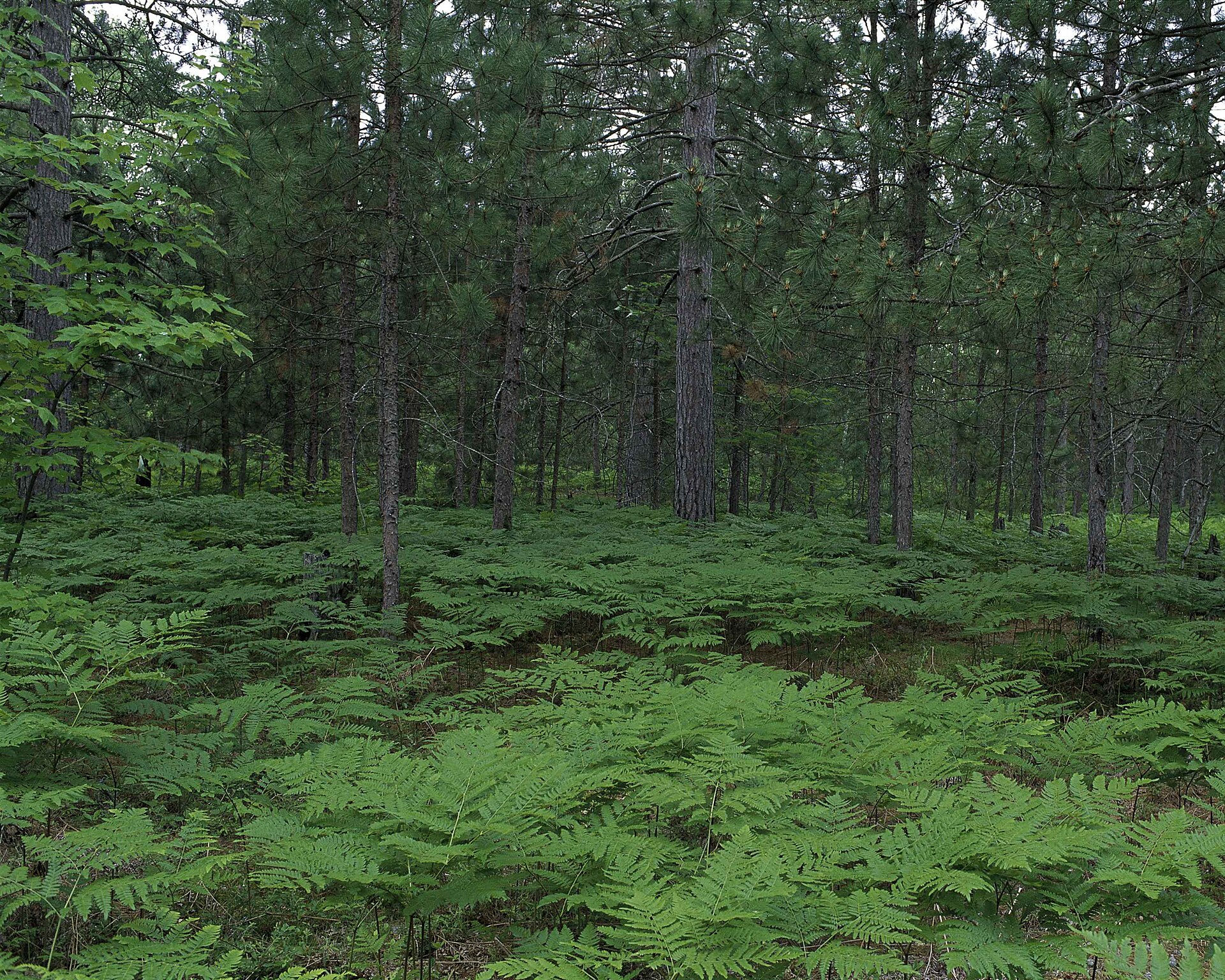
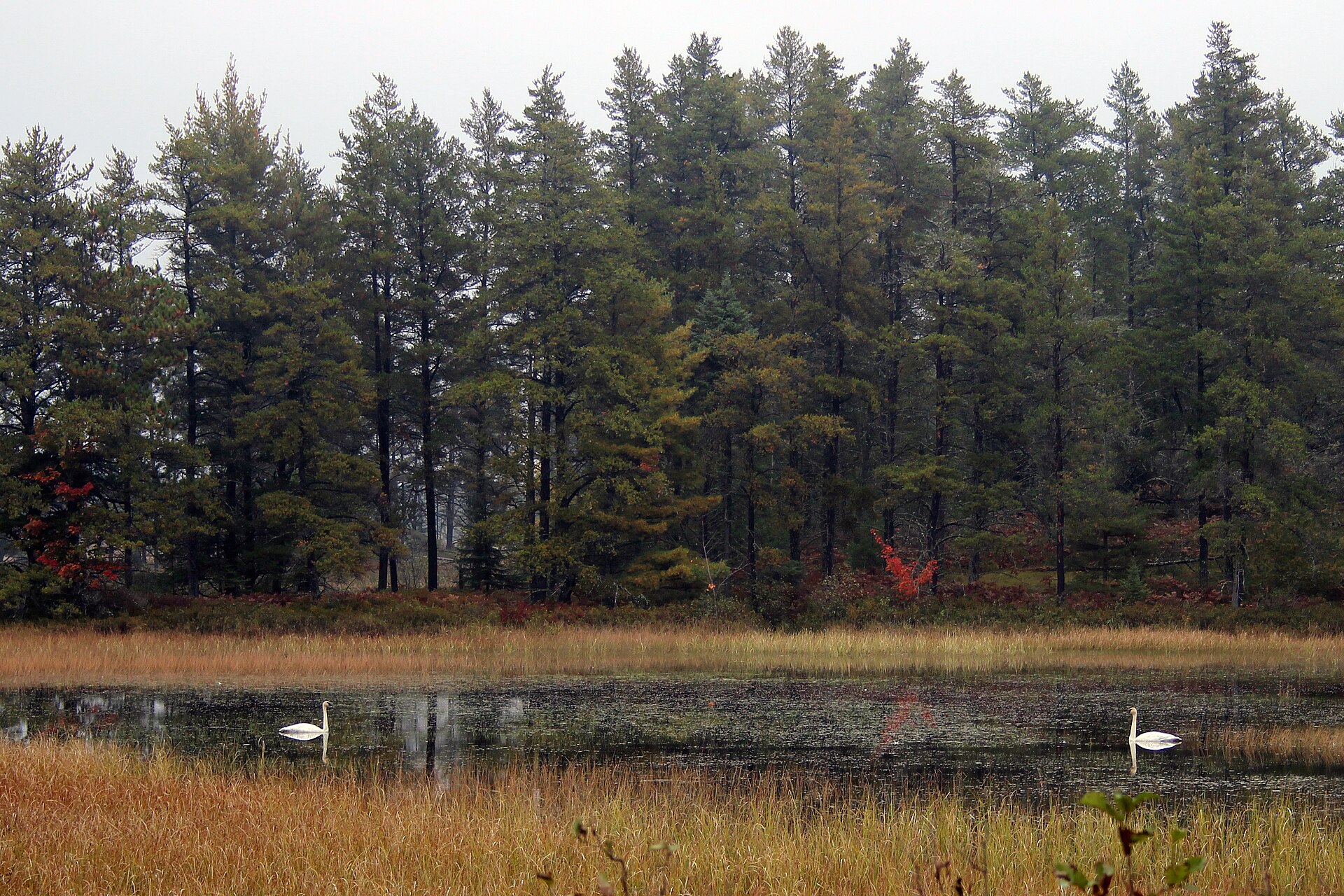
Drive M-28 across the middle of the Upper Peninsula and the landscape flattens into something that looks, at highway speed, like nothing much at all — a low expanse of scrub, bog, and stunted pine that the road crosses without ceremony. That impression is badly wrong. Seney National Wildlife Refuge occupies 95,238 acres of this country, a mosaic of marshes, swamps, bogs, and forest that supports more than two hundred species of birds and constitutes one of the most significant wetland complexes in the Great Lakes region. It is also, to an unusual degree, a manufactured landscape: the pools that make the refuge work were dug by Civilian Conservation Corps crews in the 1930s, and the trumpeter swans gliding across them today are using infrastructure built by hand during the Depression.
A Refuge Made by Hand
Seney National Wildlife Refuge was established in 1935 for the protection and production of migratory birds and other wildlife, arriving at a moment when the federal government had both an urgent conservation agenda and an enormous pool of unemployed young men to direct at it. The Civilian Conservation Corps was in full operation, and the crews — the dollar-a-day boys, as they were known — were put to work constructing a series of pools intended to entice ducks and geese onto refuge lands. The work was heavy, largely manual, and carried out in a landscape of black flies and standing water that would test anyone's enthusiasm for outdoor employment.
The result is a wetland system that reads as entirely natural to a visitor who does not know the history, and that fact is worth sitting with. The dikes, pools, and water-control structures that shape the refuge's hydrology were laid out deliberately to produce specific habitat conditions, and ninety years of vegetation and wildlife response have since blurred the engineering into something indistinguishable from wilderness. Understanding that Seney is a constructed place rather than a preserved one changes how a visitor reads the landscape, and it makes the density of birdlife on the pools considerably more impressive rather than less.
The Marshland Wildlife Drive
The refuge's centerpiece for most visitors is the Marshland Wildlife Drive, a seven-mile route that runs past a sequence of pools and crosses two bridges, and which is open seasonally from May 15 through October 20 alongside the Fishing Loop. The drive takes roughly an hour if a traveler stops several times to look and photograph, which is very much the intended pace — covering it briskly defeats the purpose entirely. Spotting decks are positioned along the route at points where the sightlines across open water are best, and pulling onto them and simply waiting is the single most productive thing a visitor can do.
What turns up on those pools justifies the patience. Seney is known for trumpeter swans, common loons, bald eagles, osprey, and sandhill cranes, and the supporting cast includes American bitterns, several rail species, and a long roster of warblers that makes the refuge a genuine destination for birders during migration. Binoculars are close to mandatory; a spotting scope is better. Early morning and the hours before dusk concentrate activity, and the light at those times is dramatically kinder to photographers than midday glare bouncing off open water.
Trails and Off-Season Access
The seasonal closure of the wildlife drive does not close the refuge, a distinction that a surprising number of visitors miss. Seney maintains more than twelve miles of trails located away from the main campus — at the Show Pool Shelters and off Robinson Road — and these are open year-round to hikers, runners, photographers, and anyone content to travel under their own power. Winter transforms the place: the pools freeze, the summer bird population departs, and the refuge takes on a stark quality that rewards visitors willing to dress properly and accept solitude as the principal amenity.
Nearer the visitor facilities, the Pine Ridge Nature Trail offers a shorter and more structured introduction, suitable for families and for travelers whose available time is measured in an hour rather than a day. Walking it in combination with a slow circuit of the wildlife drive covers the refuge's range reasonably well in a single visit. The community of Seney itself is very small and services are correspondingly limited, so provisioning is better handled in Newberry or Munising, and visitors should treat the refuge as the destination rather than expecting a town to support the trip.