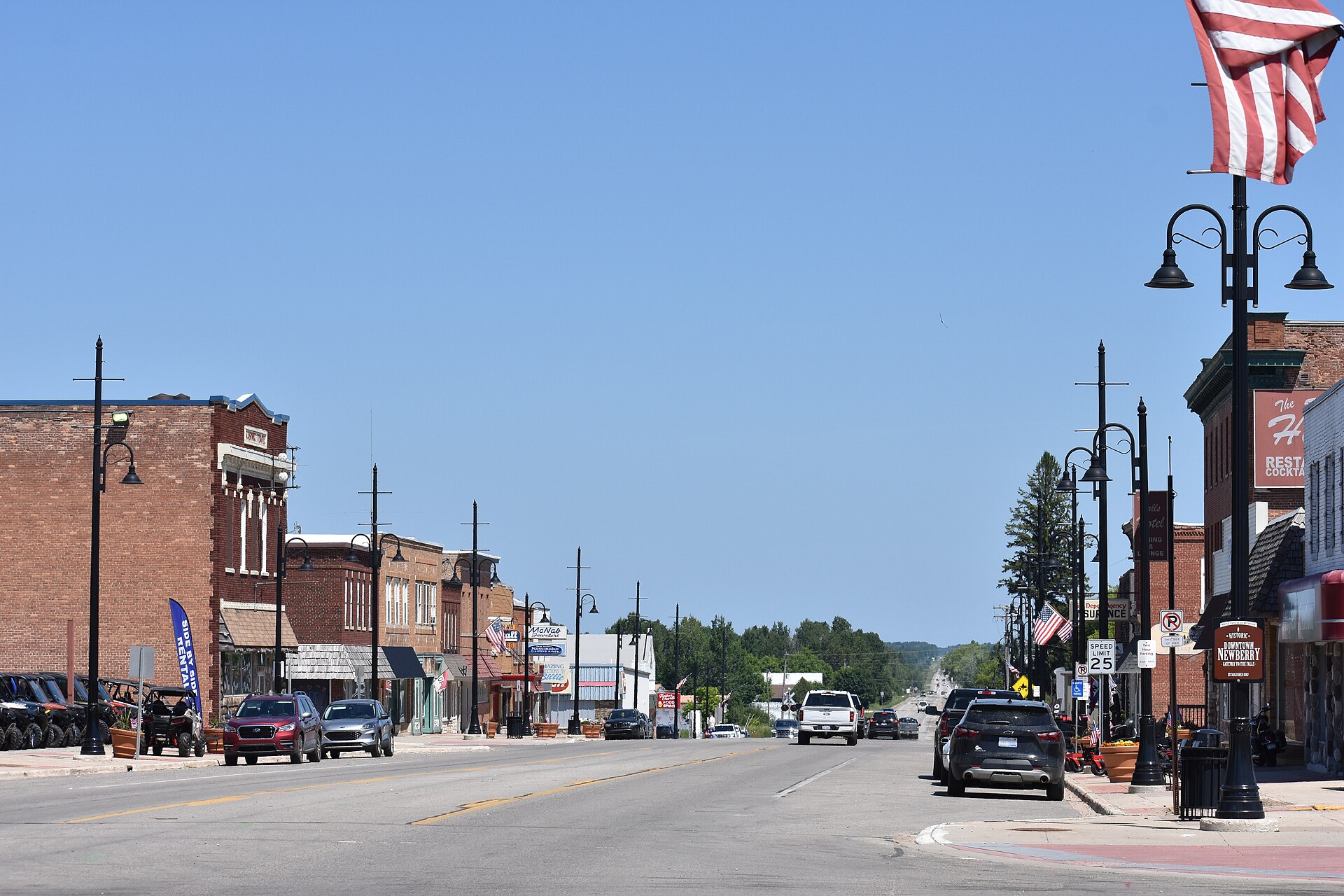
Newberry occupies a quiet stretch of Luce County forest roughly midway between Lake Superior and Lake Michigan, a small logging-era town of scarcely more than a thousand residents that nonetheless sees thousands of travelers pass through its main street every year on their way to the much more heavily promoted Tahquamenon Falls a short drive north. Founded in 1882 as a logging headquarters originally called Grant's Corner and later renamed for Detroit industrialist Truman H. Newberry, the town has since built an identity around something considerably less predictable than its timber origins: an official state designation as the Moose Capital of Michigan.
The Moose Capital of Michigan
The Michigan House and Senate formally bestowed the "Moose Capital of Michigan" title on Newberry in 2002, an official recognition of what area residents and wildlife biologists had already understood for years: the forests surrounding Luce County support one of the highest concentrations of moose sightings anywhere in the state, a legacy of a deliberate reintroduction effort that restored the species to the eastern Upper Peninsula after its original population had been hunted to local extinction generations earlier. The designation has become genuine civic identity rather than mere marketing, with moose imagery and moose-themed businesses scattered across a town that takes evident pride in being one of the few places in Michigan where an encounter with the state's largest land mammal remains a realistic possibility for an attentive visitor.
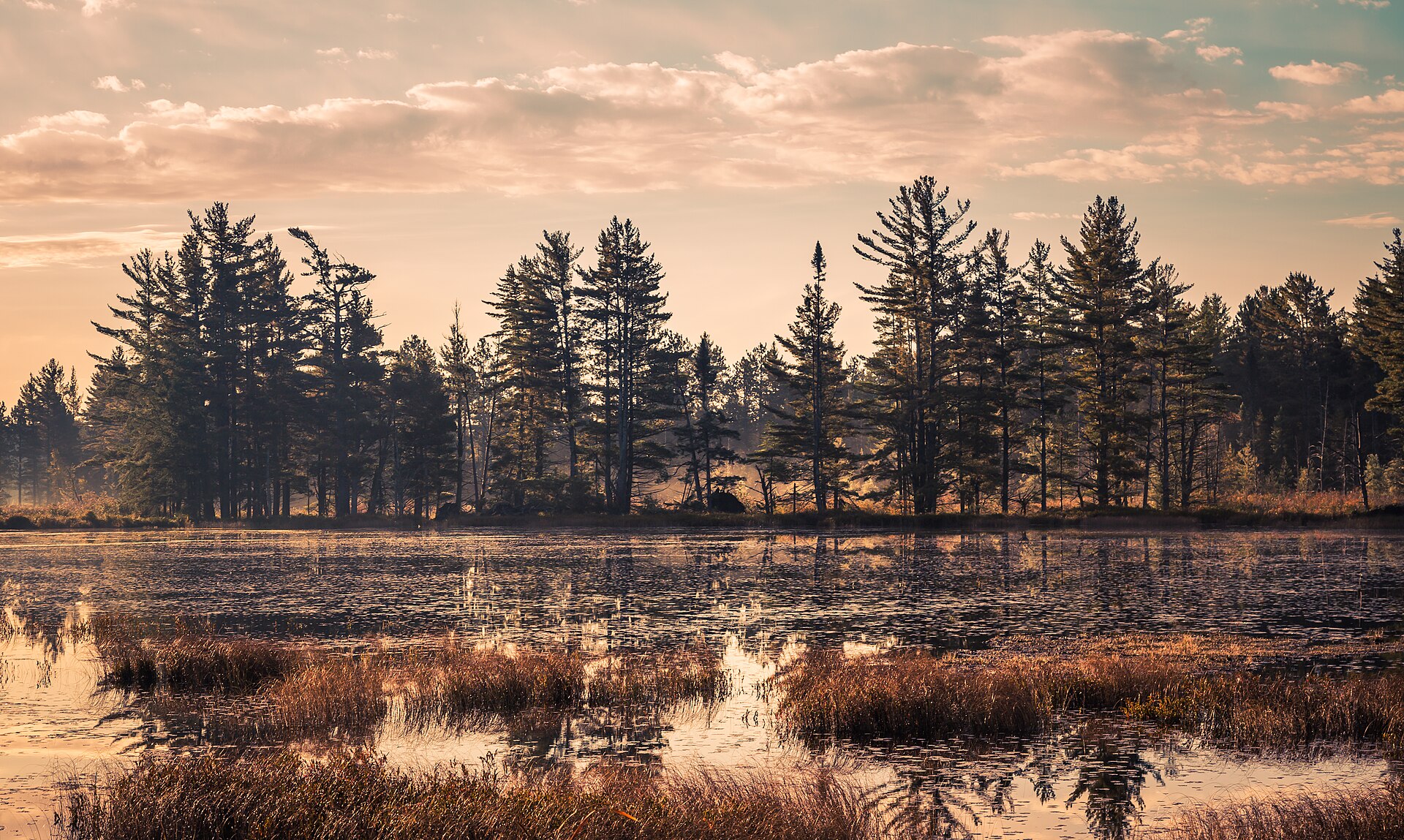
Successful moose-spotting in the area generally rewards patience and early hours over any particular technique, with dawn and dusk drives along quieter forest roads outside town offering the best odds, though sightings can never be guaranteed given how thoroughly the animals prefer the deep, undisturbed timber that surrounds Newberry on nearly every side. Even visitors who never spot one tend to leave with a clearer sense of just how much genuine wilderness still surrounds this particular corner of the eastern Upper Peninsula, official capital designation notwithstanding.
Gateway to the Falls, Anchored in Logging History
Newberry and the smaller community of Paradise function as the two practical gateways to Tahquamenon Falls State Park, and a considerable share of the falls' visitors pass directly through Newberry's downtown without necessarily realizing the town has plenty to offer on its own terms, including the Tahquamenon Logging Museum, which documents the industry that originally brought the town into existence as "Grant's Corner" in 1882. The museum's exhibits on nineteenth-century logging camp life, river drives, and sawmill operations fill in the industrial backstory behind the vast timber wealth that once defined nearly every settlement across the eastern Upper Peninsula, Newberry very much included.
Newberry became the seat of Luce County in 1887, shortly after the county itself split off from Chippewa County, and that modest civic distinction has anchored the town's role as the commercial hub for a genuinely enormous surrounding expanse of state and national forest land. The combination of deep woods, a functioning small-town main street, and the area's improbable moose fame gives Newberry a character distinct from the more heavily touristed lakeshore towns elsewhere in the Upper Peninsula, appealing specifically to visitors more interested in quiet forest immersion than in a crowded harbor view.