In This Guide
The Locks Themselves Locking Through by Boat Museum Ship Valley Camp and the Tower of History Within Forty-Five Minutes The Whitefish Point Excursion Basing in the SooLake Superior sits about twenty-one feet higher than the water below it, and every vessel moving between Superior and the rest of the Great Lakes has to be lifted or lowered through that difference at one place: the Soo Locks at Sault Ste. Marie. It is among the busiest and most consequential pieces of infrastructure in North America, and it is also — unusually for something of that importance — genuinely built for spectators. Visitors can stand on an observation platform a few feet from a thousand-foot freighter as it rises, or board a tour boat and lock through alongside them. Michigan's oldest city has arranged most of its attractions around that single fact, and the surrounding thirty to forty-five minutes hold enough lighthouses, shoreline, and maritime history to fill several days.
The Locks Themselves
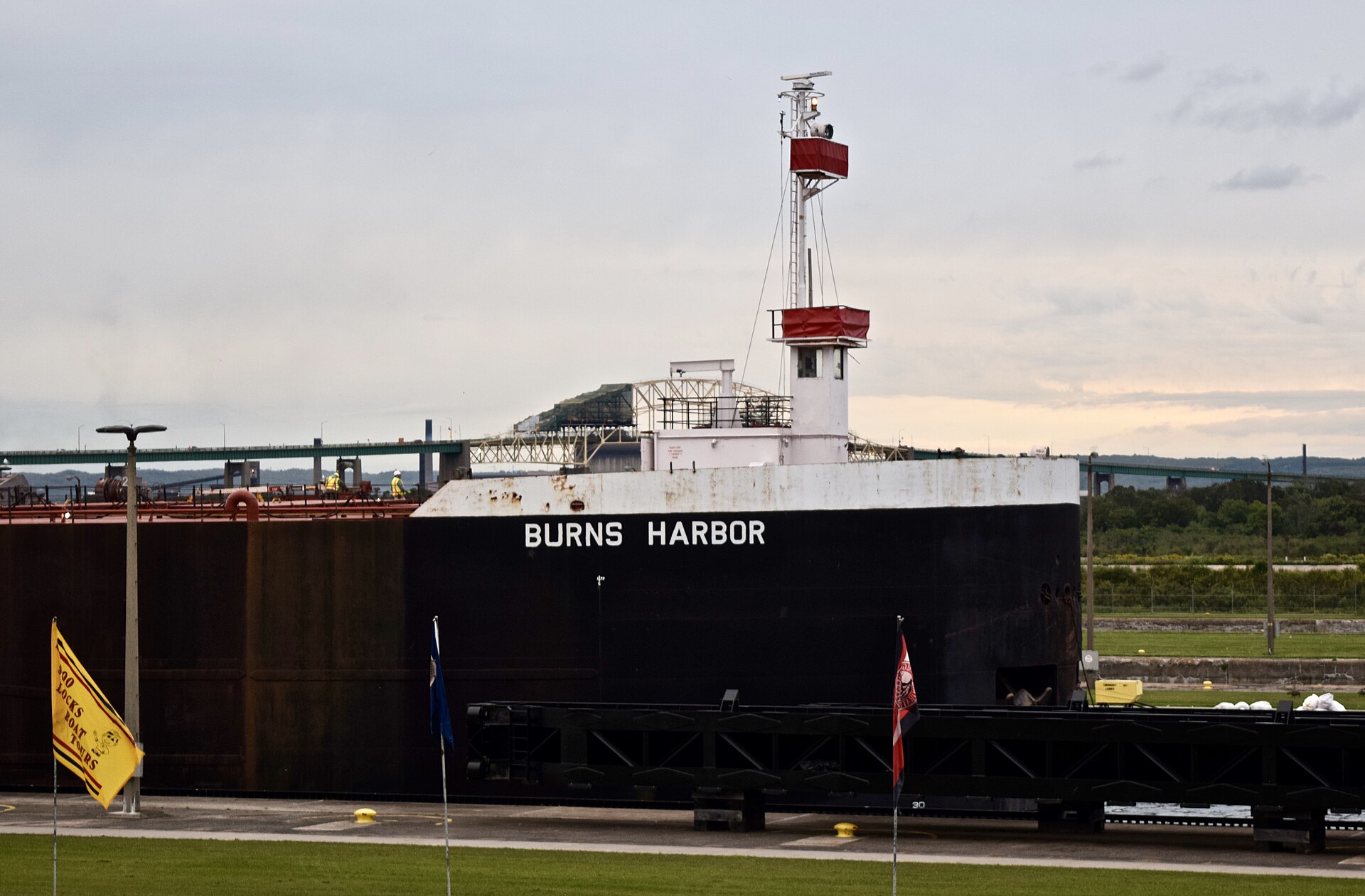
The Soo Locks sit at the northern end of the St. Marys River, the connection between Lake Superior and Lake Huron, and exist to solve a specific problem: the roughly twenty-one-foot drop between the upper and lower river. Rapids there made the passage impossible for vessels, and the locks replaced that obstacle with a controlled lift. The scale of what passes through is difficult to convey in writing — thousand-foot freighters carrying iron ore and grain, filling the chamber almost wall to wall, rising or falling while onlookers stand close enough to read the hull markings.
Watching from the observation platform costs nothing and is the single best free attraction in the Upper Peninsula. The practical question is timing, because freighter arrivals are not scheduled for visitor convenience; checking the day's expected traffic before committing an afternoon is worth the effort, and the shipping season itself runs roughly from late March into January. Visitors who arrive during the winter closure will find the chambers drained and under maintenance, which is interesting in a completely different way but not what most people came for.
Locking Through by Boat
The experience that converts a good visit into a memorable one is riding through the locks rather than watching from the wall. Two-hour narrated harbor tours run through the season, taking passengers into the American locks and past the Canadian lock on the far side of the river, and the sensation of the chamber walls rising past the boat while the water drops away is genuinely strange the first time. The narration covers the engineering, the shipping trade, and the history of the crossing, which gives the ride considerably more substance than a scenic cruise.
The tours also run alongside the working freighters, and the difference in scale between a tour boat and a thousand-foot laker is the detail most passengers remember. Booking ahead is sensible in July and August, and travelers should dress for water temperature rather than air temperature — the St. Marys River in June is cold enough to make an open deck uncomfortable regardless of what the forecast says on land.
Museum Ship Valley Camp and the Tower of History
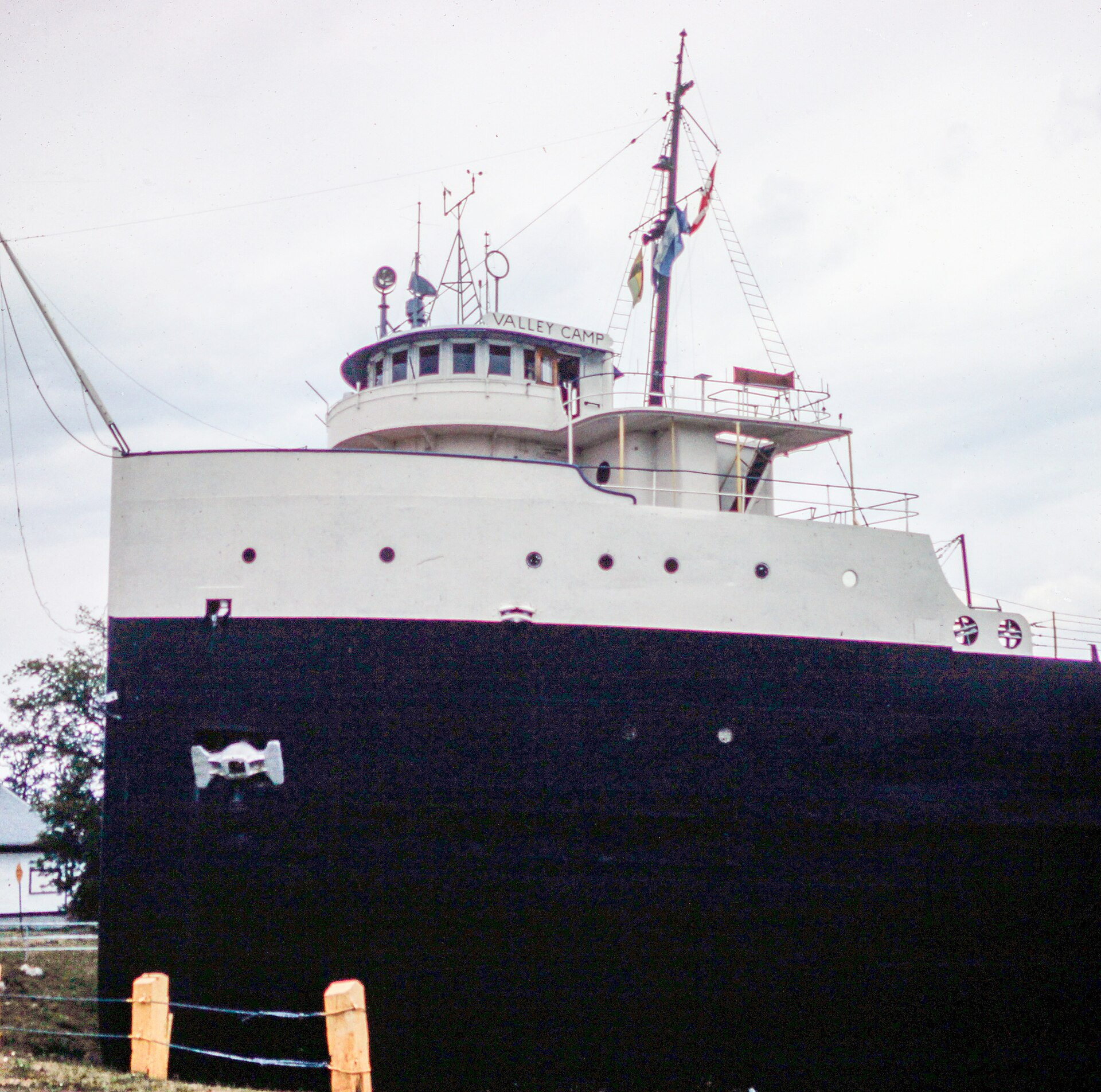
The Museum Ship Valley Camp is a retired Great Lakes freighter permanently docked in the city and open for visitors to walk aboard — engine room, crew quarters, pilothouse, and cargo holds converted to exhibit space. Boarding a real laker after watching identical vessels transit the locks closes a loop that no land-based museum could, and the sheer interior volume of a Great Lakes bulk carrier registers very differently from the deck than it does from shore.
The Tower of History provides the other perspective: a panoramic view over the city, the locks, the St. Marys River, and across into Canada. Between the two, plus the broader collection of Sault Historic Sites scattered through the city, a visitor can spend a full day without leaving the immediate downtown. This is worth knowing for a rainy day, which the eastern Upper Peninsula supplies reliably enough that having indoor options matters.
Within Forty-Five Minutes
West of the city, the Whitefish Bay Scenic Byway runs along the shoreline through Hiawatha National Forest, and Point Iroquois Lighthouse sits along it near Brimley in Bay Mills Township. The 1870 tower stands 65 feet, the site is free to enter, and visitors can climb the 72 steps to the top for a view across Whitefish Bay and the shipping lanes — the same water every Superior-bound vessel crosses after leaving the locks. Brimley State Park nearby offers the area's most straightforward shoreline access and camping, with water warm enough for swimming thanks to the bay's shallow, sheltered geometry.
The international dimension is worth mentioning as well. Sault Ste. Marie, Ontario, sits directly across the river, connected by the International Bridge, and the Canadian city is substantially larger than its Michigan counterpart. Crossing requires a passport or equivalent documentation and should be planned rather than improvised, but it puts a genuinely different city within a few minutes' drive — an option very few American vacation bases can offer.
The Whitefish Point Excursion
One major attraction sits outside the forty-five-minute radius but deserves inclusion because most visitors to the Soo will want it: the Great Lakes Shipwreck Museum at Whitefish Point, a National Historic Site whose exhibits cover area shipwrecks, the U.S. Lighthouse Service, and the point itself. Whitefish Point is a substantially longer drive than the other destinations here — closer to an hour and a quarter each way — so it should be treated as a dedicated day trip rather than an afternoon add-on.
It is worth the drive. The stretch of Lake Superior off Whitefish Point is among the deadliest water in the Great Lakes, and the museum's collection reflects that directly. Pairing it with a Soo-based trip gives a visitor both halves of the same story: the engineering that made Superior shipping possible, and the wrecks that show what happened when conditions overwhelmed it. Travelers planning both should allow a full day for the point and keep the locks for a separate one.
Basing in the Soo
Sault Ste. Marie is Michigan's oldest city and supports full services year-round, which makes it one of the more comfortable bases in the Upper Peninsula — a real grocery, a range of lodging, and dining that stays open through the off-season rather than shuttering in September. That reliability is worth more than it sounds in a region where many towns effectively close for the winter.
Season shapes the trip more than anything else. Summer brings the boat tours, the open museums, and the heaviest freighter traffic; autumn brings color along the Whitefish Bay byway with far fewer visitors; winter closes the locks to navigation and much of the tourist infrastructure with them, though the city itself carries on. For a first visit, a long weekend between June and September covers the locks, a lock-through cruise, the ship, the tower, and a run out the byway to Point Iroquois without ever feeling rushed.