The far western Upper Peninsula runs out of Michigan slowly, trailing off into a landscape of lakes, second-growth forest, and county roads that cross into Wisconsin without much ceremony. Watersmeet sits near the end of that gradient, an unincorporated community in Gogebic County surrounded on all sides by the Ottawa National Forest's million-plus acres. Its name refers to the local watershed divide, and its two principal claims on a traveler's attention could hardly be more different: one is a rigorously protected tract of old-growth forest and undeveloped lakes regarded as among the finest wilderness in the Midwest, and the other is a light that appears down a dead-end gravel road at night and has resisted a satisfying explanation for decades.
The Sylvania Wilderness
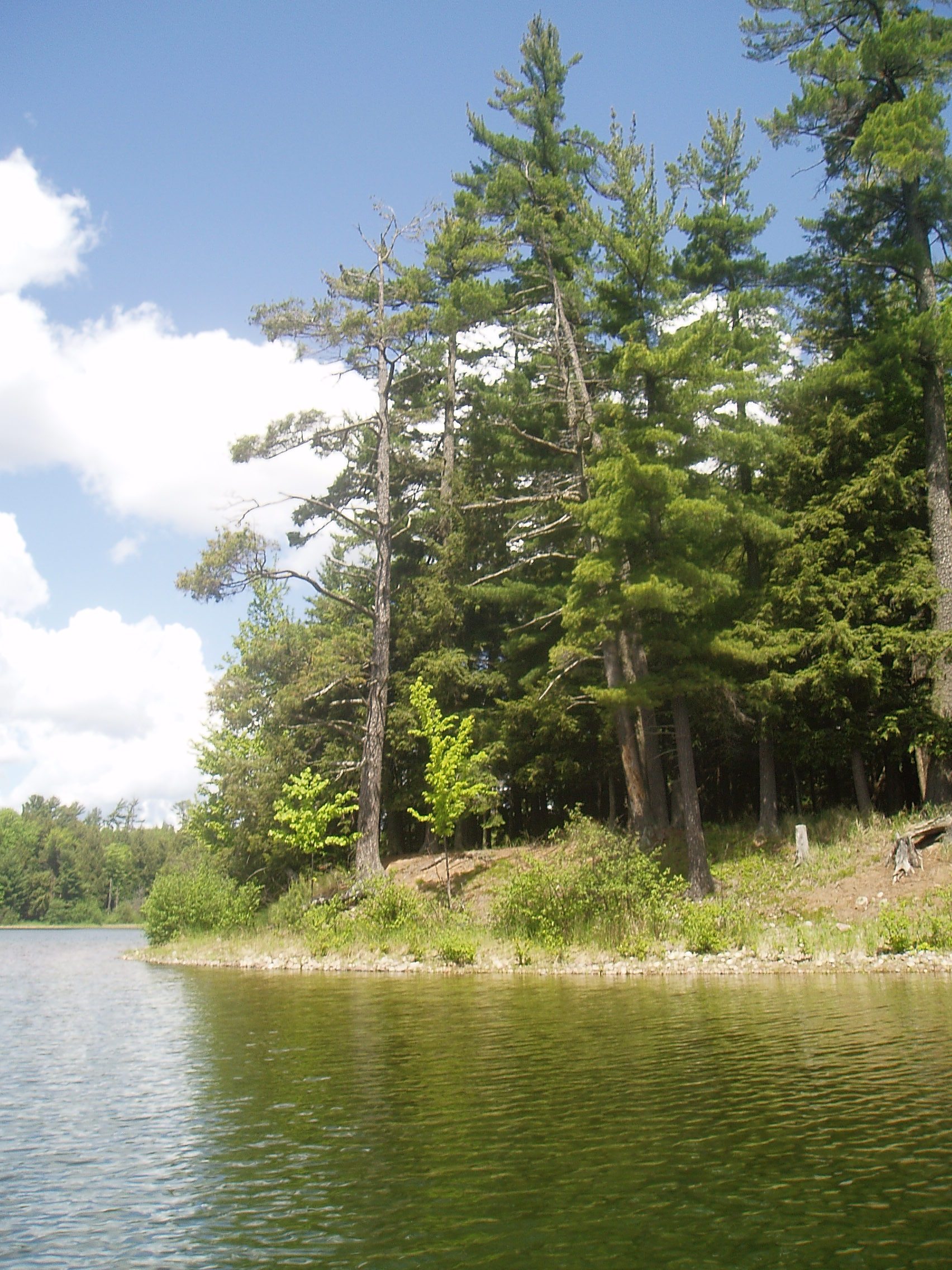
The Sylvania Wilderness protects 18,327 acres a few miles west of Watersmeet Township, administered by the U.S. Forest Service as part of the surrounding Ottawa National Forest. What distinguishes Sylvania from the ordinary run of national forest land is what it does not contain: no motors, no wheels, and no development to speak of. The tract preserves virgin forest and a constellation of clear, undeveloped lakes, and the regulations governing use are correspondingly strict, designed to protect an environment that is genuinely fragile and genuinely rare. Very little forest of this character survived the nineteenth-century logging era anywhere in the Great Lakes states, which makes Sylvania less a recreation area than a reference point for what the region looked like before.
Visiting means adapting to the wilderness designation rather than working around it. Travel is by foot or by paddle, with canoes and kayaks carried between lakes rather than trailered to them, and the resulting quiet is the entire attraction. Anglers, paddlers, and backcountry campers make up the bulk of use, and the special rules — covering everything from entry permits to catch handling to where a tent may be pitched — should be reviewed with the Forest Service before a trip rather than discovered on arrival. Those willing to accept the constraints find one of the few places in the Midwest where a paddler can cross a lake and hear nothing mechanical at all.
Lac Vieux Desert and the Fishing Country
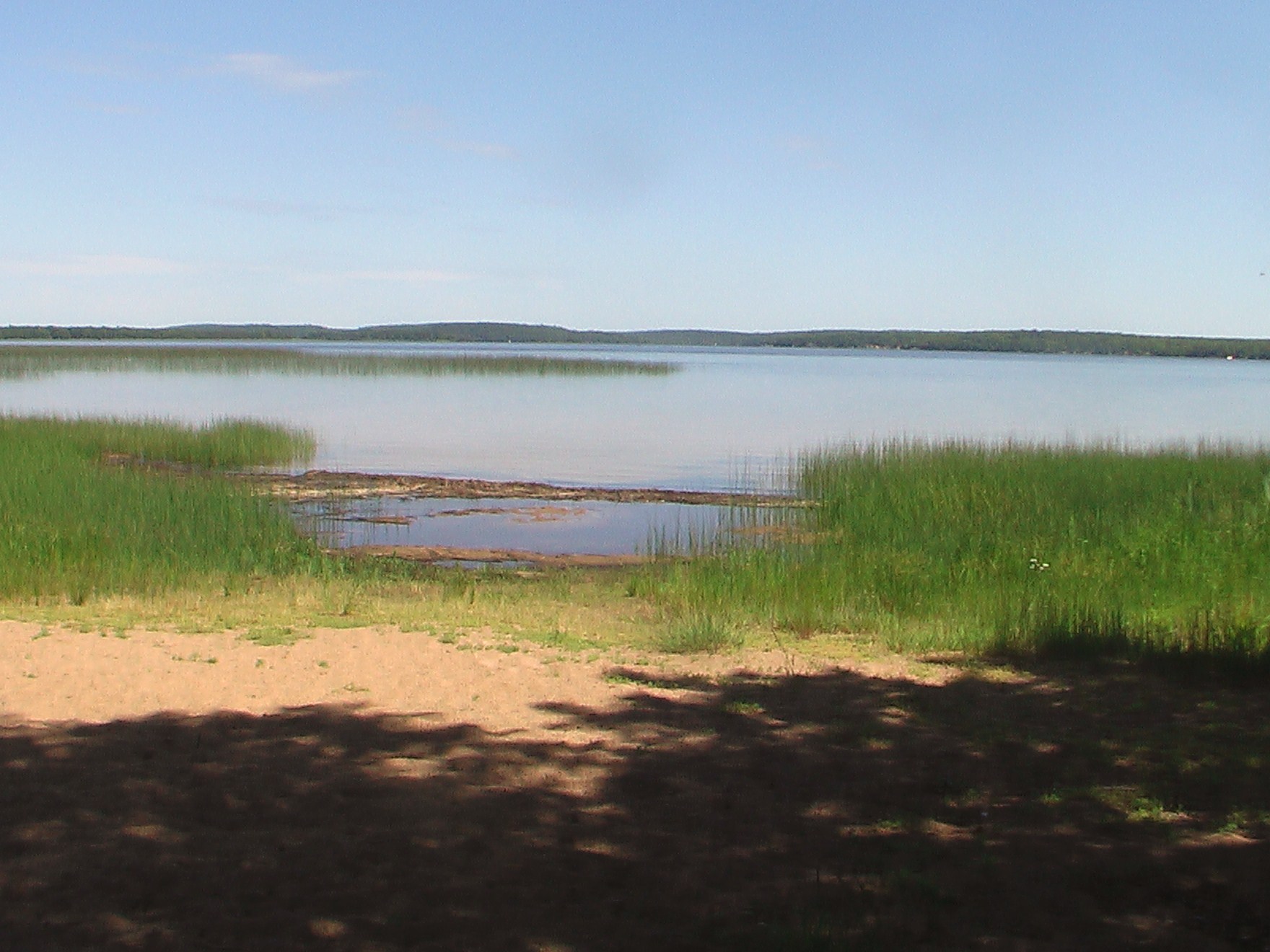
Lac Vieux Desert spreads across roughly 4,200 acres on the Michigan–Wisconsin boundary, nestled between the Ottawa and Nicolet National Forests, and it has drawn returning anglers for generations. The species list explains the loyalty: silver and tiger musky, walleye, northern pike, smallmouth and largemouth bass, and panfish, distributed across a lake large enough to fish differently in different weeks and shallow-shored enough to be approachable in a small boat. The lake also carries deep significance as the historic homeland of the Lac Vieux Desert Band of Lake Superior Chippewa Indians, a connection that predates every other use of this water by a very long margin.
The broader Watersmeet area continues the theme. The Ottawa National Forest surrounds the community with over a million acres of public land threaded by lakes, rivers, and forest roads, and the density of water here is high enough that a visitor can fish a different body every day for a week without repeating or driving far. Services are concentrated in and immediately around the community itself, which functions as the practical supply point for a large and thinly settled area. Lodging runs to lakeside cabins, small resorts, and campgrounds rather than anything resembling a hotel district, and the seasonal rhythm — open water, hunting seasons, and a serious winter snowmobile economy — governs what is available when.
The Paulding Light
Michigan's most persistently discussed unexplained phenomenon appears a few miles north of town, and the directions are specific enough to be worth stating plainly: take State Highway 45 north out of Watersmeet roughly five miles, watch for Robbins Pond Road — the old State Highway 45 — on the left, turn there, and follow the gravel about three-eighths of a mile to the dead-end barricade. From that vantage, on many nights, a light appears in the distance down the old roadway, sometimes steady, sometimes apparently moving, occasionally changing color. It has been drawing carloads of observers for decades, and the site has acquired the informal infrastructure of a genuine attraction despite consisting of nothing but a gravel turnaround and a view.
Explanations have been offered with varying degrees of rigor and varying degrees of local acceptance. Folklore supplies the customary inventory of spectral brakemen and lost lanterns; investigators applying instruments have generally concluded that the effect involves headlights on a distant highway segment, viewed along a sightline that atmospheric conditions can distort in ways that make the source appear far closer and stranger than it is. Whether that settles the matter is, for most visitors, beside the point. The experience of standing on a dark gravel road in the middle of the Ottawa National Forest watching an unexplained light hover in the distance is worth having regardless of which account one finds persuasive, and it costs nothing but an evening.