Four miles southwest of Rockland, on Victoria Dam Road in Ontonagon County, four restored log houses stand in a clearing where a copper-mining village used to be. Old Victoria is not a reconstruction or a themed attraction; it is what remains of the housing that miners and their families actually occupied, preserved in place by a local society and recognized as a Heritage Site within Keweenaw National Historical Park. The Victoria Mine worked the Forest Lode off and on from 1849 until it closed for good in 1921, never quite delivering on the promise that kept drawing capital back to it, and the settlement's slow abandonment is legible in the buildings that survived.
The Victoria Mine
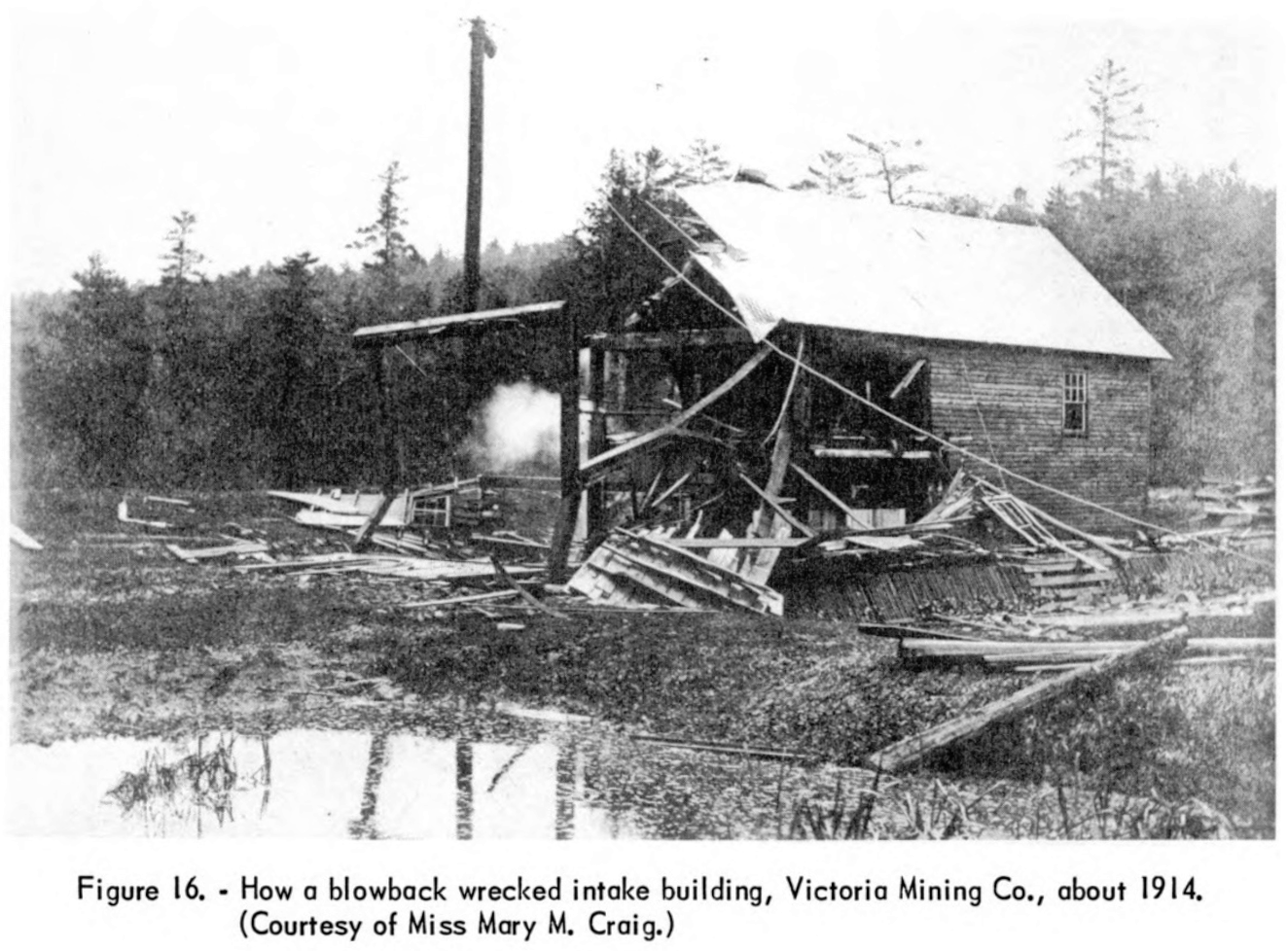
The Victoria Mine is properly a series of copper mines in Rockland Township, worked intermittently across more than seventy years — from 1849 to a final closure in 1921 — in Michigan's Copper Country. Most of what came out was low-grade native copper from the Forest Lode, and that qualifier explains a great deal about the operation's history. Native copper is metal already in metallic form rather than locked in ore requiring smelting, which made Michigan's deposits extraordinarily attractive; low grade meant the concentration here was thin enough that profitability depended on copper prices, transportation costs, and technology in combinations that kept failing to align.
The result was a mine that opened, closed, changed hands, and reopened repeatedly as conditions shifted, and a settlement whose population rose and fell with it. That pattern was common across the Copper Country, but Victoria's remoteness sharpened it — this was never a Calumet or a Hancock, with the institutional weight to survive a downturn. When the mine finally stopped in 1921, there was very little else holding the village in place, and the forest began taking it back almost immediately.
The Restoration Site
Old Victoria is maintained by the Society for the Restoration of Old Victoria and is open from Memorial Day weekend through mid-October. The four restored log houses give visitors an unusually direct sense of the domestic conditions of Copper Country mining life around the turn of the twentieth century — small rooms, hard winters, and families living within sight of the shaft that employed them. The scale is what registers most strongly; these were not spacious accommodations, and understanding that the buildings housed whole families reframes the mining history considerably.
The site's designation as a Heritage Site within Keweenaw National Historical Park matters practically as well as symbolically. The affiliation brings the preservation and interpretation under national standards, which for a small volunteer-run operation in a remote township is a meaningful stabilizer. Visitors should check operating dates before making the drive, as the season is genuinely limited and the site is not staffed year-round. The four miles of Victoria Dam Road from Rockland are straightforward in summer but should be approached with the usual western-U.P. caution outside the open season.
The Dam and the Country Around It
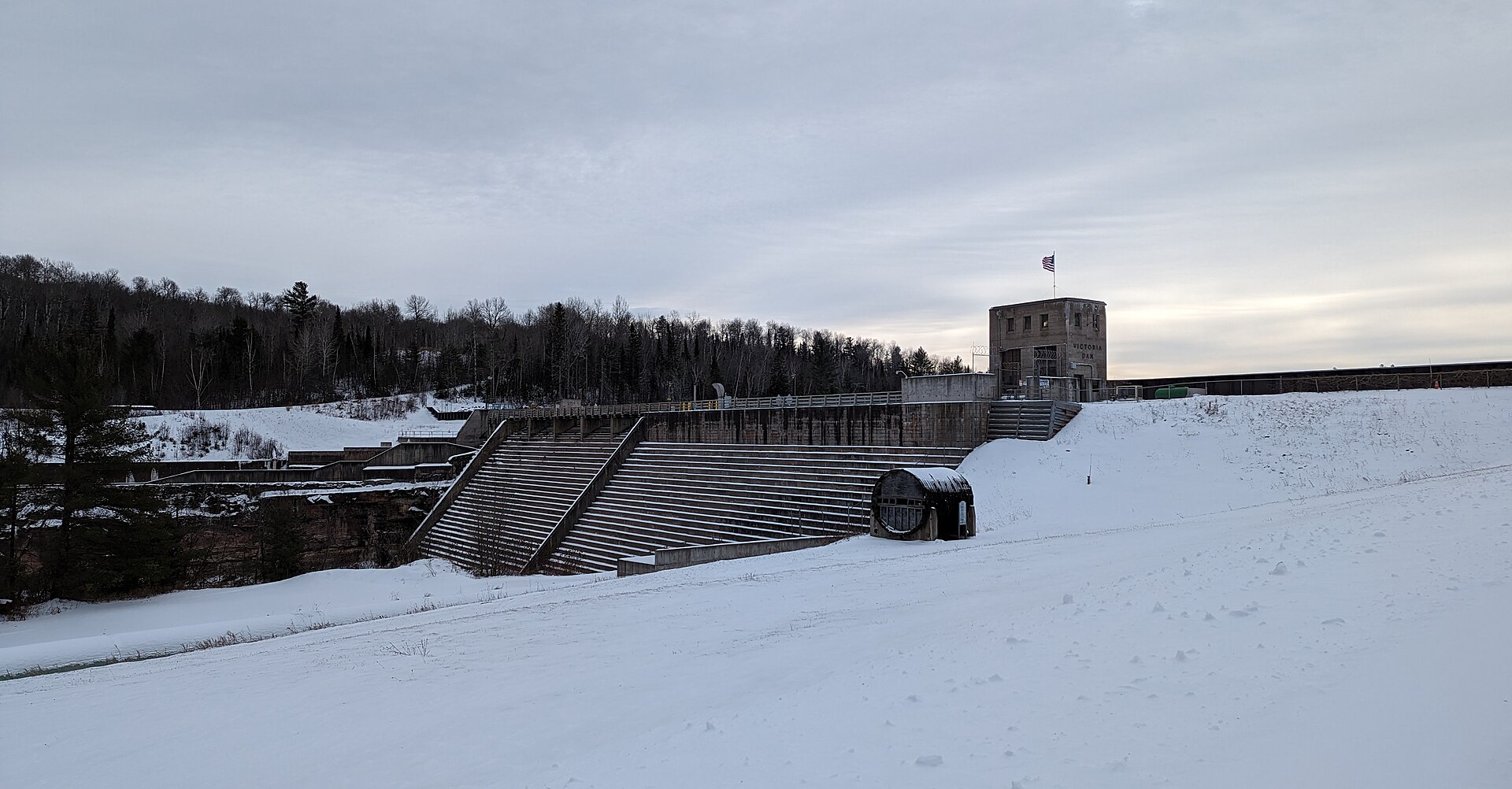
Below the settlement, the Victoria Dam impounds the west branch of the Ontonagon River for hydroelectric generation, and the falls and impoundment associated with it have become an attraction in their own right — frequently paired with Old Victoria on the same visit, since one road serves both. Mount Lookout provides an elevated vantage over the surrounding country, and the combination of an industrial-heritage site, a working dam, and a genuine overlook within a few miles of each other makes for an efficient half-day.
Rockland itself is very small, and travelers should provision in Ontonagon or along US-45 rather than expecting services in the village. The surrounding country belongs to the western Upper Peninsula's least-populated quarter, with the Porcupine Mountains to the northwest and the Ottawa National Forest spreading south and west, which means Rockland works best as one stop within a broader loop rather than as a destination in isolation. For travelers already exploring the Copper Country's better-known sites, it offers something the restored downtowns of Calumet and Hancock cannot: a mining settlement that simply stopped, with the buildings still standing where the families left them.