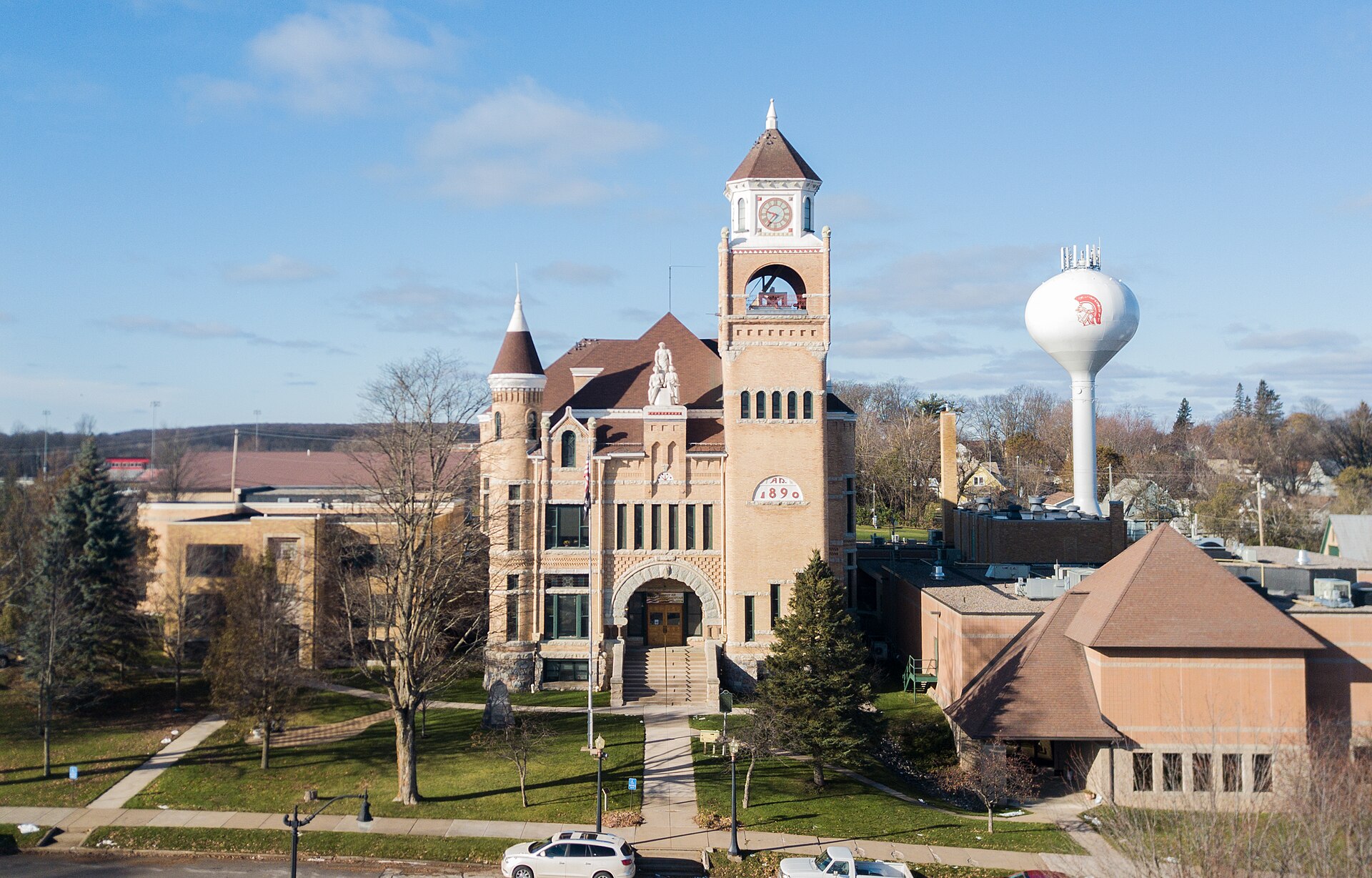
Crystal Falls occupies a hilltop above the Paint River in Michigan's western Upper Peninsula, the seat of Iron County by a margin so narrow that the town's founding-era rivalry with neighboring Iron River remains a genuine point of local pride more than a century later. The Richardsonian Romanesque courthouse crowning the town's highest ground stands as physical proof of exactly how seriously nineteenth-century Michigan communities took the question of which town got to keep the county's official business.
Won By Five Votes
John Armstrong opened the Crystal Falls Mine along the Paint River in 1880, the same pivotal year that saw a rival strike open the competing settlement of Iron River a short distance away, and the two young mining towns spent the following decade locked in an increasingly personal contest over which would ultimately control the newly organized Iron County's government. Iron River initially held the temporary designation as county seat by virtue of being the only incorporated village in the county at its 1885 founding, but Crystal Falls partisans refused to accept that arrangement as permanent, at one point reportedly spiriting county records away from the temporary courthouse entirely.
The dispute finally went to a formal vote in 1888, and Crystal Falls won the county seat by a margin of just five votes, a result close enough that it has remained a genuine point of local conversation and civic identity in both towns for well over a century since. The victory gave Crystal Falls the lasting institutional prestige of the courthouse, even as Iron River eventually grew into the larger and more populous of the two communities.
A Courthouse on a Hill
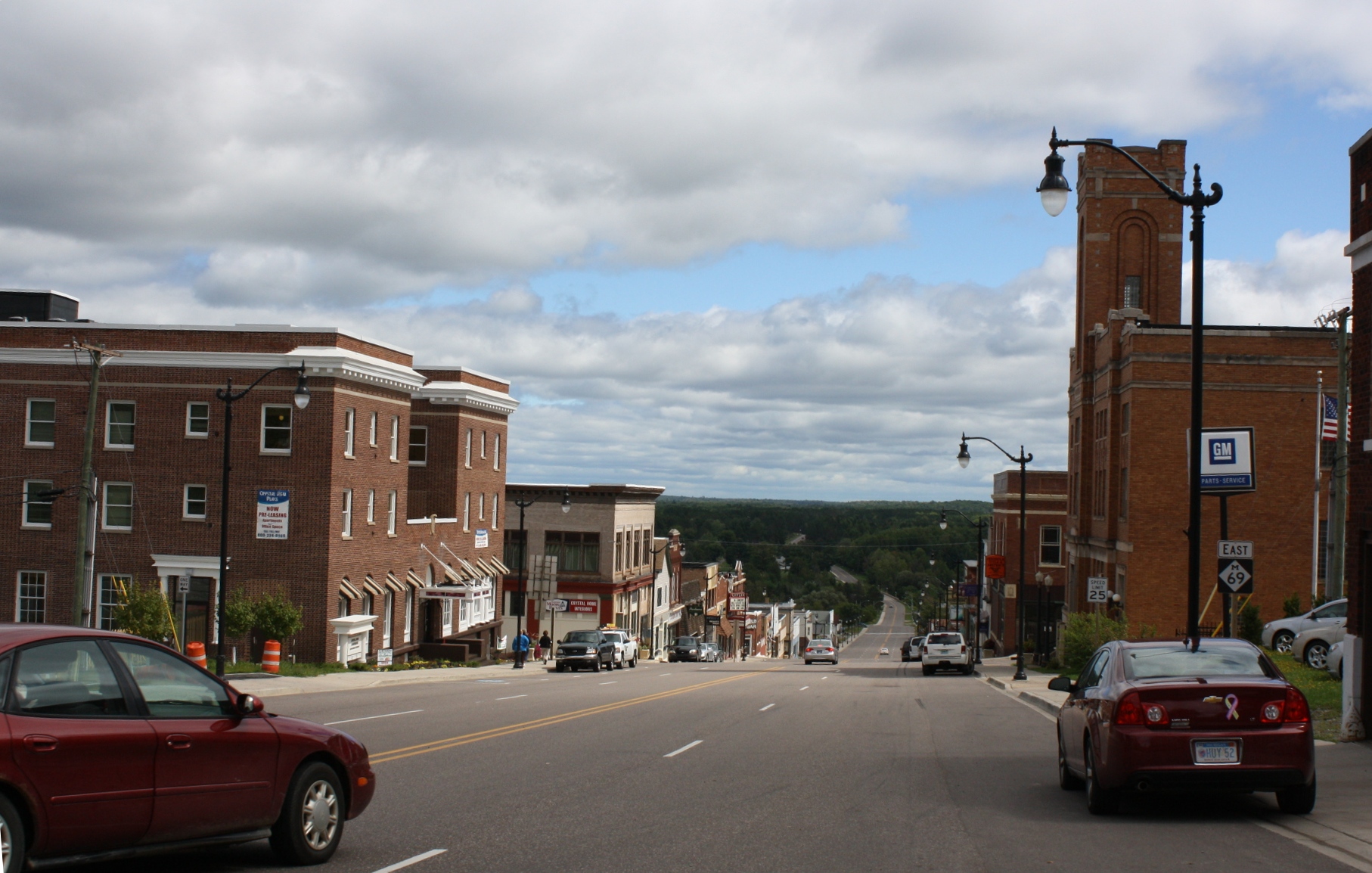
The Iron County Courthouse, completed in 1890 to a design by architect J.C. Clancey and built by Louis A. Webber, occupies a genuinely commanding hilltop position at the west end of Superior Avenue, its reddish-brown brick walls and stone trim rising in the heavy, round-arched Richardsonian Romanesque style that so many ambitious county governments favored for their most important civic buildings during this era. The building's two-and-a-half-story profile, set on a rubble masonry foundation, overlooks Crystal Falls's entire business district, a placement that reads less like an accident of geography and more like a deliberate architectural statement about which town, exactly, had won the argument that mattered most to its nineteenth-century founders.
Listed on the National Register of Historic Places in 1975 and designated a Michigan State Historic Site the year before, the courthouse remains a functioning government building today rather than a museum piece, giving visitors the rare chance to walk through a genuinely historic seat of local government still being used for precisely the purpose its hilltop position was designed to advertise.