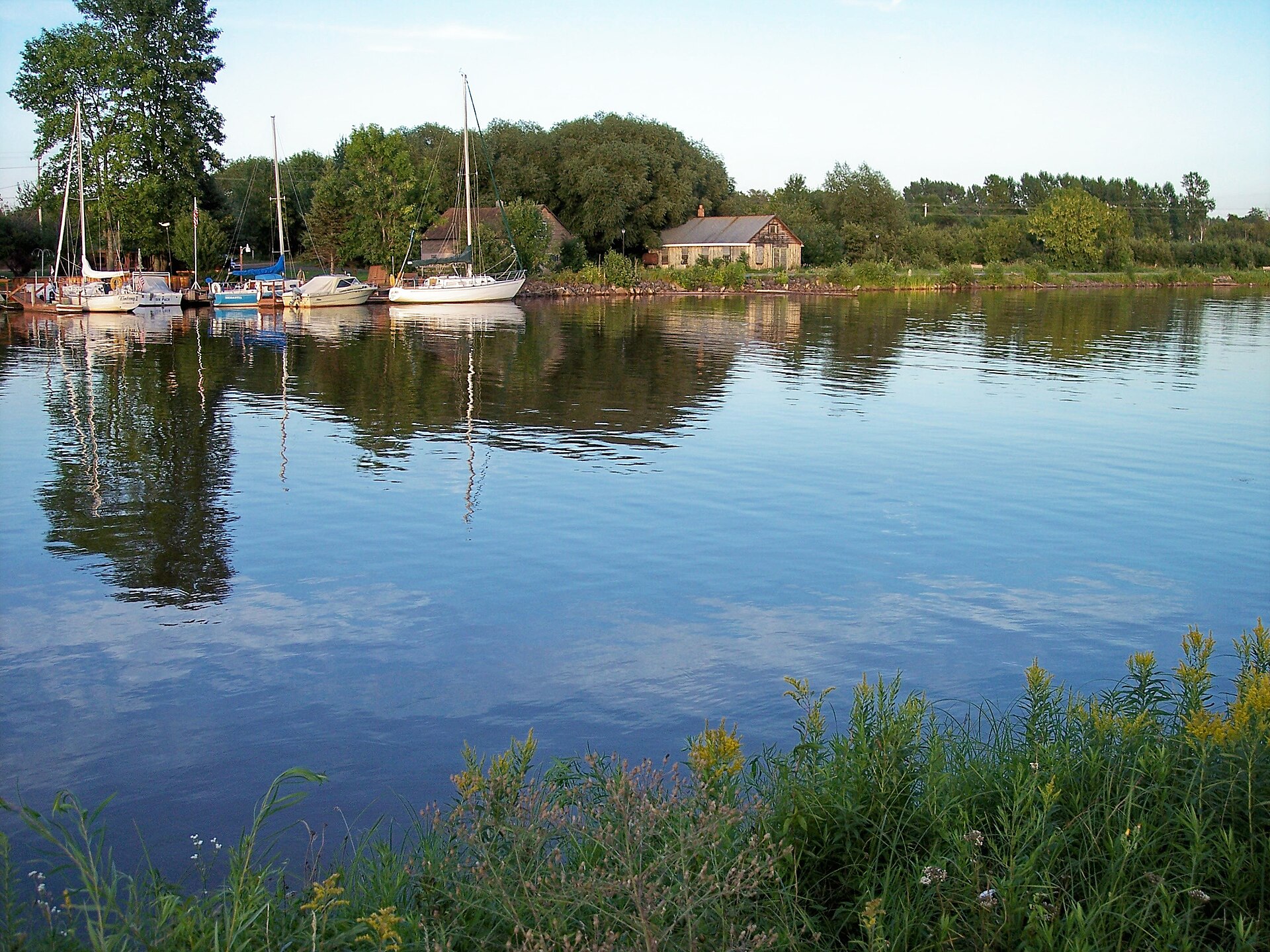
Ontonagon sits where its namesake river meets Lake Superior at the western edge of the Upper Peninsula, a small county-seat community whose entire economic destiny was set in motion by a single, almost absurdly famous rock. Long before the Keweenaw's copper boom made fortunes for mining companies up and down the peninsula, a three-thousand-pound mass of pure native copper sitting exposed on the riverbank a few miles upstream had already convinced geologists, prospectors, and eventually the federal government itself that this stretch of Lake Superior shoreline held mineral wealth worth fighting over.
The Boulder That Started It All
The Ontonagon Boulder, a 3,708-pound mass of native copper, had been known to the Ojibwe for generations before European explorers ever laid eyes on it, and the tribe is said to have used the site to leave offerings to Gitche Manitou, treating the exposed metal as something closer to sacred than merely valuable. Alexander Henry documented the boulder's location on the Ontonagon River in 1766, and word of its existence spread slowly through the following decades among fur traders and government surveyors, each of whom recognized that a chunk of copper this size, sitting essentially on the surface, implied a considerably larger deposit somewhere beneath it.
Detroit hardware merchant Julius Eldred finally succeeded in hauling the boulder out in 1843, after several earlier attempts by others had failed against its sheer weight and the difficulty of the surrounding terrain, and his ownership claim promptly landed him in a legal dispute with the federal government that dragged on until 1847. The government ultimately prevailed and took possession of the boulder, though it did compensate Eldred more than five and a half thousand dollars for his trouble, and the boulder itself now resides at the Smithsonian's National Museum of Natural History, a considerable distance from the Lake Superior shoreline where it once lay exposed to any passing canoe.
A Discovery, Not a Relic
What makes the Ontonagon Boulder historically significant rather than merely a curious museum piece is the sequence of events it set in motion: the copper boom that would eventually reshape the entire Keweenaw Peninsula's economy did not produce the boulder as one of its byproducts, but rather the boulder's well-publicized removal to Washington helped convince investors and prospectors that serious copper wealth was waiting to be extracted from the surrounding region. The Victoria Mine, opened near the boulder's original location, operated intermittently from 1849 until its final closure in 1921, one of dozens of mining operations that followed in the wake of the publicity the boulder's odyssey generated.
Modern Ontonagon retains a genuinely small, quiet Lake Superior character, its downtown considerably less developed than the busier tourist towns further east along the Keweenaw, and the surrounding county's copper and lumber history remains visible in local museums and preserved mine sites for visitors willing to make the comparatively long drive to reach this far corner of the peninsula.