In This Guide
Getting to Isle Royale: Ferries, Floatplanes, and the Ranger III Rock Harbor and the Best Day Hikes Wolves, Moose, and the Longest-Running Predator Study Lighthouses, Fisheries, and Ancient Copper Backpacking, Camping, and Planning Your VisitSome national parks greet you with a paved scenic drive and a gift shop; Isle Royale National Park greets you with a dock, a trailhead, and a silence that feels almost architectural. The island stretches roughly forty-five miles long and nine miles wide in the cold, clear heart of Lake Superior, and together with more than four hundred satellite islands and the surrounding waters it forms one of the most isolated corners of the national park system. There are no roads here, and nothing with wheels is permitted beyond wheelchairs and the carts that shuttle luggage from the Rock Harbor marina, so every journey proceeds at the unhurried pace of boots or paddles. That isolation is precisely why the island ranks as the least-visited national park in the contiguous United States, and why the people who do make the crossing so often come back. It is also the only American national park that closes entirely in winter, shutting down from November 1 through mid-April, as the park's operating hours page explains. This guide covers how to get there, where to wander once you land, and how to plan a visit that matches your appetite for wilderness.
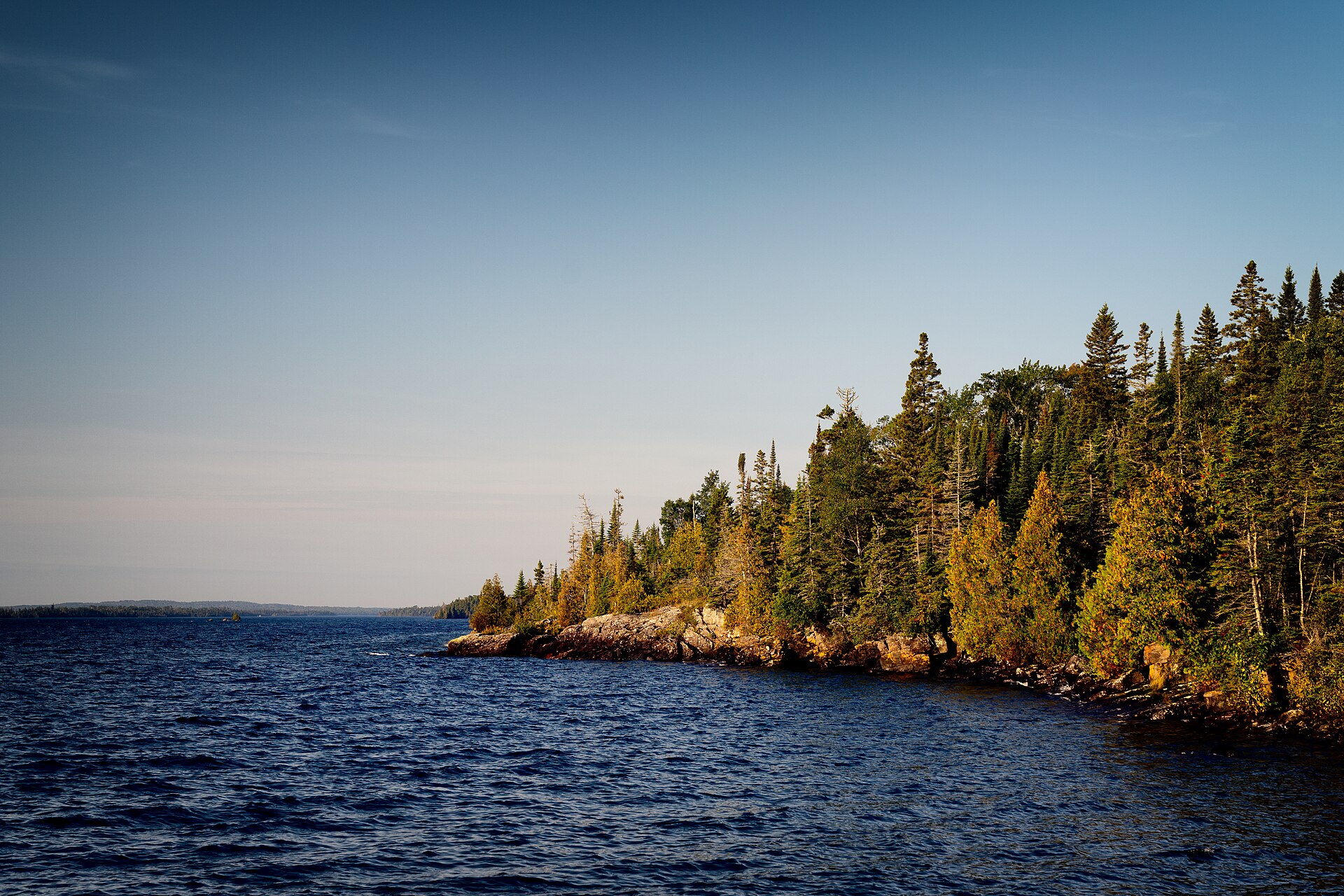
Getting to Isle Royale: Ferries, Floatplanes, and the Ranger III
Reaching the island is the first adventure, and it begins in one of three mainland ports. From Houghton, the National Park Service's own vessel, the Ranger III, makes a six-hour crossing to Rock Harbor; at 165 feet long, it is often described as the largest single piece of equipment the Park Service owns. From the tip of the Keweenaw, the privately operated Isle Royale Queen IV leaves Copper Harbor each morning and reaches Rock Harbor in roughly three to three and a half hours, which makes a long day trip possible for visitors short on time. Two Minnesota boats, the Voyageur II and the Sea Hunter III, sail from Grand Portage to the island's western end at Windigo, while floatplanes from Hubbell, near Houghton, cut the journey to about forty minutes. Every option operates seasonally, generally from mid-May into September, and schedules bend to weather that Lake Superior dispenses without apology. Book early, pack a seasickness remedy, and treat the crossing as part of the experience rather than an obstacle to it.
Whichever boat you choose, remember that the park charges its own entrance fee on top of the fare. The National Park Service lists a $7 per person per day entrance fee, with children 15 and under exempt, and a season pass is available for frequent visitors and private boaters. Anyone staying overnight in a campground needs a camping permit, and groups follow their own reservation process, both detailed on the park's permits and reservations page. The park headquarters in Houghton is a worthwhile stop the day before you sail, since rangers there can answer last-minute questions about trails and conditions. Crossings fill quickly in the height of summer, so reserve as early as the operators allow. Leave some slack in your itinerary as well, because a gale can hold a return boat at the dock for a day or more.
Rock Harbor and the Best Day Hikes
Most first-time visitors land at Rock Harbor, the developed hub at the island's northeastern end, where a campground, a store, a restaurant, and the island's only lodge cluster around a sheltered inlet. Rock Harbor Lodge offers lake-view rooms and housekeeping cottages for travelers who prefer a mattress to a sleeping pad, and the same concessioner books two simple camper cabins at Windigo on the far end of the island. From the dock, the Stoll Memorial Trail loops along the rocky shoreline toward Scoville Point, threading through spruce and fir to promontories where Lake Superior stretches toward the Canadian horizon. The park's Rock Harbor area guide lists the short loop at under two miles and the full Scoville Point figure-eight at a little over four. It is a perfect introduction to the island's character: wind-scoured bedrock, twisted conifers, and the sudden flash of a red fox crossing the path ahead. Bring a wind layer even in August, because the lake writes its own forecast.
A second classic outing follows the Rock Harbor Trail to Suzy's Cave, an inland sea arch carved by waves when the lake stood higher, before returning along the gentler Tobin Harbor Trail for a loop the Park Service puts at about 3.8 miles. Paddlers find equally rewarding terrain, since the island's long, narrow harbors create sheltered routes far from the open lake. Ranger-led programs run through the summer season, and day-trippers arriving on the morning ferry can comfortably combine one of these hikes with lunch at the harbor before the afternoon departure. Keep an eye on the shoreline gravel for greenstone, the Isle Royale form of chlorastrolite that serves as Michigan's state gem. Admire it where it lies, though, because collecting rocks or anything else in a national park is prohibited. The island rewards those who slow down, so resist the urge to cover distance for its own sake.
Wolves, Moose, and the Longest-Running Predator Study
Isle Royale's most famous residents are rarely seen but endlessly discussed. Moose arrived early in the twentieth century, possibly with human help, and wolves followed around 1949, when a few animals crossed an ice bridge from Ontario during a severe winter. Since 1958, scientists have tracked the two species in what is widely described as the world's longest-running predator-prey study, a project now based at Michigan Technological University. The story has swung dramatically over the decades: inbreeding reduced the wolves to just two animals by 2016, and the Park Service relocated nineteen wolves from Minnesota, Michigan, and Ontario between 2018 and 2019 to restore the predator. The research team publishes its findings through the Wolves and Moose of Isle Royale project, and its annual reports read like chapters in an ecological novel. Few places on Earth offer such a clear window into how a single predator and a single prey animal shape an entire landscape.
The most recent winter survey, flown in early 2026, estimated about 37 wolves in three packs, a level not seen since the late 1970s, while the moose herd had fallen to roughly 524 animals, according to Michigan Tech's announcement. Researchers counted no moose calves at all during that survey, a first in nearly seven decades of observation. For visitors, the practical upshot is that moose sightings, once nearly routine along certain trails and shorelines, may be less frequent than older guidebooks suggest. Wolves remain elusive, although dozens of sightings were reported around Rock Harbor during the 2024 season, and the park's nature pages explain how to behave around wildlife. Store food properly, keep a respectful distance from every animal, and never feed the foxes that patrol campgrounds hoping for careless campers. A set of fresh tracks on a muddy trail may be the closest you come, and on this island even that feels like a privilege.
Lighthouses, Fisheries, and Ancient Copper
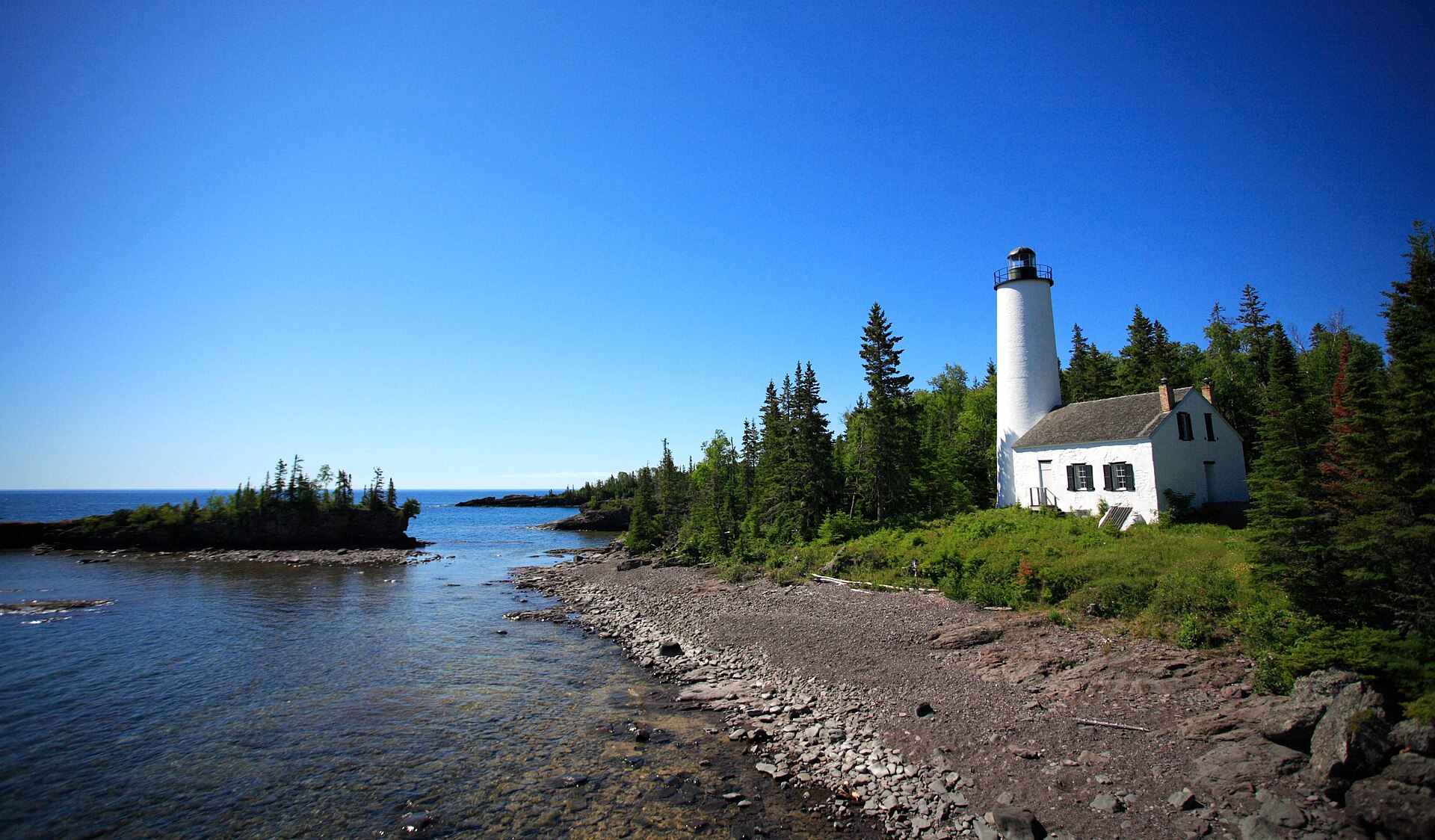
Long before it was a park, Isle Royale was a workplace. Indigenous people mined native copper here for thousands of years, leaving pits and trenches still visible in the forest, and the island's Ojibwe name, Minong, lives on in the Minong Traditional Cultural Property, added to the National Register of Historic Places in 2019. Nineteenth-century prospectors followed those ancient pits in hopes of a bonanza, opening mines between the 1840s and the 1880s that mostly failed in the face of remoteness and thin veins. Increased shipping prompted construction of the Rock Harbor Lighthouse, completed in 1856, a fifty-foot tower of stone and brick that was in service for only about eight years in total before being deactivated for good in 1879. The tower still leans by roughly two degrees, a quiet testament to the stubborn ground beneath it. It stands near the mouth of Rock Harbor, close to a historic fishery, and the two make a natural pairing for anyone curious about the island's working past.
That neighboring site, the Edisen Fishery, preserves a commercial fishing camp whose oldest log buildings date to 1895, when Scandinavian fishermen worked Isle Royale's waters from spring into late fall before retreating to the mainland for winter. Fishing families once dotted the shoreline, and a handful of descendants still hold lifetime leases on their cabins today. Offshore, the island's reefs claimed numerous vessels, and the cold fresh water has kept many wrecks remarkably intact, including the passenger steamer America near the western end, a favorite of experienced divers. Two more lights, Rock of Ages off the west end and Passage Island off the northeast tip, still mark the treacherous approaches. Even from the deck of a ferry, the sense of maritime peril is palpable. History here is never sealed behind glass; it lies in the water, the woods, and the weathered timbers.
Backpacking, Camping, and Planning Your Visit
For travelers with more time, Isle Royale becomes a backpacker's masterpiece. The park maintains some 165 miles of trails and 36 wilderness campgrounds, many with three-sided screened shelters, and the signature route, the Greenstone Ridge Trail, runs about forty miles along the island's spine, cresting Mount Desor at 1,394 feet, the highest point on the island. Most hikers take four or five days for the traverse, using water taxis or the ferries to stitch together one-way itineraries between Rock Harbor and Windigo. The park's backpacking FAQ covers permits, water treatment, and the campfire restrictions that apply at most sites. All drinking water must be filtered, treated, or boiled, and gas or alcohol stoves are the norm, as the Wikipedia overview of the park notes. Pack light but thoughtfully, because resupply is limited to the small stores at the two developed areas.
Timing a visit matters as much as packing for it. The park reopens in mid-April, but ferry service generally runs from mid-May into September, and lodging and stores operate in roughly the June-through-early-September window, so midsummer offers the fullest range of services. Late summer brings ripe blueberries and thimbleberries along the trails, which visitors may pick and eat, while early autumn paints birch and aspen gold against the dark spruce. Pair the trip with a few days in the Keweenaw, perhaps on Brockway Mountain Drive, from whose summit Isle Royale can be glimpsed on a clear day. Before you go, review current sailings with the Isle Royale Line and the park's directions and transportation page, since schedules and fares change from year to year. Whatever your itinerary, leave room for the unexpected: on Isle Royale, the weather and the wildlife always make the final edits.