Birmingham sits in Oakland County along Woodward Avenue, the historic Detroit-area corridor once known as the Saginaw Trail, and the town's 1818 founding at the exact spot where that route crossed the Rouge River set the stage for a downtown that has since become, by most commercial real estate measures, the single most expensive retail address anywhere in Michigan. What began as a diversified manufacturing settlement rather than a purely agricultural one has evolved, across two full centuries, into one of the most walkable and consistently reinvented downtown districts in the entire Detroit metro area.
Founded at a River Crossing
Elijah Willits, John Hamilton, and John West Hunter purchased the earliest land parcels at Birmingham's future townsite in 1818, choosing the location specifically because it sat at the crossing point of the Rouge River and the Saginaw Trail, the well-established Native American and early settler route that would eventually become Woodward Avenue, one of the most significant roads in Michigan history. Unlike many of the era's founding parties, who focused their new settlements almost entirely around agriculture, Birmingham's founders diversified from the very beginning, establishing foundries, tanneries, blacksmith shops, and brick and broom manufacturing operations alongside the transportation services a crossroads settlement naturally attracted.
By the 1890s, Birmingham had accumulated the full suite of markers associated with a genuinely well-established American town: improved roads, an interurban streetcar connection, quality public schools, a paid fire department, and a reliable municipal water supply, and the community formally transitioned from village to city status in 1933 after more than a decade of deliberate preparation.
Michigan's Most Expensive Sidewalk
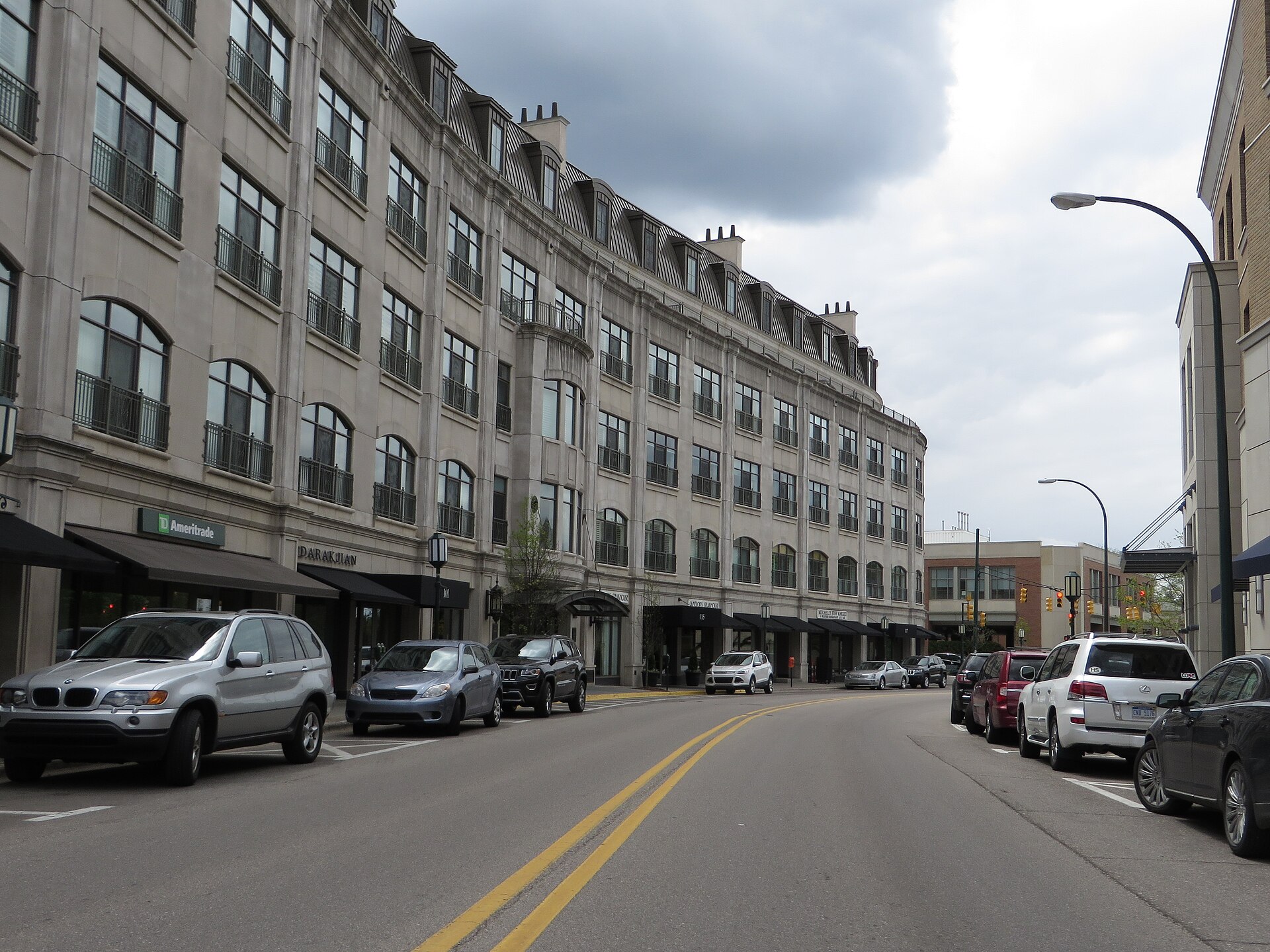
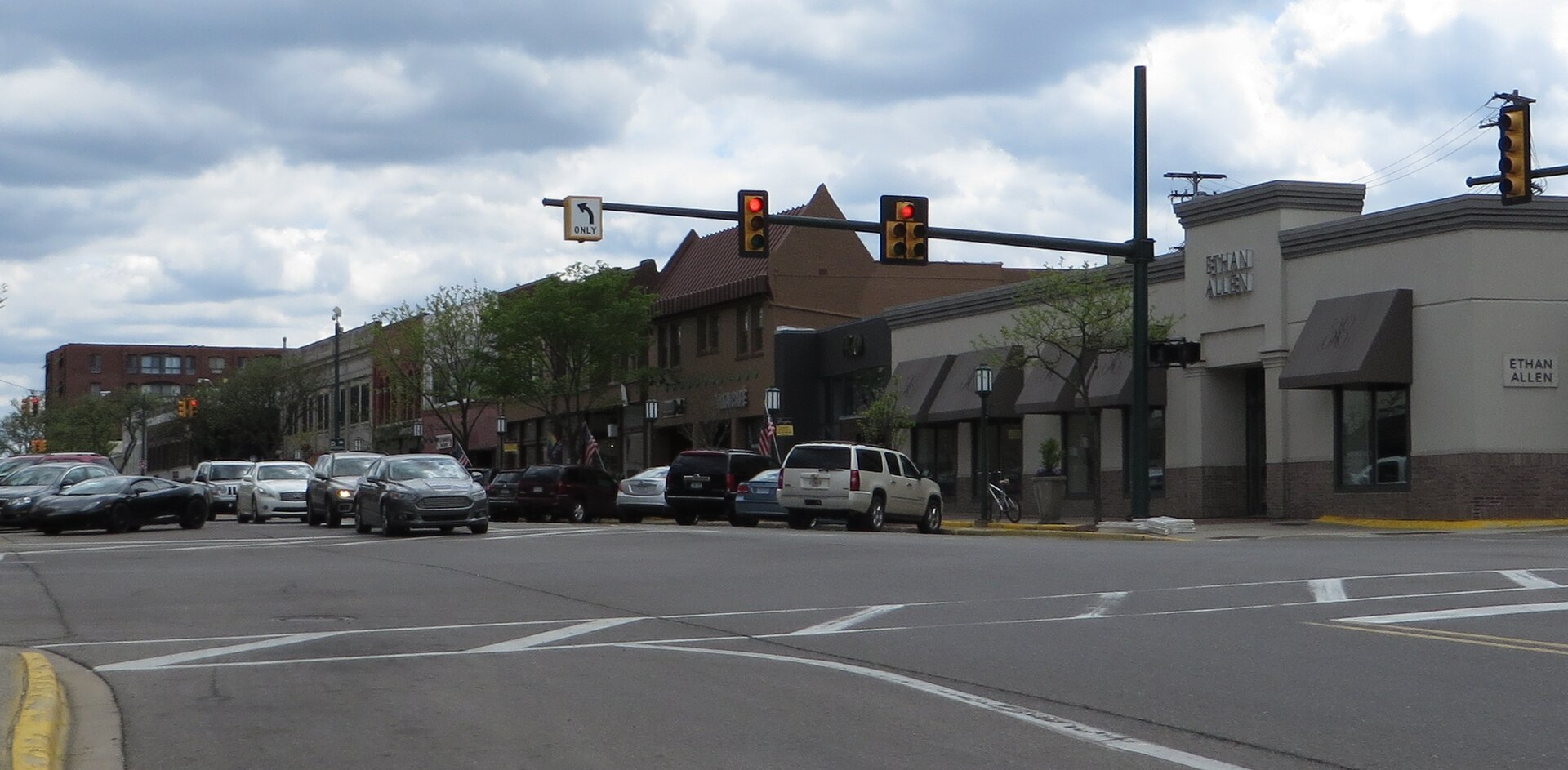
Modern Birmingham commands the highest commercial rents and land values anywhere in the state of Michigan, and its downtown is regularly cited among the most walkable commercial districts in the entire country, a dense concentration of coffee houses, ice cream parlors, upscale apparel boutiques, home furnishing shops, restaurants, and theaters packed into a genuinely compact and pedestrian-friendly footprint. That density did not develop without setbacks: a ring-road highway project built through the area in the 1960s diverted considerable traffic away from the historic downtown core, and a subsequent wave of high-rise construction eventually provoked enough local backlash against increasing density that new development in the core effectively stalled for a period afterward.
Birmingham has since worked through that mid-century planning setback with a genuine downtown revival built around improved urban design and carefully managed mixed-use development, restoring the kind of pedestrian energy that made the original crossroads settlement a viable town site in the first place. The result today is a downtown that trades heavily on its walkability and upscale retail mix, drawing visitors from across the broader Detroit metro area for a evening of shopping and dining considerably more polished than the blacksmith shops and tanneries the Willits, Hamilton, and Hunter families originally built the settlement around.