For much of the twentieth century, Detroit's riverfront was walled off by industry — rail yards, cement plants, and warehouses standing between downtown and the Detroit River that gave the city its name and its earliest reason for existing. Over the past two decades, a sustained public and private investment effort has reclaimed roughly three and a half miles of that shoreline, turning what was once industrial no-man's-land into one of the more genuinely successful urban riverfront projects in the country.
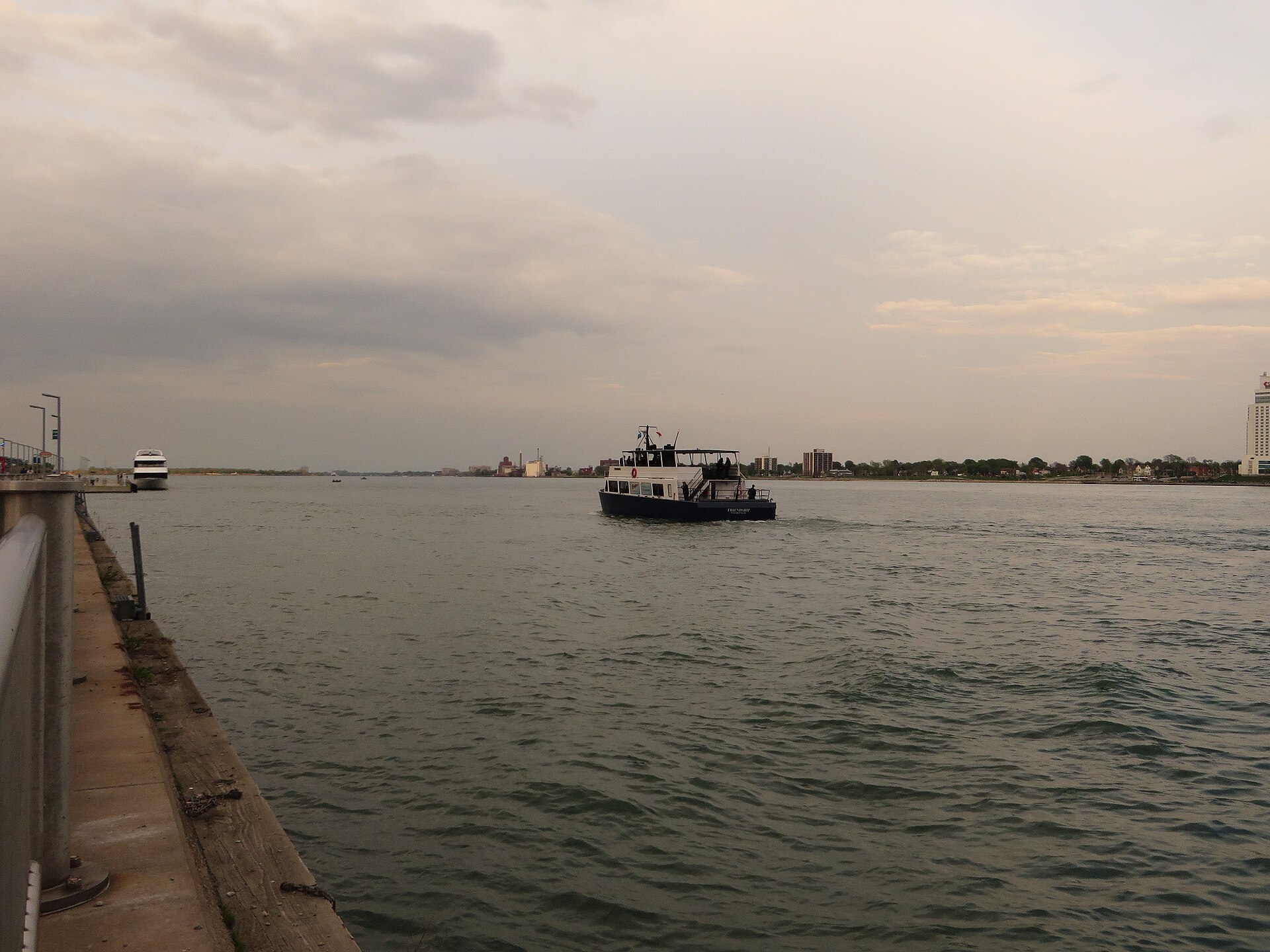
The Detroit RiverWalk
The Detroit RiverWalk runs from the Renaissance Center east toward the MacArthur Bridge, threading through public plazas, a working carousel, and fishing piers with an unobstructed view across the river to Windsor, Ontario — making Detroit one of the only American cities from which visitors can watch a foreign country's skyline light up at dusk without leaving downtown. The walkway's completion required untangling decades of industrial land ownership along the river, a bureaucratic and financial undertaking as significant as the physical construction itself.
Belle Isle
Belle Isle, a nearly 1,000-acre island park in the Detroit River designed in part by Frederick Law Olmsted, the same landscape architect behind New York's Central Park, houses the Belle Isle Aquarium — the oldest continuously operating aquarium in North America — alongside a conservatory, a nature center, and the James Scott Memorial Fountain, an elaborate 1925 Beaux-Arts fountain that remains one of the more unexpectedly grand public structures in the city.
The island now operates as a Michigan state park rather than a city park, a jurisdictional shift made in 2014 as part of Detroit's bankruptcy settlement, which brought state funding for maintenance the city could no longer reliably provide on its own.
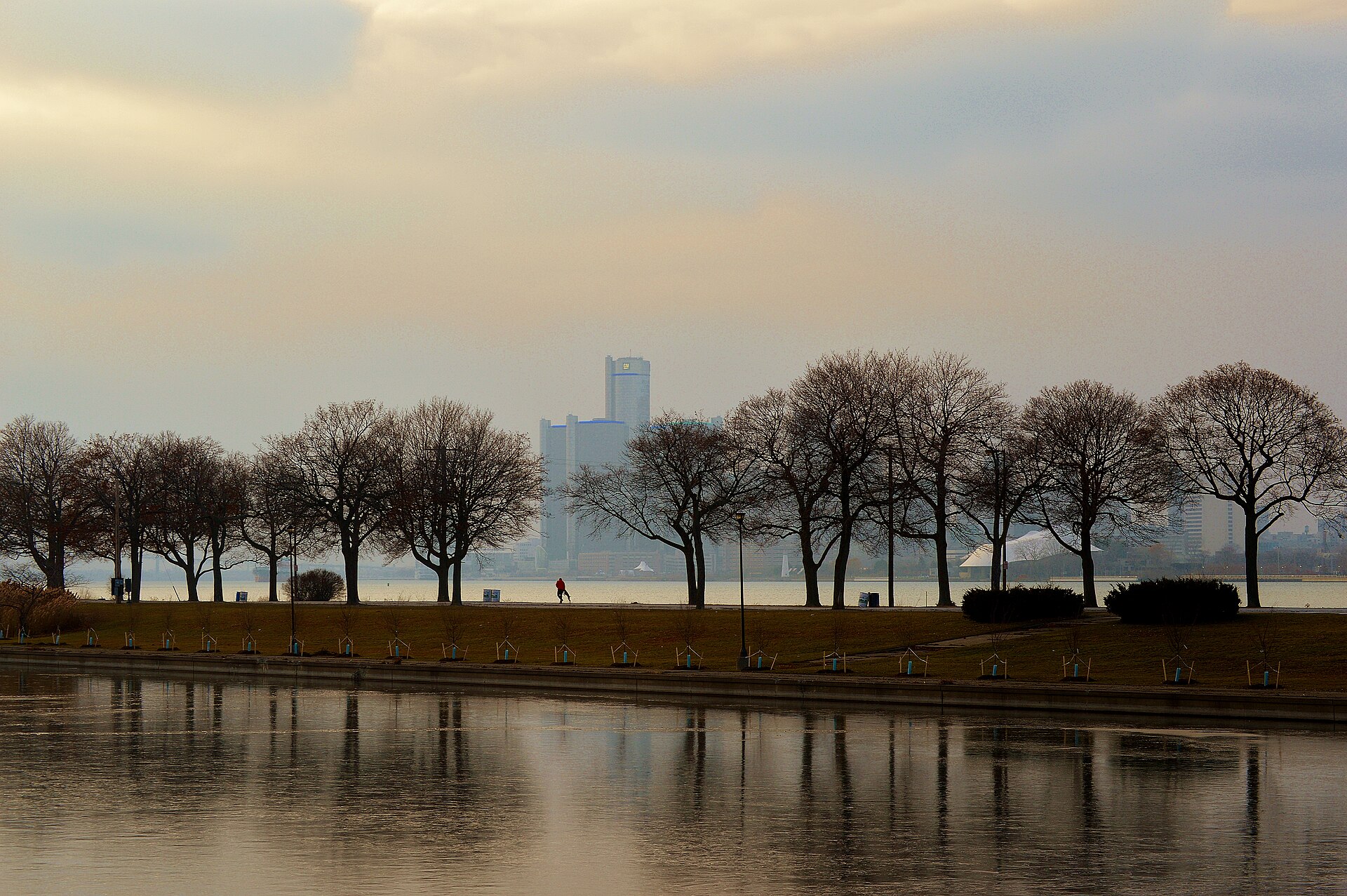
A Skyline Still in Motion
The Renaissance Center's cluster of glass towers, built in the 1970s as a private effort to revive confidence in downtown Detroit, remains the dominant feature of the riverfront skyline, its distinctive cylindrical form visible for miles along the river in both directions. Ongoing redevelopment nearby continues to add residential and mixed-use buildings to a stretch of waterfront that, within living memory, most Detroiters had little reason to visit at all.