Ypsilanti sits along the Huron River just east of Ann Arbor, a college town in its own right thanks to Eastern Michigan University, but a place whose two most distinctive landmarks reach back considerably further than the modern campus: a genuinely strange castle-like water tower visible from across the city, and, a short distance away, the site of a wartime manufacturing effort so vast it briefly employed tens of thousands of workers building bombers around the clock.
The Tower on the Highest Hill
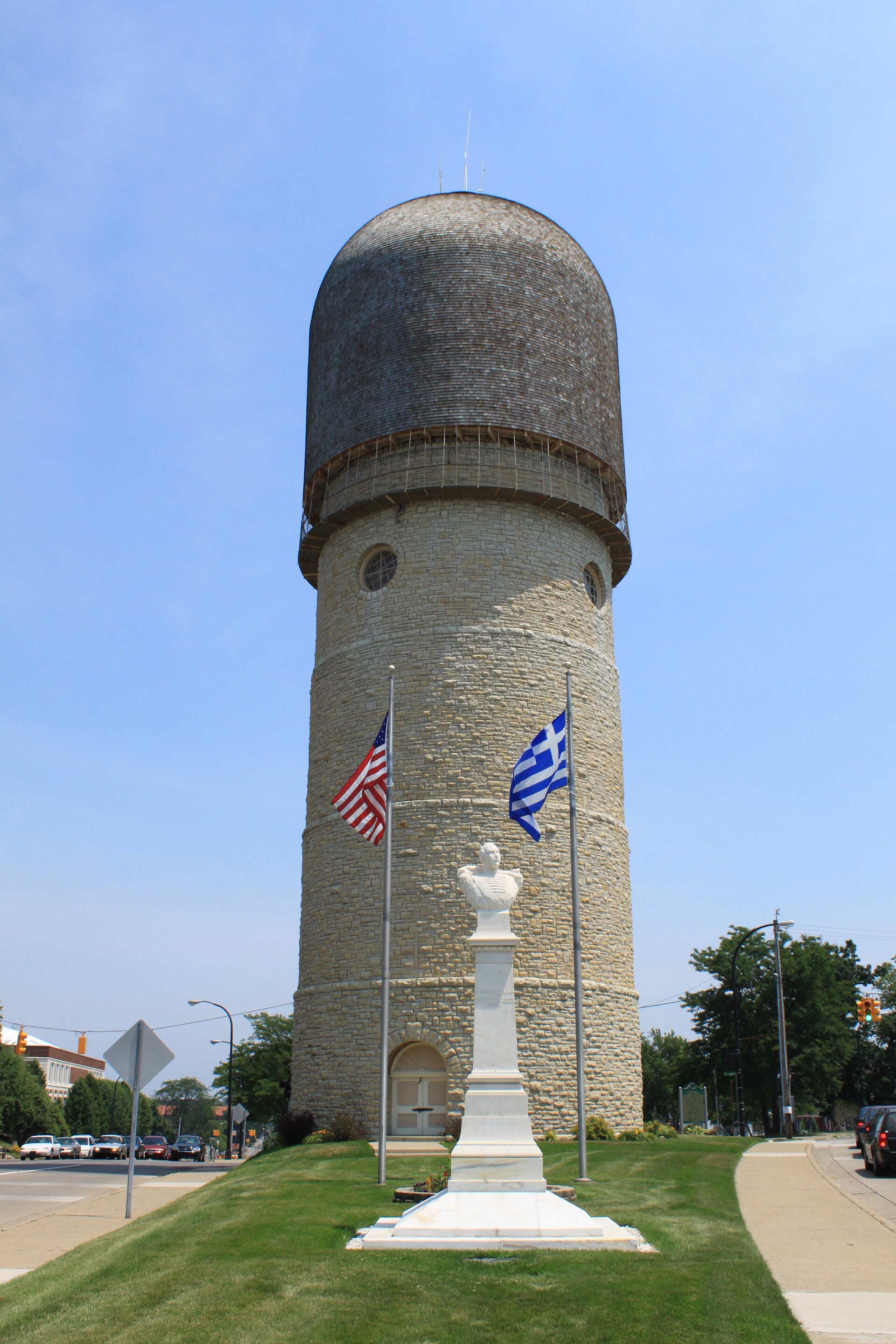
The Ypsilanti Water Tower, designed by William R. Coats and completed in 1890 at a cost of just over twenty-one thousand dollars, occupies the highest natural point in the city, its 147-foot height and 85-foot Joliet limestone base making it visible from a considerable distance across town, a silhouette distinctive enough that generations of residents have used it as an informal landmark for giving directions rather than relying on street names alone. The tower's 250,000-gallon steel tank still crowns a structure formal enough to have earned recognition as an American Water Landmark from the American Water Works Association in 1974, alongside its 1981 listing on the National Register of Historic Places and a separate designation as a Historic Civil Engineering Landmark.
A bust of Demetrios Ypsilantis, the Greek War of Independence hero for whom the entire city is named, stands at the tower's base, tying the landmark's nineteenth-century American engineering directly back to the far more distant European conflict that gave Ypsilanti its unusual name in the first place, a naming choice that reflected the considerable American sympathy for Greek independence during the era the city was founded.
Willow Run and the Real Rosies
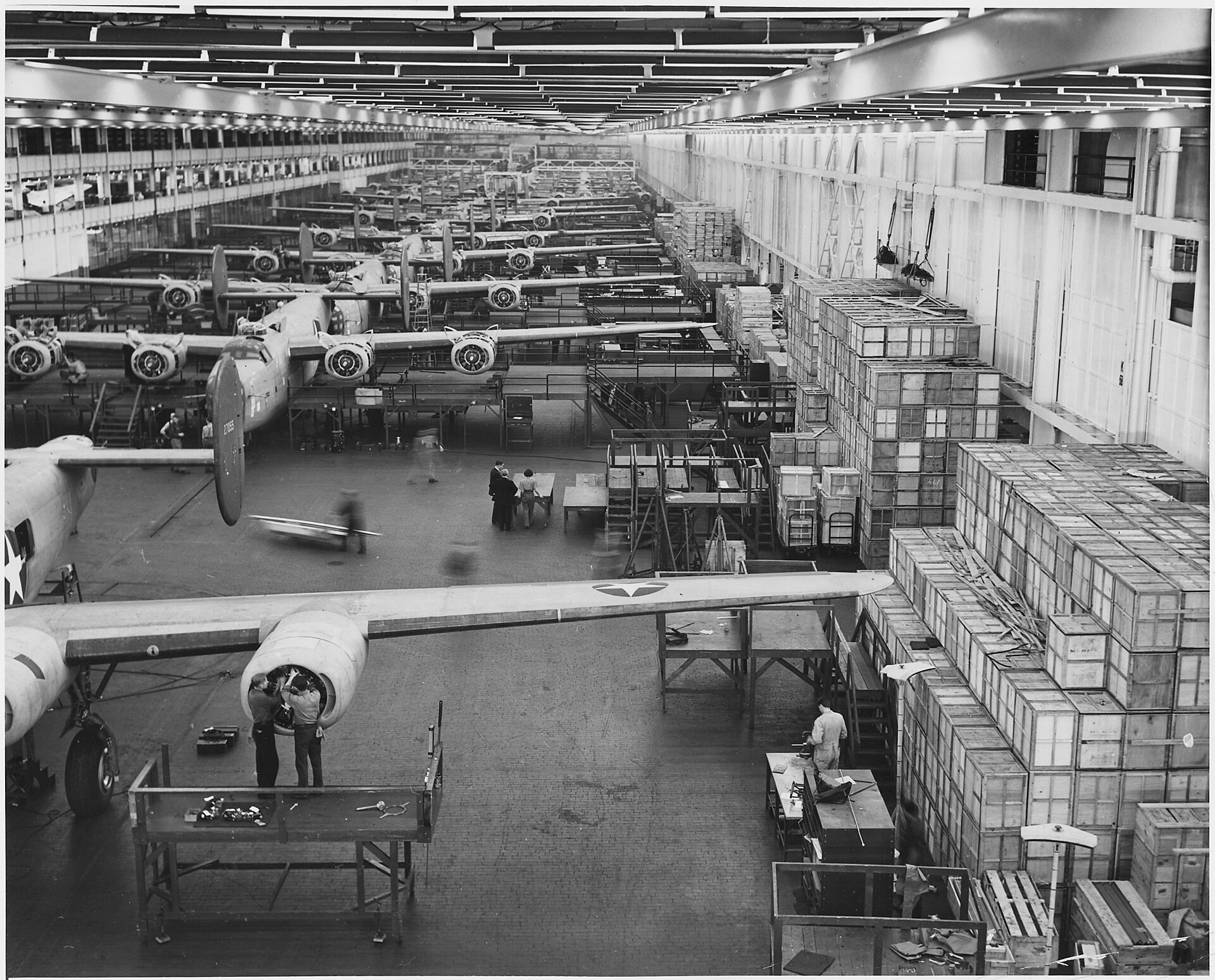
Ford Motor Company built the Willow Run manufacturing complex between Ypsilanti Township and neighboring Belleville between 1940 and 1942 specifically to mass-produce the Consolidated B-24 Liberator heavy bomber, and at its wartime peak the plant stood as the largest factory under a single roof anywhere in the world, employing some 42,500 workers who eventually turned out a completed B-24 every sixty-three minutes, an assembly-line achievement that helped define the very concept of American wartime industrial capacity. Ford's Willow Run operation built 6,972 complete B-24s over 776 days of production and supplied components for nearly two thousand more assembled elsewhere, a genuinely staggering manufacturing output for a single facility.
That workforce depended heavily on women taking on industrial jobs previously closed to them, and Rose Will Monroe, an employee at the Willow Run plant, has long been closely associated with the Rosie the Riveter figure that came to symbolize the entire wartime homefront labor effort, giving Ypsilanti a genuine, specific claim on one of the most enduring images of twentieth-century American history rather than merely a general association with the broader wartime manufacturing boom.