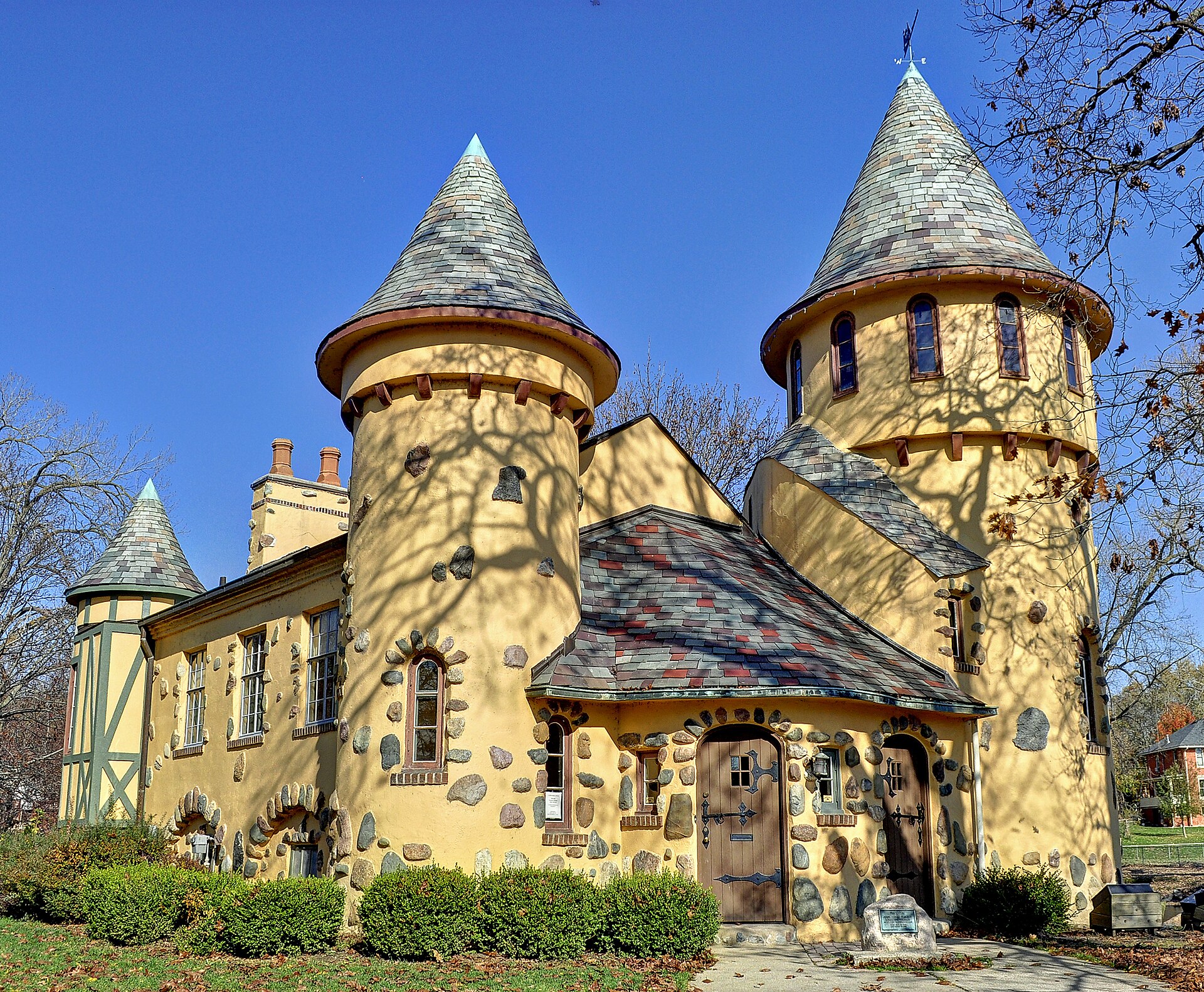
Owosso sits along the Shiawassee River in central Michigan, a modest Shiawassee County city whose most visually surprising landmark has nothing to do with local industry or civic ambition and everything to do with one hometown novelist's flair for the theatrical: a genuine castle, complete with turrets, rising along the riverbank in a city that otherwise looks like any number of comparably sized Michigan county seats.
The Castle an Adventure Novelist Built
James Oliver Curwood, born in Owosso in 1878, built his career as an action-adventure novelist writing stories set in the Hudson Bay wilderness, the Yukon, and Alaska, a body of work popular enough that his novels ranked among the top-ten best-selling books in the United States multiple times during the early and mid-1920s. Having returned to Owosso in 1907 to focus seriously on writing after an earlier stretch working as a journalist, Curwood eventually built himself a genuinely unusual writing studio: a small castle modeled after a Norman chateau, constructed along the Shiawassee River near his mother's home between 1923 and 1924.
Curwood used the completed castle as his primary office and writing studio for the remainder of his career, a suitably dramatic workspace for an author whose entire literary reputation rested on tales of wilderness adventure and physical peril. Following his death in 1927, the building eventually passed into the city's ownership and now operates as the Curwood Castle Museum, listed on the National Register of Historic Places and maintained as a monument to a writing career that briefly made this small central Michigan city genuinely famous in American popular fiction.
A Small Town's Literary Legacy
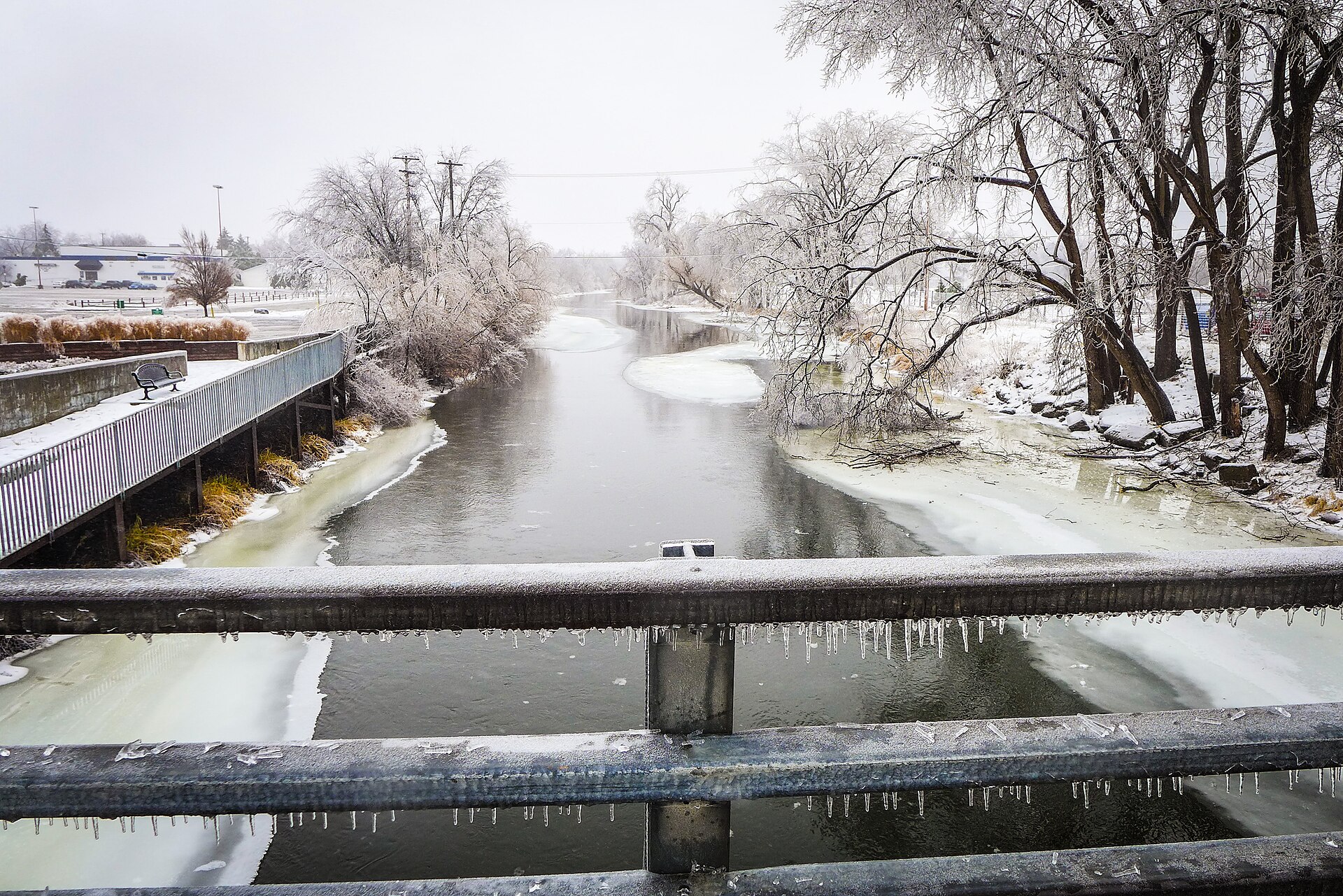
Owosso continues to honor its most famous native son through the annual Curwood Festival, a community celebration that gives the city an explicit occasion to revisit its unlikely connection to early twentieth-century American adventure fiction each year. The castle itself remains the visual centerpiece of that legacy, its turreted silhouette rising incongruously along an otherwise unremarkable stretch of the Shiawassee River, a landmark substantial enough that visitors regularly detour through Owosso specifically to see it even when the rest of the city's downtown might not otherwise register as a dedicated travel destination.