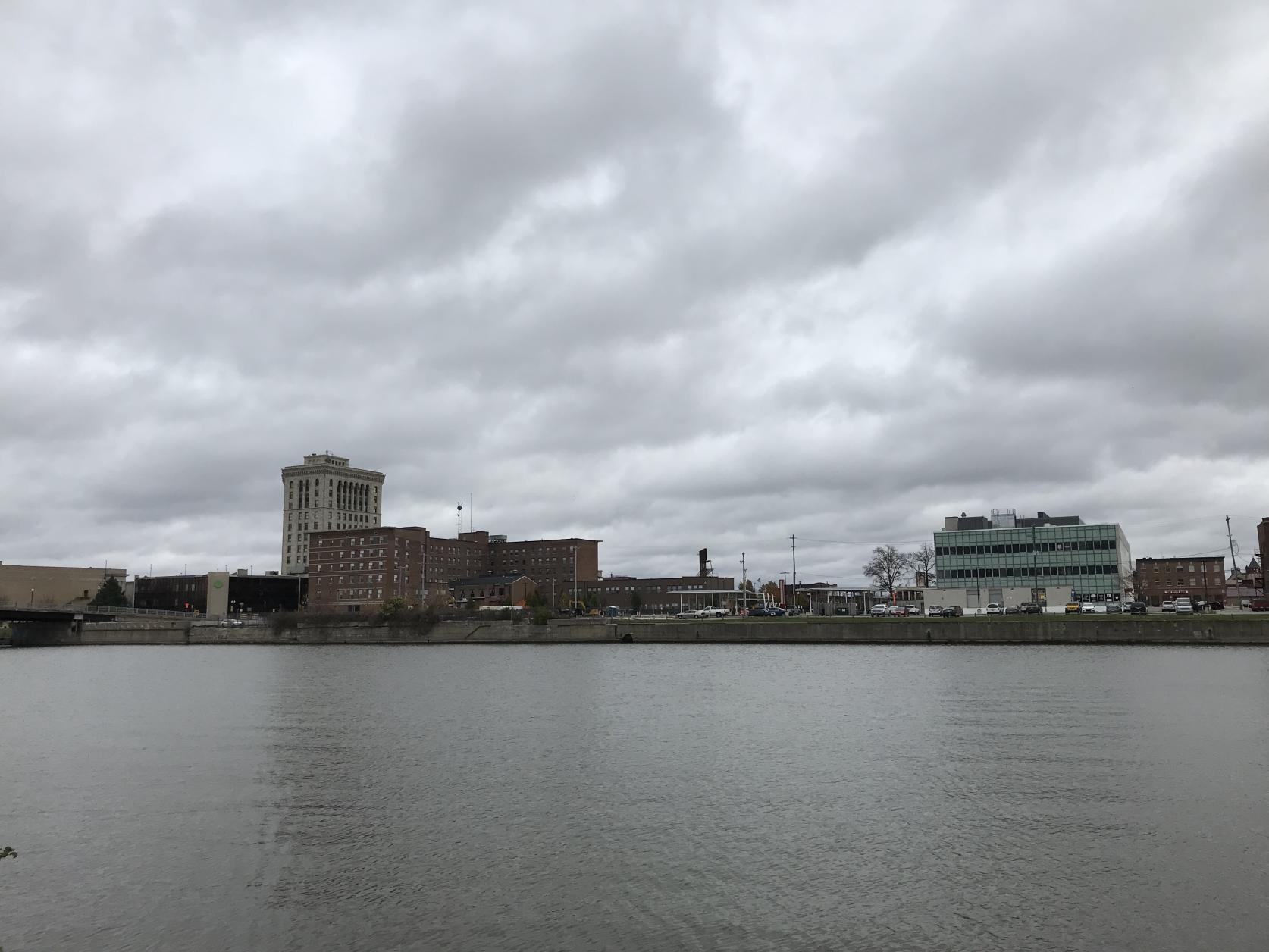
Saginaw sits along the river of the same name at the heart of the Saginaw Valley, a region that briefly stood as the single most productive lumber-producing area anywhere in Michigan during the industry's mid-nineteenth-century peak, generating fortunes substantial enough to fund the ornate civic architecture that still defines much of the city's historic core. What is now a single unified city was, for much of the nineteenth century, actually two rival municipalities facing each other across the same river, a divided-city arrangement common enough in booming Michigan lumber towns but one that Saginaw maintained longer than most before finally consolidating at the very end of the century.
The Lumber Capital That Was Two Cities
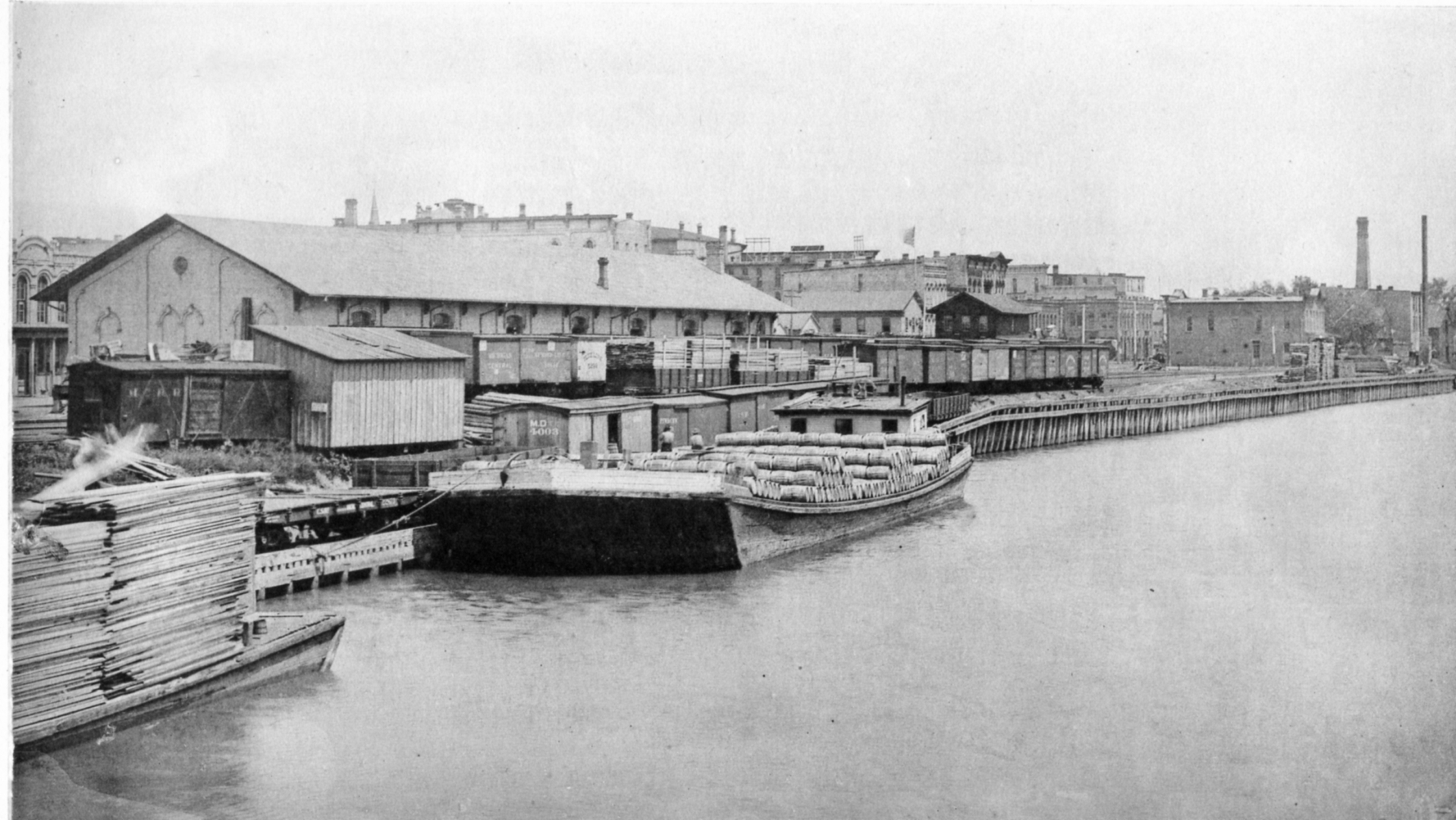
French missionaries and fur traders had already been operating in the Saginaw area since the late seventeenth century, encountering an established Ojibwe population along the river, but organized American settlement did not begin in earnest until after the 1819 Treaty of Saginaw opened the surrounding land to purchase. Commercial lumber production took off in the 1830s with the construction of the valley's first sawmills, and by 1855 the Saginaw Valley supported twenty-three separate sawmills producing a combined one hundred million board feet of lumber annually, a figure that made the region the undisputed leader of Michigan's entire lumber industry between 1840 and 1860.
That lumber wealth actually built and sustained two separate cities rather than one: Saginaw proper on the river's west bank, and East Saginaw across the water, each developing its own civic institutions, business district, and municipal government through the industry's boom years, generating a combined annual income the valley's lumber and salt production had pushed past seven million dollars by 1869 alone. The two rival municipalities finally merged into a single consolidated city of Saginaw in 1889, ending several decades of parallel civic development and creating the unified city that exists today.
The Castle Museum and What Came After
As Michigan's accessible old-growth timber inevitably ran out toward the end of the nineteenth century, Saginaw's economy pivoted toward automobile manufacturing through the twentieth century, following the same industrial transition playing out across dozens of other Michigan cities as the state's economic center of gravity shifted from timber toward automobiles. The Castle Museum of Saginaw County History, housed in a genuinely striking building modeled after a French chateau, today documents this full arc from Ojibwe settlement through the lumber boom's two-city era and into the automotive age that eventually replaced it.
Saginaw's downtown architecture still bears the unmistakable fingerprints of its lumber-boom wealth, with ornate commercial buildings and civic structures dating to the era when East Saginaw and Saginaw proper were still competing directly for prestige and investment, an architectural rivalry whose physical evidence long outlasted the municipal boundary that originally motivated it. Visitors interested in tracing Michigan's full industrial arc, from timber to automobiles within a single city's history, will find few better single stops than Saginaw's historic core and its dedicated county history museum.