Houghton Lake anchors Roscommon County almost exactly at the geographic center of Michigan's Lower Peninsula, and the lake itself, rather than any single incorporated municipality, gives the surrounding string of resort communities their shared identity and their considerable bragging rights: at more than twenty square miles, it stands as the largest inland lake anywhere in the state of Michigan, and one of the largest natural inland lakes in the entire country. What was originally surveyed and named Roscommon Lake was renamed during an 1852 resurvey to honor Douglass Houghton, Michigan's pioneering first state geologist, and the new name stuck permanently even after the surrounding county kept the original Roscommon designation for itself.
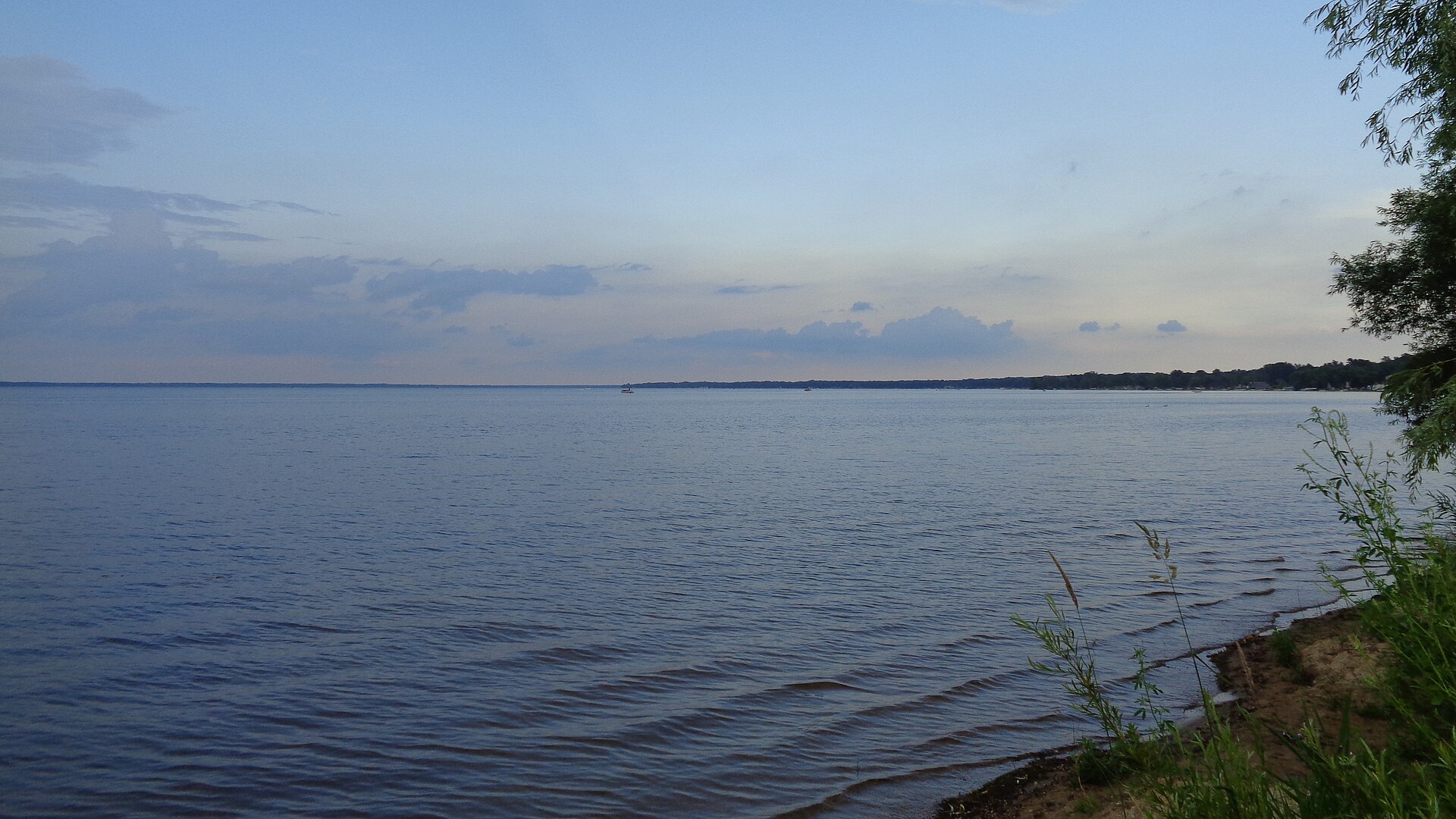
Michigan's Biggest Inland Lake
The first European-descended settlers arrived at Houghton Lake's shores in 1869, and the community that formed there grew quickly enough that it briefly served as the seat of newly organized Roscommon County beginning in 1874, a distinction it held only until 1878, when the courthouse relocated to nearby Higgins Lake instead. Lumbering drove the area's earliest economy just as it did across nearly every other corner of Michigan's northern Lower Peninsula, with the lake and its connecting rivers providing a practical highway for moving felled timber toward downstream mills.
Today the lake's sheer surface area, roughly twenty thousand acres depending on exactly where the shoreline is measured, supports a year-round resort economy built around fishing, boating, and swimming through the warmer months, with a shallow average depth that allows the water to warm considerably faster than Michigan's deeper glacial lakes, making it a particularly forgiving destination for family swimming. That same shallow, expansive profile also sets up the lake's other defining seasonal identity, one that has nothing to do with warm-weather recreation at all.
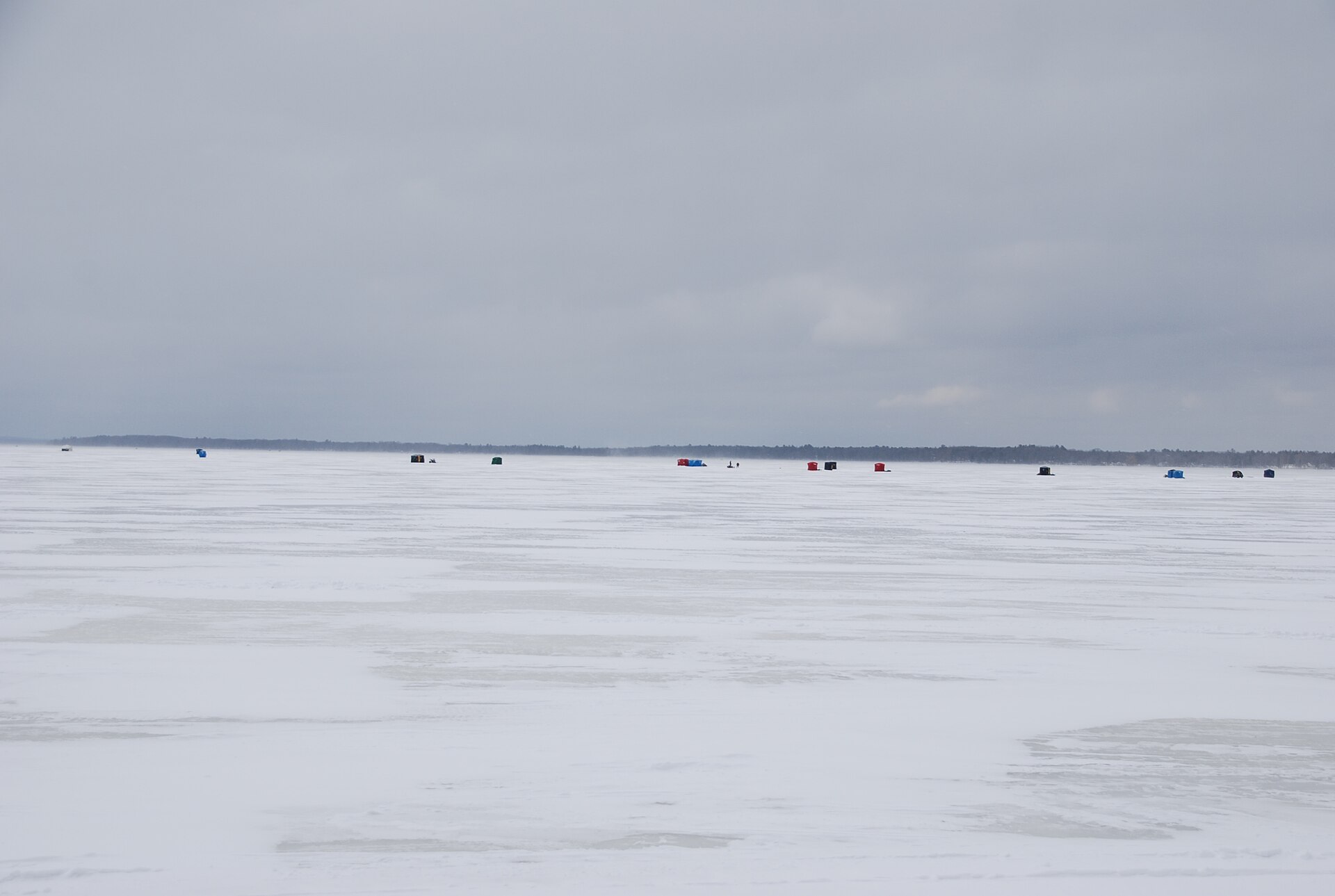
Tip-Up Town USA
Each January, Houghton Lake hosts Tip-Up Town USA, an ice fishing festival with roots stretching back to the early 1950s that has grown into, by most measures, Michigan's longest-running and largest winter festival, named for the simple flag-and-spool devices anglers use to signal a bite on a line left unattended beneath the ice. The festival transforms a stretch of the frozen lake surface into a genuinely elaborate temporary carnival, complete with amusement rides staged directly on the ice, a polar bear plunge for participants willing to brave open water cut through the frozen surface, carnival games, and a beer tent that keeps the whole event running late into frigid January evenings.
The specific appeal of holding a carnival midway on top of a frozen lake tends to strike first-time visitors as somewhere between admirable Midwestern stubbornness and mild insanity, but Tip-Up Town's decades of continuous operation suggest the formula works precisely because it embraces winter rather than merely enduring it. For a lake this large, freezing solidly enough to support a temporary midway is itself a testament to just how thoroughly a Michigan winter can lock down even the state's biggest body of inland water.