In This Guide
The CCC Museum and the Higgins Lake Nursery Higgins Lake Houghton Lake Roscommon and the Country Around ItThe middle of the northern Lower Peninsula holds two of Michigan's most significant inland lakes within twenty minutes of each other, and the small county seat of Roscommon sits between them. Houghton Lake is the largest inland lake in the state; Higgins Lake is among the clearest and deepest, and has drawn comparisons to far more famous water. Together with the surrounding state parks, state forest, and the Au Sable River headwaters country to the north, they anchor a vacation area that is genuinely underrated — partly because it lacks a Great Lake shoreline, and partly because generations of Michigan families have quietly treated it as their own and seen no reason to advertise. Nearly everything worth doing here falls within a thirty-to-forty-five minute radius of Roscommon.
The CCC Museum and the Higgins Lake Nursery
The area's most substantial indoor attraction sits inside North Higgins Lake State Park, and it explains a great deal about why northern Michigan looks the way it does. The Civilian Conservation Corps Museum tells the story of the young men who built Michigan's state parks and state forests during the Great Depression, and the numbers it documents are genuinely staggering: between 1933 and 1942 the Michigan CCC planted 484 million trees, spent 140,000 days fighting forest fires, and constructed 7,000 miles of truck trails, 504 bridges, and 222 buildings. A visitor who has spent a week using northern Michigan's parks and forest roads is, to a remarkable extent, using CCC infrastructure.
The site is not arbitrary. The Higgins Lake Nursery operated here from 1903 to 1965, beginning as an experiment in reforestation after the logging era had stripped the region, and growing into one of the largest pine nurseries in the world — the seedling source that made the state forest system possible. The museum and the preserved nursery grounds together make a coherent story out of what is usually treated as background scenery. Allow about an hour for the museum and its outdoor exhibits. Admission is free with a Recreation Passport, and the seasonal schedule is worth checking: the museum opens for the season in May, runs daily through the summer, and shifts to appointment-only in the fall.
Higgins Lake
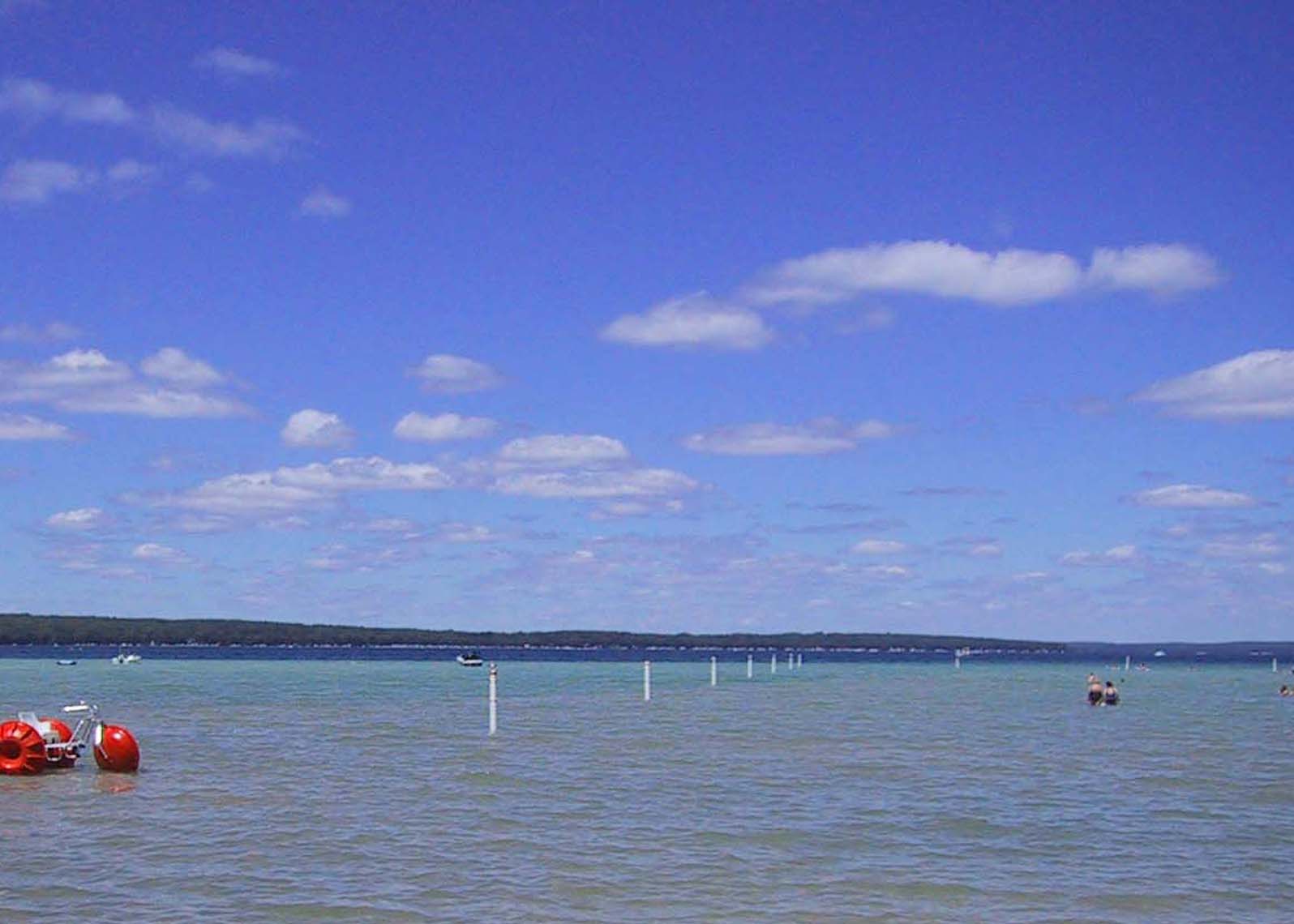
Higgins Lake is the reason many families first come to this part of the state and the reason they keep returning. It is deep, cold, and startlingly clear by inland-lake standards, with a sandy bottom that produces water color more often associated with the Caribbean than with mid-Michigan, and its reputation among Michigan lakes is close to unmatched. Two state parks — North Higgins Lake and South Higgins Lake — provide the public access, with camping, picnicking, hiking, and swimming at both, plus public boat launches that make the lake genuinely usable rather than merely visible.
The lake permits motorized boating, and summer weekends bring pontoons, ski boats, and jet skis in numbers that can surprise visitors expecting a quiet northern lake. That is worth planning around rather than complaining about: early mornings are calm and beautiful, midday weekends are busy, and weekdays outside July and August return the lake to something close to solitude. Anglers, paddlers, and swimmers who time their outings around the boat traffic get the best of both.
Houghton Lake
Twenty minutes southwest, Houghton Lake is a different proposition entirely — the largest inland lake in Michigan by surface area, but shallow where Higgins is deep, and warm where Higgins is cold. That contrast is the single most useful thing for a visitor to understand, because it means the two lakes support genuinely different activities and a well-planned trip uses both. Houghton's warmth and shallow, weedy structure make it excellent fishing water and comfortable swimming; Higgins offers clarity and depth.
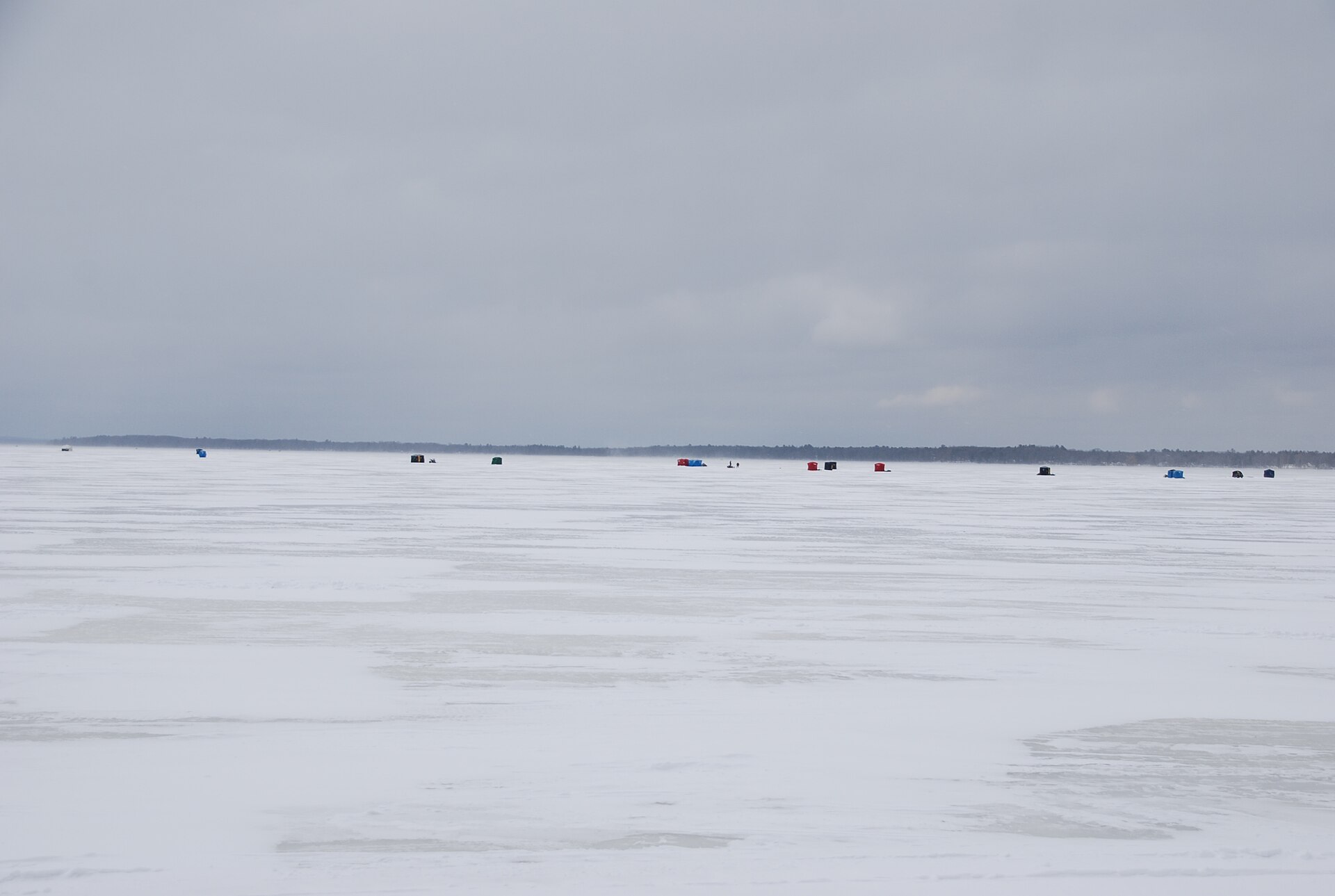
The community around Houghton Lake is the more developed of the two, with the lodging, dining, and outfitting that a large recreational lake supports, and it functions as the practical service center for the whole area. Winter matters here as much as summer: the lake freezes reliably and hard, and ice fishing is a serious regional pursuit rather than a novelty, supported by a shoreline economy that stays open through the cold months in a way that much of northern Michigan does not.
Roscommon and the Country Around It
Roscommon itself is small, walkable, and functions as the county seat rather than as a resort — which makes it the sensible base for travelers who would rather not sleep in the middle of a recreational economy. The surrounding country is state forest land threaded with truck trails and pathways, much of it CCC-built, and it supports hiking, mountain biking, cross-country skiing, and snowmobiling depending on season. The trail density here is high and the usage is low compared with the Traverse City corridor two hours west.
Northward, the Au Sable River headwaters country around Grayling lies within comfortable reach, opening some of the finest trout water and paddling in the state to anyone based on the lakes. That proximity is what elevates this area from a two-lake destination to a genuine week's worth of activity: a visitor can spend a day on Higgins, a day on Houghton, a day on the river, a morning at the CCC Museum, and still have forest trails left over. For families in particular, the combination of warm water, cold water, moving water, and a serious historical museum inside a single short radius is difficult to match anywhere else in the Lower Peninsula.