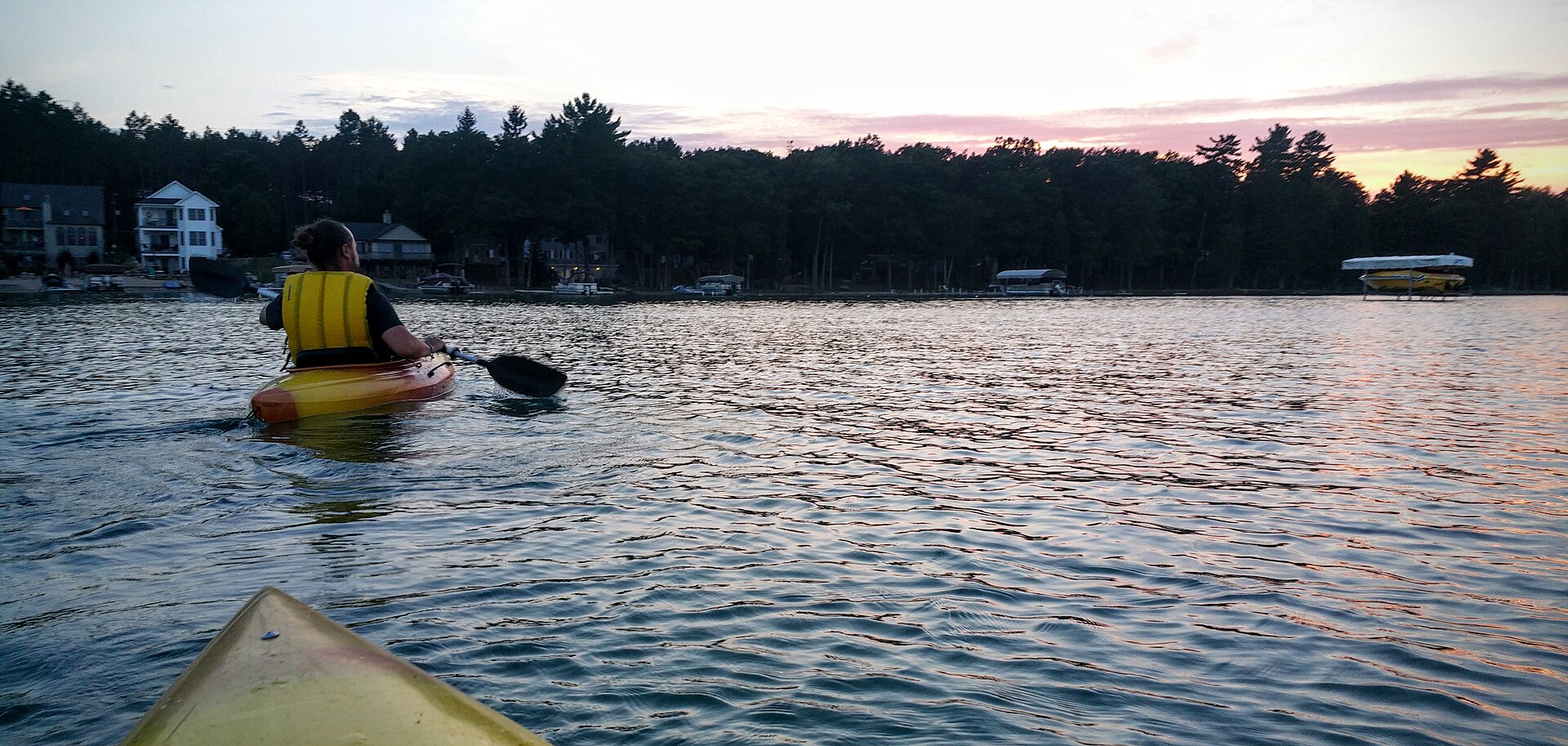
Higgins Lake ranks as the tenth largest lake anywhere in Michigan, its clear, spring-fed water straddling the boundary between Roscommon and Crawford counties in the heart of the northern Lower Peninsula, and the lake's popularity as a family vacation destination is substantial enough that it supports not one but two dedicated state parks along its opposite shores. The lake's own name, borrowed from a nineteenth-century government surveyor rather than any more romantic naming legend, is a fittingly practical origin story for a body of water that has spent most of its documented history serving one utilitarian purpose or another.
Named for a Surveyor, Shaped by Loggers
Higgins Lake takes its name from Sylvester Higgins, a Michigan surveyor who worked on an 1852 government land survey of the surrounding region, a fairly ordinary bureaucratic distinction for a lake that would go on to become one of the state's most beloved recreational destinations. Long before that recreational identity took hold, the lake's deep, clear waters and connecting rivers served the region's booming late-nineteenth and early-twentieth-century logging industry as a practical transportation corridor, floating felled timber toward downstream sawmills in a role shared by nearly every substantial lake and river system across Michigan's northern timber country.
The lake's north shore was also home to one of the largest tree seedling nurseries in the world during the early twentieth century, a facility whose reforestation mission would eventually connect directly to the Civilian Conservation Corps camp that operated at the same site from 1933 to 1942, part of a broader statewide CCC effort that planted 484 million trees across Michigan during the program's nine years of operation.
Two State Parks, One Lake
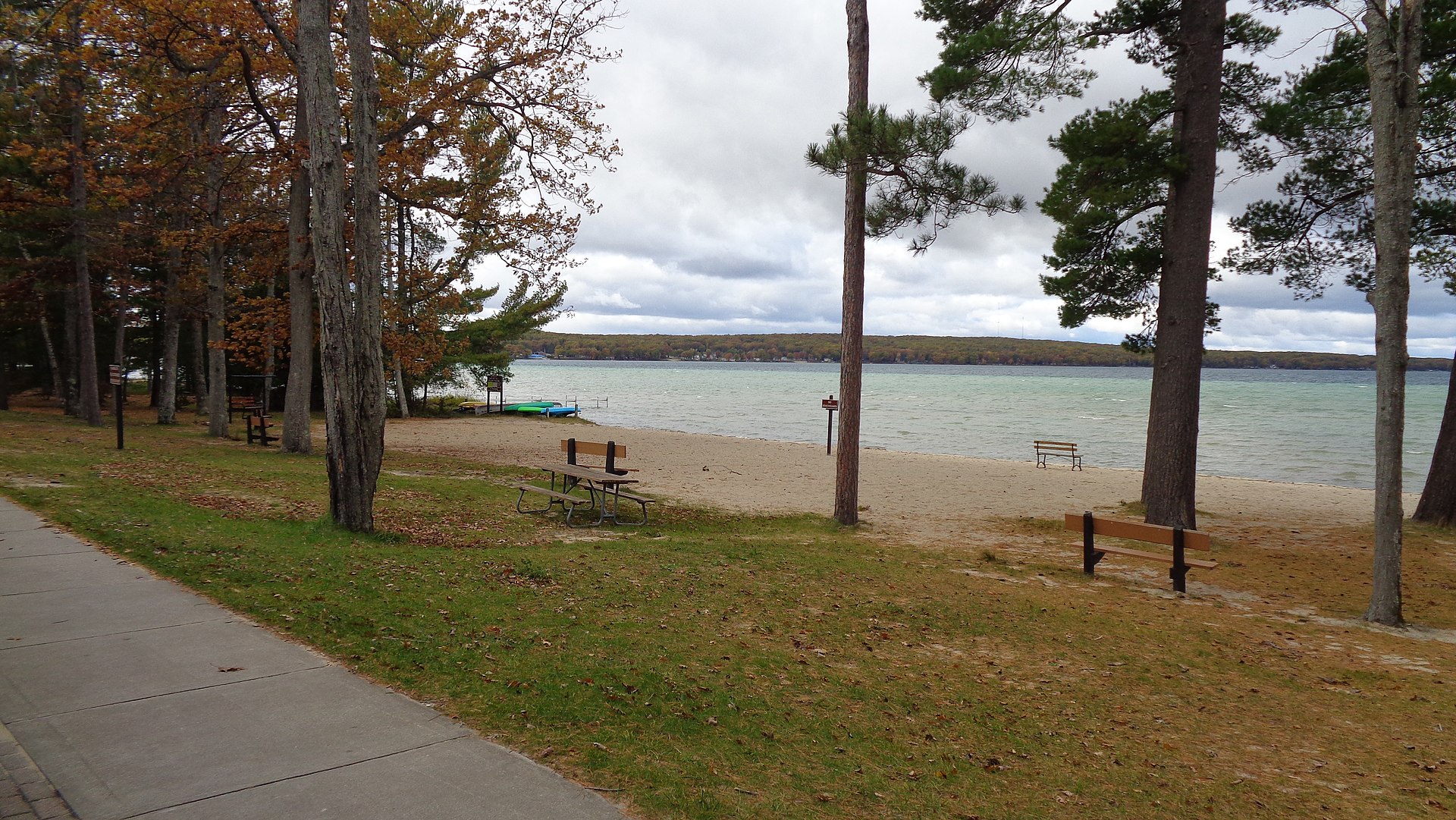
North Higgins Lake State Park occupies 449 acres on the lake's north shore at the site of that former seedling nursery, and the grounds today include the Higgins Lake Nursery and CCC Museum, which documents the Civilian Conservation Corps' considerable reforestation legacy in unusually specific local detail rather than treating the program as a distant national abstraction. South Higgins Lake State Park, by contrast, opened in 1927 with a modest fifteen-unit campground that has since expanded into roughly four hundred campsites, making it the second-largest camping area anywhere in the entire Michigan state park system.
Together the two parks give Higgins Lake a rare combination for a lake this size: genuinely substantial public shoreline access on both ends of the lake, a level of protected recreational space that has helped keep much of the shoreline from being entirely absorbed into private cottage development the way many of Michigan's other popular inland lakes have been over the past century.