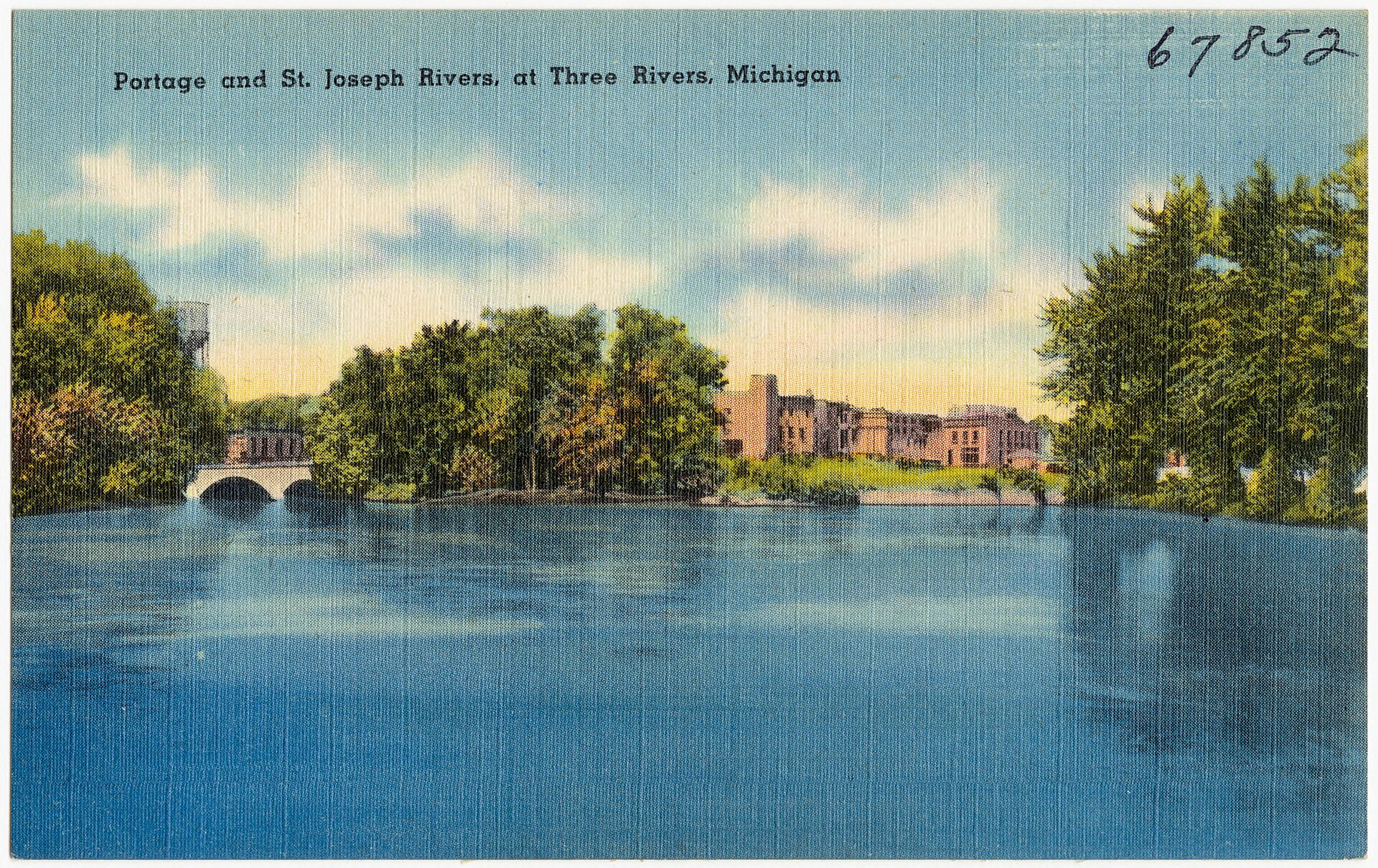
Three Rivers earns its literal, unembellished name from genuine hydrology: the city sits at the confluence of the St. Joseph River with two of its tributaries, the Rocky River and the Portage River, a three-way meeting of waterways that made the site an obviously attractive location for early settlement long before anyone had gotten around to naming the place that would grow up around it. That confluence still defines the town's physical layout today, giving Three Rivers a genuinely water-oriented downtown unlike the more single-river settlement pattern found in most comparable southwestern Michigan communities.
Where Three Rivers Actually Meet
Jacob McInterfer arrived in 1828 and established one of the area's earliest homesteads, and additional families followed over the next several years, drawn by the same practical advantages, water power, fertile bottomland, and river-based transportation routes, that the confluence site offered any early settler willing to commit to it. The village of Lockport was platted in 1836, the same year that Hon. John H. Bowman formally established the separate community that would take the Three Rivers name directly from its distinctive river geography.
The two settlements existed as separate entities for several decades before Three Rivers annexed Lockport in 1871, consolidating the area's early development into a single unified city that has carried the Three Rivers name ever since, a merger that mirrors the pattern of many other nineteenth-century Michigan river towns that began as multiple competing settlements before eventually combining under one municipal government.
A Confluence Downtown
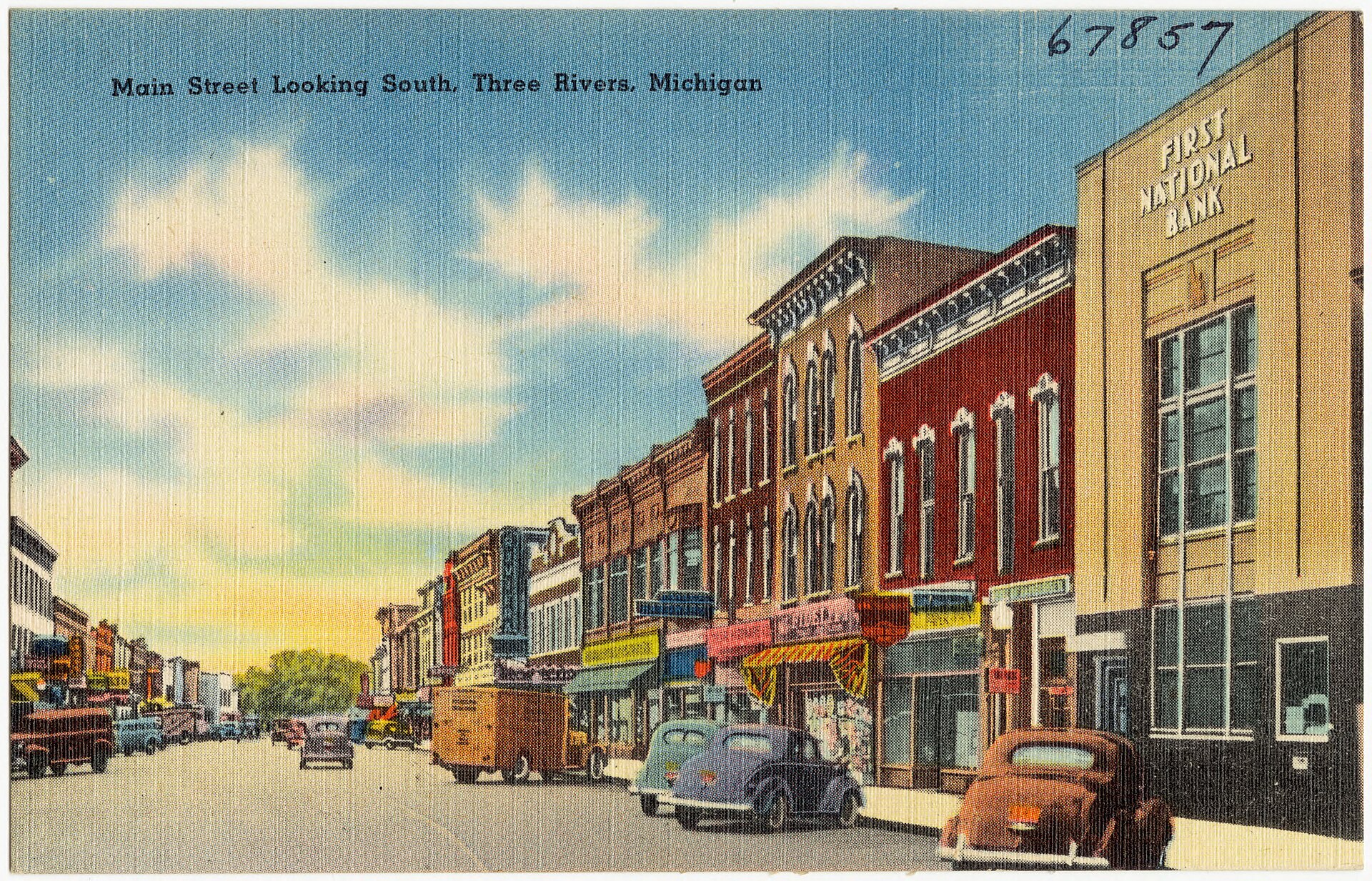
Modern Three Rivers retains a historic downtown commercial district substantial enough to have earned recognition as a historic district in its own right, its brick storefronts reflecting the genuine nineteenth-century prosperity that the confluence location generated for the young St. Joseph County community. The rivers themselves remain a defining recreational feature today, with parks and river access points scattered along all three waterways giving residents and visitors a considerably more varied set of water-based activities than a typical single-river Michigan town can offer within its own city limits.