In This Guide
Fort St. Joseph and the Four Flags The Niles History Center The Depot Fernwood Bear Cave Vineyards and the Tabor Trails Downtown Buchanan and the Water How to Structure ItNiles calls itself the Four Flags City, and unlike most municipal nicknames this one is literally true and historically specific. Ten minutes west, Buchanan has a cave, a winery trail, and a theater in an 1865 tin shop. Together they cover the inland St. Joseph River country that most travelers blow past on their way to the Lake Michigan beaches, and everything here is within forty-five minutes of either downtown.
Fort St. Joseph and the Four Flags
The French established Fort St. Joseph in 1691 as a trading post on the St. Joseph River. Over the next century it flew the flags of France, Great Britain, Spain, and the United States, and it is the only fort in Michigan that did. That is where the Four Flags name comes from.
The British left in 1795 following Jay's Treaty, the fort fell into ruin, and the site was overgrown and eventually lost. Western Michigan University began excavating it in 2002 and has been at it since, turning up building foundations and a rare Jesuit medallion from the 1730s. The project runs an annual field school with a public open house that draws large crowds over its two days, and a local organization called Support the Fort raises money toward a replica fort and interpretive space.
If your dates line up with the open house, go. Watching an active dig is a completely different experience from reading a marker about one.
The Niles History Center
At 508 E. Main Street, the Niles History Center runs two connected sites. The Chapin Mansion was built in 1882 and is one of the country's better surviving examples of the American Aesthetic style: stained glass, beveled mirrors, brass chandeliers, hand-carved woodwork, and nine fireplaces. Tours are offered on a limited weekly schedule with a modest adult admission and free entry for visitors eighteen and under.
The Fort St. Joseph Museum occupies the mansion's former carriage house and carries the local story from the prehistoric period forward. It is the place to see what the excavations have produced without waiting for the open house.
Check the History Center's current tour days before you plan around the mansion. Like most small-city house museums, it opens on a schedule rather than continuously.
The Depot
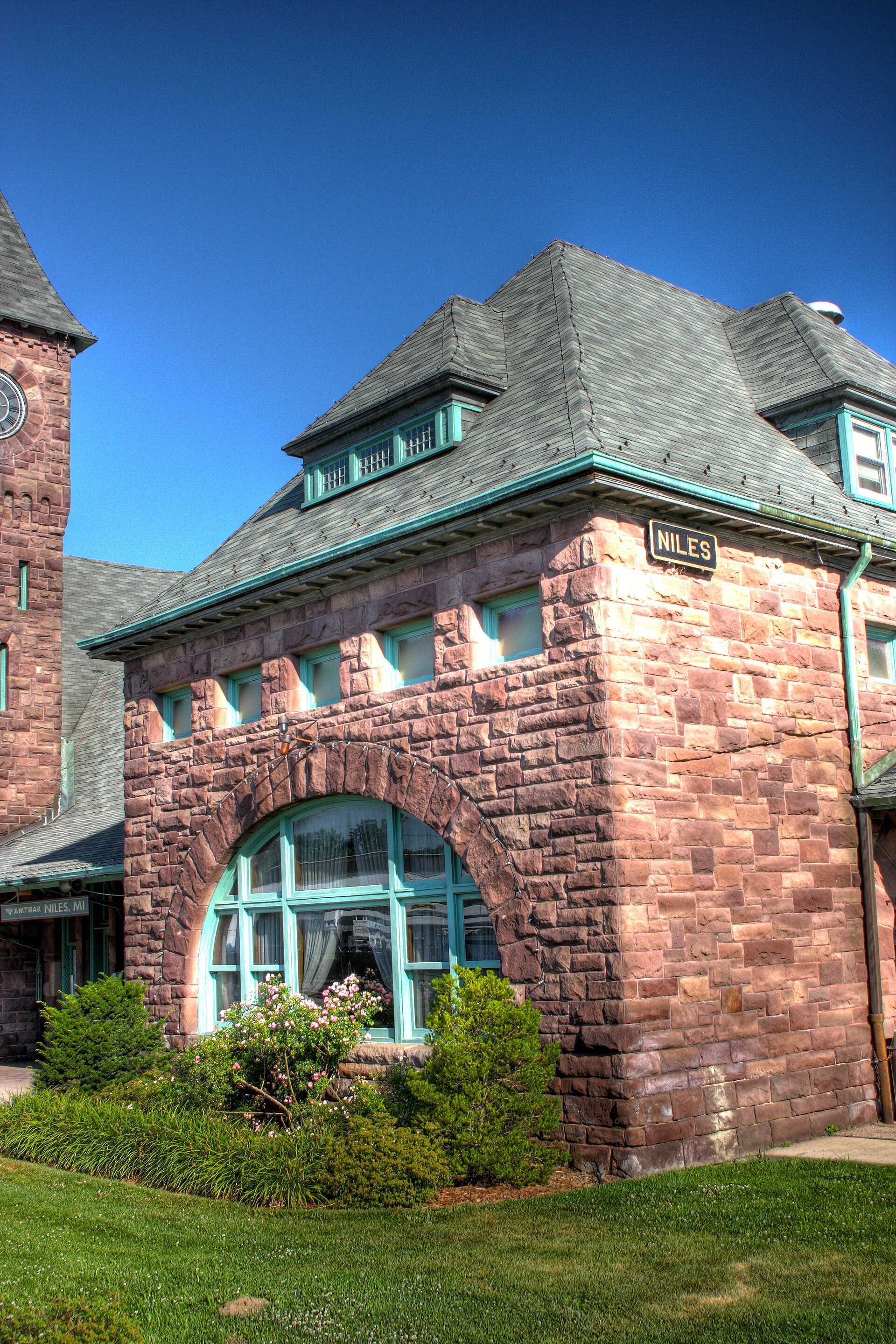
The Niles railroad station is one of the finest buildings in southwest Michigan and it is still a working Amtrak stop. The Michigan Central built it in 1892 to a Romanesque design by the architects Spier and Rohns, intending it as the railroad's showpiece and finishing it in time to impress passengers heading to the 1893 World's Columbian Exposition in Chicago. It is listed on the National Register.
John Gipner laid out an elaborate park around it with gardens, fountains, and greenhouses, in the spirit of what Frederick Law Olmsted had done for H.H. Richardson's depots on the Boston and Albany. Those gardens are the reason Niles was once nicknamed the Garden City. They are gone now, but Amtrak has restored the building itself.
The station has appeared in three films: Continental Divide, Midnight Run, and Only the Lonely. It is served today by Wolverine and Blue Water trains, which means you can actually arrive here by rail from Chicago or Detroit and not need a car for the downtown portion of this trip.
Fernwood
Fernwood Botanical Garden and Nature Preserve sits on Range Line Road between Niles and Buchanan and covers 105 acres protecting at least ten distinct ecosystems. It is the single best half-day in this area.
The cultivated side includes an herb garden, a Japanese garden, a perennial border, a rain garden, a hardy fern collection, and a railway garden that reliably captivates children who were promised nothing of the sort. The wild side includes an arboretum, a reconstructed prairie, and miles of trail.
Be aware that the trails are not uniformly easy. Surfaces are wood chip or bare earth, some sections climb steeply with steps, and boardwalks carry you over the wet ground. Daytime garden hours run Tuesday through Sunday, and there is an admission charge.
Bear Cave
The Lower Peninsula is glacial till over sedimentary rock and it is not cave country. Bear Cave, on the St. Joseph River north of Buchanan, is generally described as the only cavern in the Lower Peninsula, and it got there by an unusual route: it formed in tufa, a soft secondary limestone deposited by mineral-rich water, rather than being dissolved out of ordinary limestone the way most caves are.
It is small. Roughly 150 feet long, four to six feet wide, and ten to fifteen feet high, with some low spots. The passage is lit and the walk is easy and damp, and the whole thing takes about twenty minutes. It sits beneath the office at Bear Cave Resort, where you pay a small fee at the desk and tour it yourself.
The resort's own interpretation identifies a chamber called the Slave Room, said to have sheltered freedom seekers on the Underground Railroad. Take that as local tradition rather than documented history; the geology, at least, is beyond argument.
Vineyards and the Tabor Trails
Buchanan sits in Berrien County, in the heart of the Lake Michigan Shore wine region, and two of the better-known properties are right here. Tabor Hill Winery and Restaurant is the anchor, with a dining room that is a destination in its own right rather than a tasting-room afterthought.
The Tabor Trails run about three and a half miles between Tabor Hill and Round Barn Estate, through woods and vineyard rows. This makes a sip-and-hike loop that is genuinely walkable in either direction and is open year-round, including for snowshoeing.
This is also the top of the Lake Michigan Shore wine region. If you want more, St. Joseph and the lakeshore tasting rooms are about thirty-five minutes northwest.
Downtown Buchanan and the Water
Buchanan was originally called McCoy Creek, renamed in 1833 for the early settler Russell McCoy. It is known now as Redbud City and has been recognized by the National Arbor Day Foundation as a Tree City USA, which tells you what the streets look like in early May.
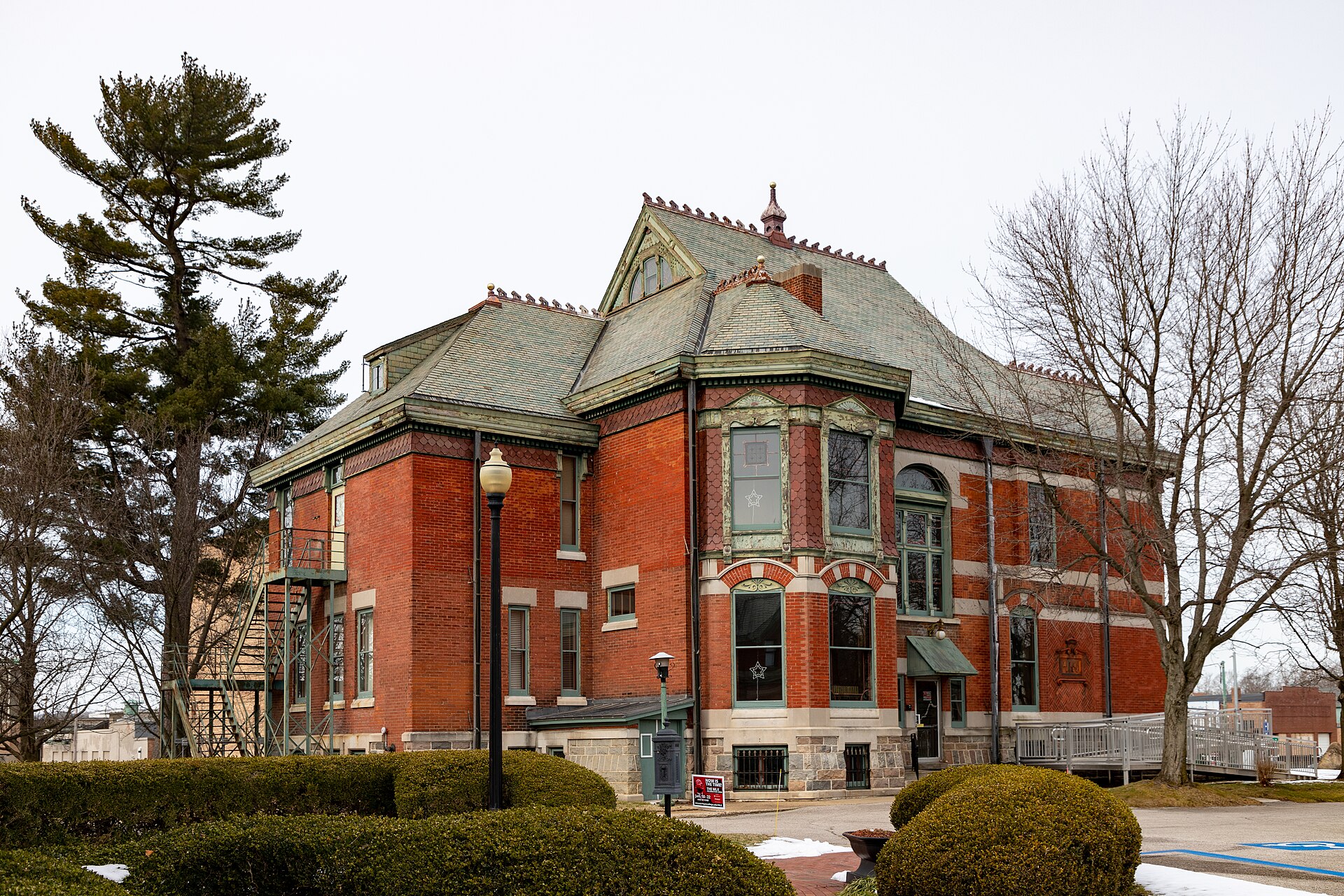
The Tin Shop Theatre operates out of an 1865 building, and the Buchanan Art Center occupies a mid-century Prairie-style structure. The McCoy Creek Trail runs through town and gives you the walk. On the water, the St. Joseph River, McCoy Creek, and the nearby lakes all take paddlers.
Niles adds its own calendar: a bluegrass and Americana festival, an apple festival in the fall, and the Niles Burn Run.
How to Structure It
Two nights, based in either town. Niles has more rooms and the train station; Buchanan has more character per block and puts you closer to the wineries.
A workable shape: start at the Niles History Center to get the Fort St. Joseph story before anything else, then walk downtown and see the depot. Give the next morning to Fernwood, which needs three hours to do properly, and the afternoon to Bear Cave and the Tabor Trails. Leave the evening for dinner at a winery.
US-12, the old Sauk Trail, runs just south of here, so this pairs naturally with the US-12 Heritage Trail if you are driving east or west. The Lake Michigan beaches at New Buffalo and St. Joseph are both roughly half an hour away, which means you can add a beach afternoon without changing your base.