Sturgis sits in the St. Joseph River valley in Michigan's far southern tier, a county seat-adjacent city whose two most distinctive claims to fame, a decidedly quaint naming legend and a genuinely substantial municipal electric utility, sit oddly but comfortably alongside its position as a gateway to the surrounding countryside's well-known Amish communities.

A Town Named for a Pan of Biscuits
Judge John Sturgis arrived in the St. Joseph Valley area in 1827 and settled at what would become the town bearing his name, though local legend insists the actual naming decision hinged on something considerably more domestic than the judge's own reputation: Mrs. John Sturgis is said to have baked a pan of biscuits and sent them out to a nearby surveying party working in the area, a party that happened to include Lewis Cass, the future Michigan governor. Cass reportedly remembered those biscuits fondly enough that, when the time came to formally name the settlement, he insisted on Sturgis specifically in the family's honor, a charmingly minor origin story for a town that would go on to build a genuinely significant municipal identity of its own.
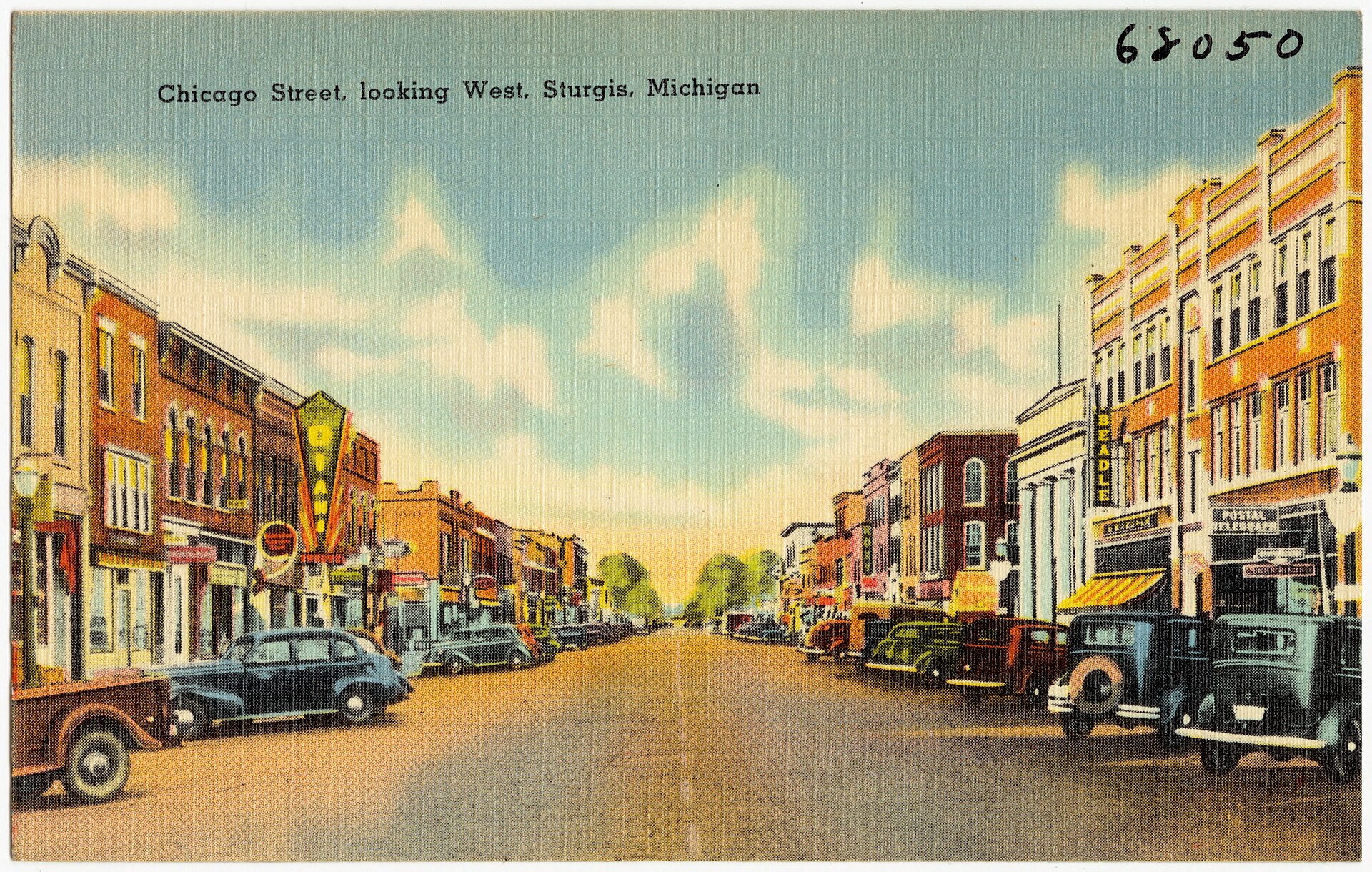
Sturgis officially incorporated as a city in 1896, and the community has held onto both its founding legend and its practical civic development in equal measure ever since, its downtown reflecting more than a century of continuous small-city growth in the St. Joseph River valley.
The Electric City
Sturgis earned its enduring nickname, the Electric City, from a municipal electric utility and hydroelectric dam dating back to the very founding of the city itself in 1896, a city-owned power operation that has continuously served the Sturgis area for well over a century, an unusually long-running example of municipal utility ownership compared to the investor-owned power companies that serve most comparable Michigan cities. That electric infrastructure has become a genuine point of civic identity, distinguishing Sturgis from its neighbors in a way that has nothing to do with either its founding legend or its agricultural surroundings.
The countryside immediately surrounding Sturgis forms part of Michigan's best-known Amish country, with the first Michigan Amish settlement having taken root nearby in Centreville in 1895, and the region's ongoing Amish presence today supports a steady stream of visitors drawn by hand-crafted furniture, quilts, and baked goods sold from farms and roadside stands scattered across the surrounding St. Joseph County countryside.