In This Guide
Hunting Petoskey Stones Petoskey State Park and the Bay The Little Traverse Wheelway The Gaslight District and Bay View Planning the TripMichigan's state stone is a fossil, and the town it is named for sits on the bay where people most reliably find it. Petoskey occupies the shore of Little Traverse Bay in the northwest Lower Peninsula, and its central attraction costs nothing: walking a rocky beach with your eyes down, looking for the distinctive hexagonal pattern of colonial coral that lived in warm seas covering Michigan more than 350 million years ago. Around that sits a genuinely well-equipped vacation town — a downtown shopping district with over 170 shops and restaurants, a 23-mile paved trail along the water, a 303-acre state park, and a historic Victorian community two miles up the shore.
Hunting Petoskey Stones
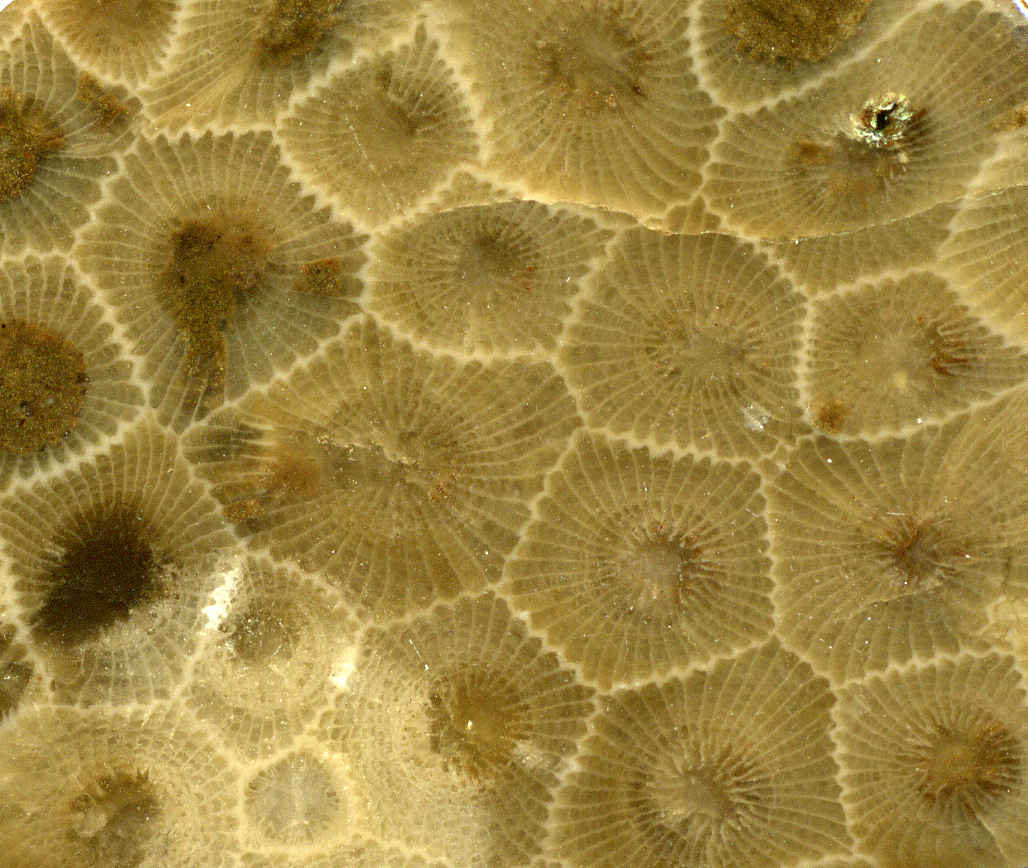
A Petoskey stone is fossilized coral — specifically the remains of colonial coral that grew in the warm shallow sea covering this part of the continent over 350 million years ago, later scattered across northern Michigan by glaciers. Dry, they look like unremarkable gray rocks. Wet, the hexagonal cell pattern emerges clearly, which is why experienced hunters carry a spray bottle or simply search the waterline where waves keep the stones damp. Michigan named it the state stone, and finding one is a rite of passage for visiting children and a surprising number of adults.
Two locations near town produce most of the finds. Magnus Park has roughly a thousand feet of rocky shoreline and is generally considered the best place in the area to search — rocky beaches concentrate the stones in a way sandy ones do not. Petoskey State Park's beach is sandier, which makes it more comfortable for a family spending the day but somewhat slower going for hunting; the stones are still there and still findable. The most productive conditions follow a storm, when wave action turns over fresh material along the waterline.
Petoskey State Park and the Bay
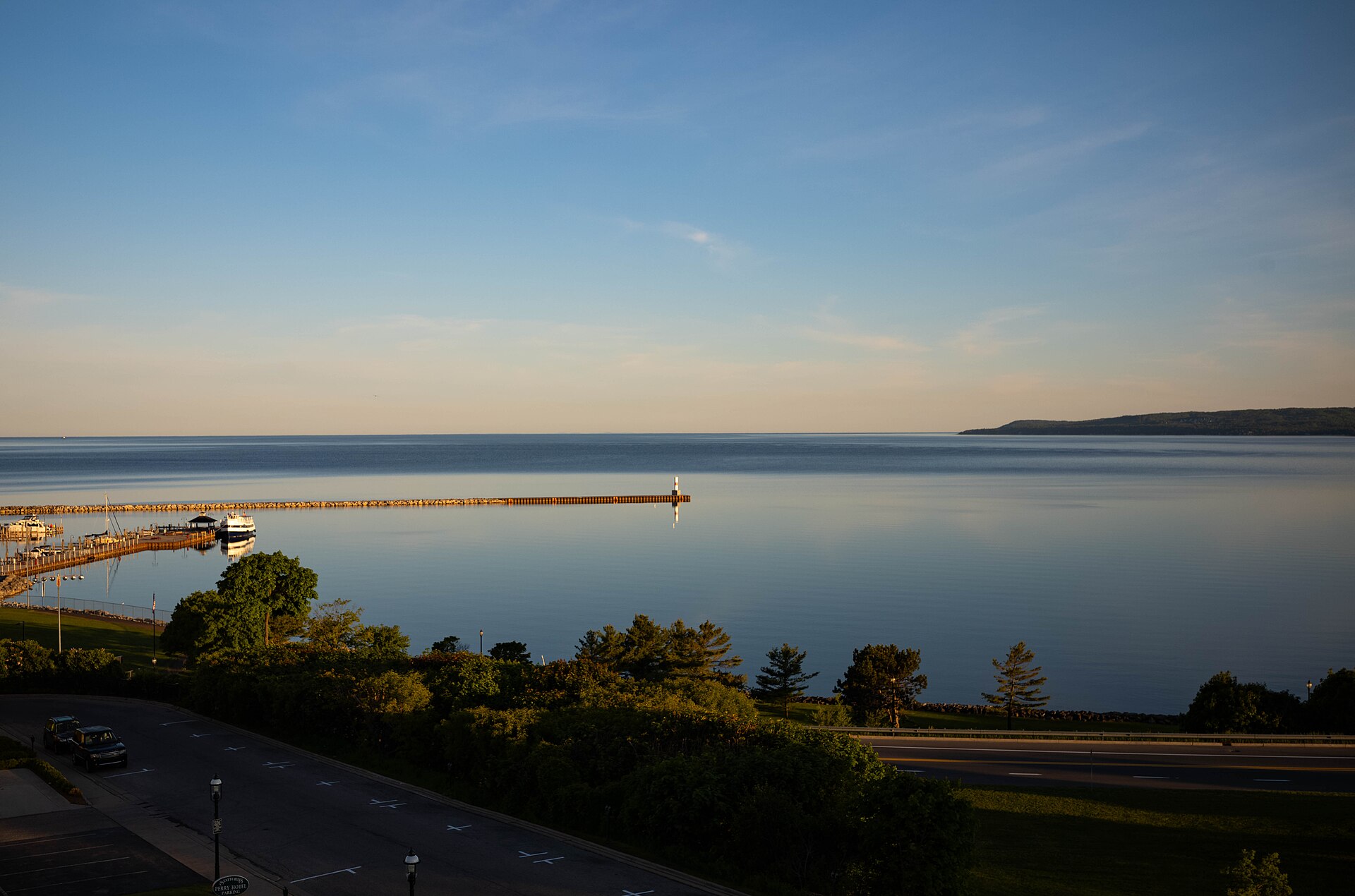
Petoskey State Park covers 303 acres at the north end of Little Traverse Bay and functions as the area's principal public shoreline. Beyond stone hunting it supports swimming, camping, and — unusually as a listed activity — metal detecting, along with cross-country skiing once snow arrives. The bay itself is the region's playground, with fishing, boating, kayaking, and stand-up paddleboarding all well established, and its partially sheltered geometry makes it considerably more forgiving than open Lake Michigan for small craft.
The water here is the reason the town exists in its current form. Little Traverse Bay drew resort development in the nineteenth century, and the shoreline has been oriented toward visitors ever since. That long history shows in the density of what is available: this is not a town that recently discovered tourism, and the infrastructure — public access, trails, marinas — reflects well over a century of accumulated investment.
The Little Traverse Wheelway
The Little Traverse Wheelway runs 23 miles of paved path along the bay and ranks among the most attractive rail-trail-style routes in the state. It serves cyclists, skaters, walkers, and runners, and its length means a visitor can take on anything from a half-hour stroll to a full day's ride. Substantial portions run directly along the water, which is what separates it from the many pleasant but inland trails elsewhere in Michigan.
The Wheelway also solves a practical problem: it connects communities along the bay, which means a cyclist can move between towns without driving. For families, the paved surface and gentle grades make it genuinely accessible to children, and the frequent access points allow a group to ride one direction and arrange a pickup rather than committing to an out-and-back. It is the single best way to understand the shape of Little Traverse Bay.
The Gaslight District and Bay View
Downtown Petoskey's Gaslight District holds more than 170 shops and restaurants in a compact, walkable arrangement, and it is the reason the town works for travelers whose interest in fossil hunting is limited. The district has retained independent retail to a degree that many resort downtowns have not, and the combination of a working commercial center with a bay view a block away is unusual.
Two miles north, Bay View is something considerably rarer: a historic Victorian community founded in 1875 as a camp for Michigan Methodists, its cottages preserved in a density and consistency that make the whole settlement feel like a single artifact. It remains an active community rather than a museum, so visitors should treat it with the courtesy owed to a neighborhood, but driving or cycling through it is among the more distinctive things to do in northern Michigan. Harbor Springs and the Tunnel of Trees lie just around the bay, which puts one of the state's great scenic drives within easy reach of a Petoskey base.
Planning the Trip
Summer is peak, and Petoskey books accordingly — this is one of northern Michigan's established resort towns, and July and August lodging should be arranged well ahead. Autumn is the connoisseur's season here as elsewhere in the north: the hardwood color is excellent, the Wheelway is at its best, the Gaslight District stays fully open, and the crowds thin considerably after Labor Day.
Winter keeps more of the town running than most northern Michigan destinations manage, with skiing in the surrounding hills and a downtown that does not shutter. For stone hunters specifically, spring is worth considering: winter storms and ice action turn over the shoreline thoroughly, and the beaches in April and May often yield better finds than the same ground picked over by summer visitors. Bring a spray bottle regardless of season.