Harbor Springs sits on one of the deepest natural harbors on the Great Lakes, a geographic accident that has shaped the town's entire identity, first as a genuinely useful shipping port and later as a refuge for wealthy Gilded Age families who built rambling summer cottages along the bluffs above the water and have, in many cases, been returning every summer ever since. The town's year-round population hovers around a thousand people, but its summer population swells considerably, filling a downtown of boutiques and restaurants that feel distinctly more polished, and pricier, than the typical Up North small town.
Wequetonsing and Harbor Point
Just outside Harbor Springs proper, two private summer cottage communities, Wequetonsing and Harbor Point, have maintained a genuinely unusual set of traditions for more than a century, including, at Harbor Point specifically, a near-total ban on automobiles within the community, meaning residents and guests get around by bicycle, on foot, or by horse-drawn wagon in a landscape that otherwise looks, at a glance, entirely contemporary. The cottages themselves, many dating to the 1880s and 1890s and still owned by descendants of the original families who built them, are generally not open to public tours, but the roads through both communities are open for a walk or bike ride, and the sheer scale and craftsmanship of the shingle-style architecture on display makes the detour worthwhile even from a distance.
The exclusivity of these communities has long made Harbor Springs a slightly different animal from other Up North resort towns: less a place that grew organically around tourism infrastructure and more one where old money quietly built its own private infrastructure first and let the town develop around it.
A Downtown Built to Match
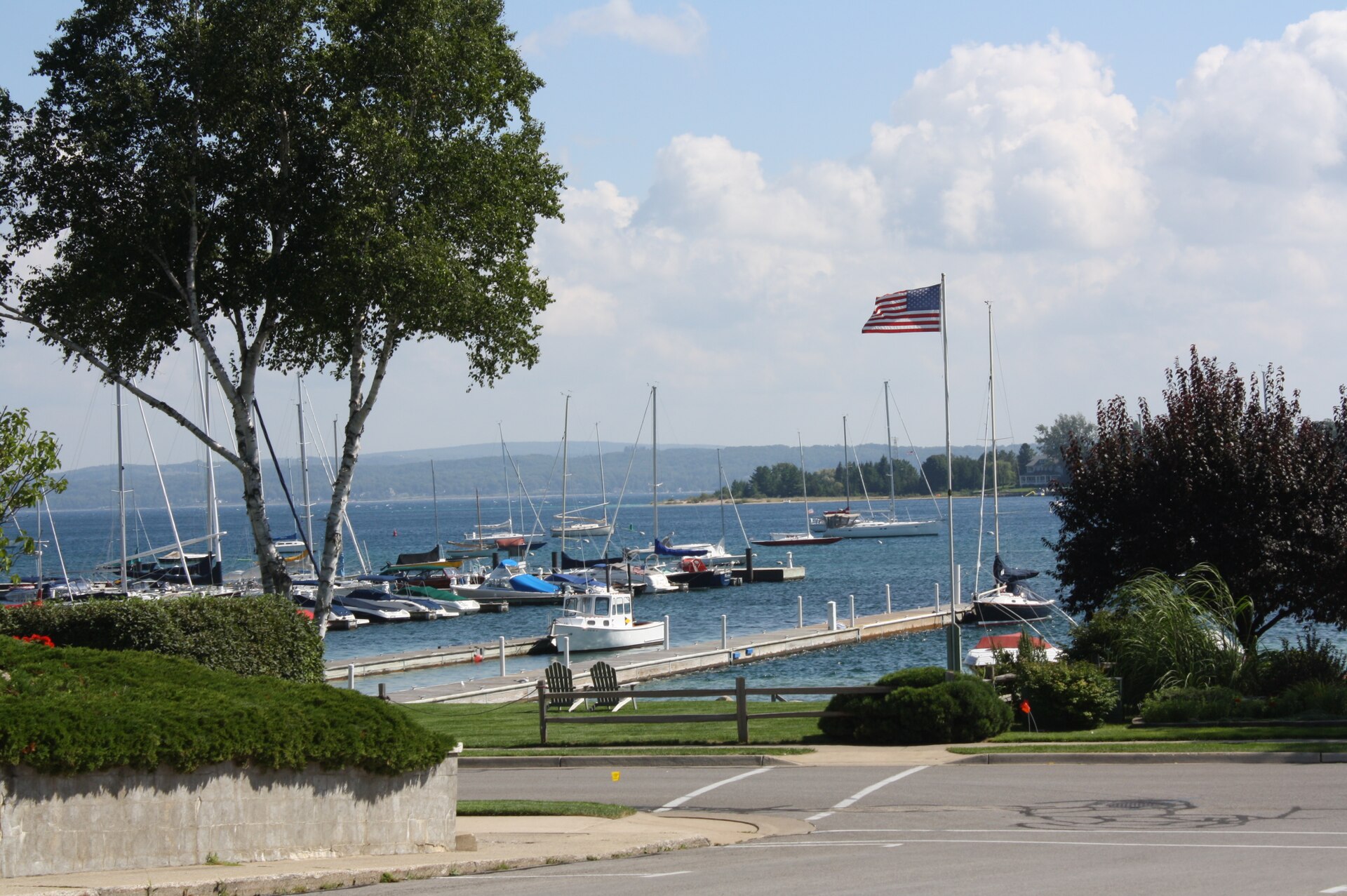
Downtown Harbor Springs has responded to its wealthy clientele with a commercial district that leans upscale without quite tipping into self-parody, its brick storefronts housing art galleries, a well-regarded bookstore, and restaurants that would not look out of place in a much larger city, alongside more traditional small-town fixtures like a hardware store and a marina supply shop that keep the whole district from feeling entirely manufactured for tourists. The harbor itself remains a working marina, filled each summer with a genuinely impressive concentration of sailboats and yachts, and an evening walk along the waterfront as the boats settle in for the night, their rigging clanking gently in the breeze off the bay, remains one of the more purely pleasant small-town experiences Up North has to offer.
Winter Sport Just Up the Hill
Boyne Highlands, one of Michigan's larger ski resorts, sits just a few miles outside town, giving Harbor Springs a legitimate four-season identity rather than the purely summer-oriented economy that defines many of its Lake Michigan peers, and the town's restaurants and shops generally stay open, if at a reduced pace, through the ski season rather than shuttering entirely once Labor Day passes. That winter economy, smaller than the summer rush but genuinely present, gives Harbor Springs a rhythm closer to a real four-season community than a purely seasonal resort town, even if the summer months remain, by a wide margin, when the town is at its fullest and its most expensive.