Indian River sits at a genuine crossroads of Michigan geography, the point where the state's Inland Waterway crosses M-68 partway across the top of the Lower Peninsula, and the small community draws a steady stream of visitors for a landmark considerably larger, and considerably more solemn, than the boat traffic and fishing that otherwise define this stretch of the Inland Waterway. A single monumental cross rising from the woods just outside town has made Indian River a genuine pilgrimage destination, drawing hundreds of thousands of visitors a year to a community whose year-round population barely registers by comparison.
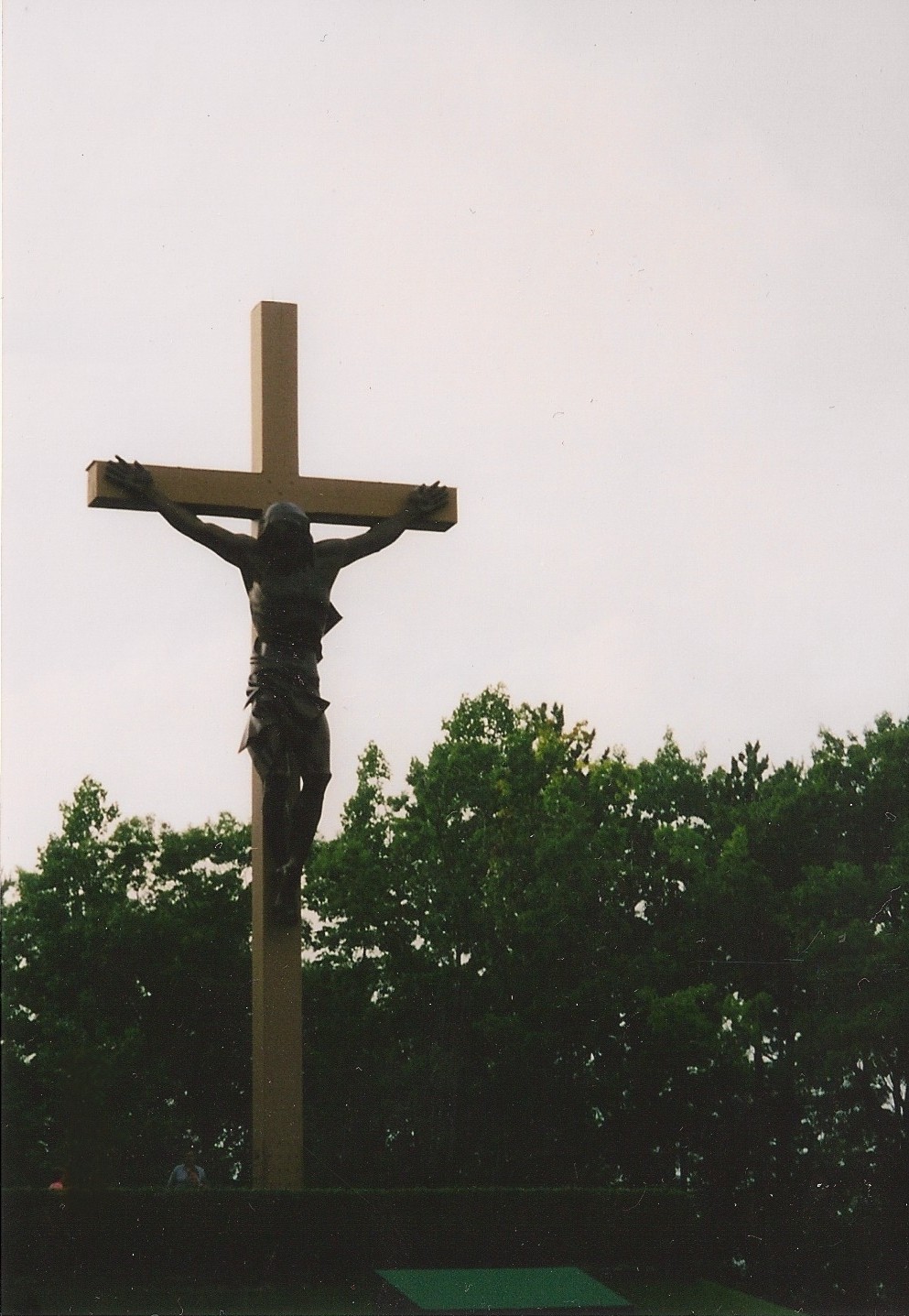
The Second-Largest Crucifix in the World
The Cross in the Woods, a fifty-five-foot wooden cross bearing a bronze figure of Christ sculpted by the celebrated Michigan artist Marshall Fredericks, stands as the second-largest crucifix anywhere in the world, a scale that becomes considerably more striking in person than any photograph quite manages to convey. The cross itself was erected in 1954, with Fredericks's bronze corpus added five years later in 1959, and the completed shrine has drawn Catholic pilgrims and simply curious travelers alike ever since, its scale making it visible from a considerable distance through the surrounding trees.
The United States Conference of Catholic Bishops formally declared the site a national shrine in September 2006, a designation that reflects both the scale of the monument itself and the volume of visitors it draws, with attendance running between roughly 275,000 and 325,000 people annually. The broader shrine grounds have grown to include outdoor and indoor chapels, a scattering of smaller devotional shrines, and even a dedicated nun doll museum, giving visitors considerably more to explore than the cross alone, however dominant its presence remains over the entire site.
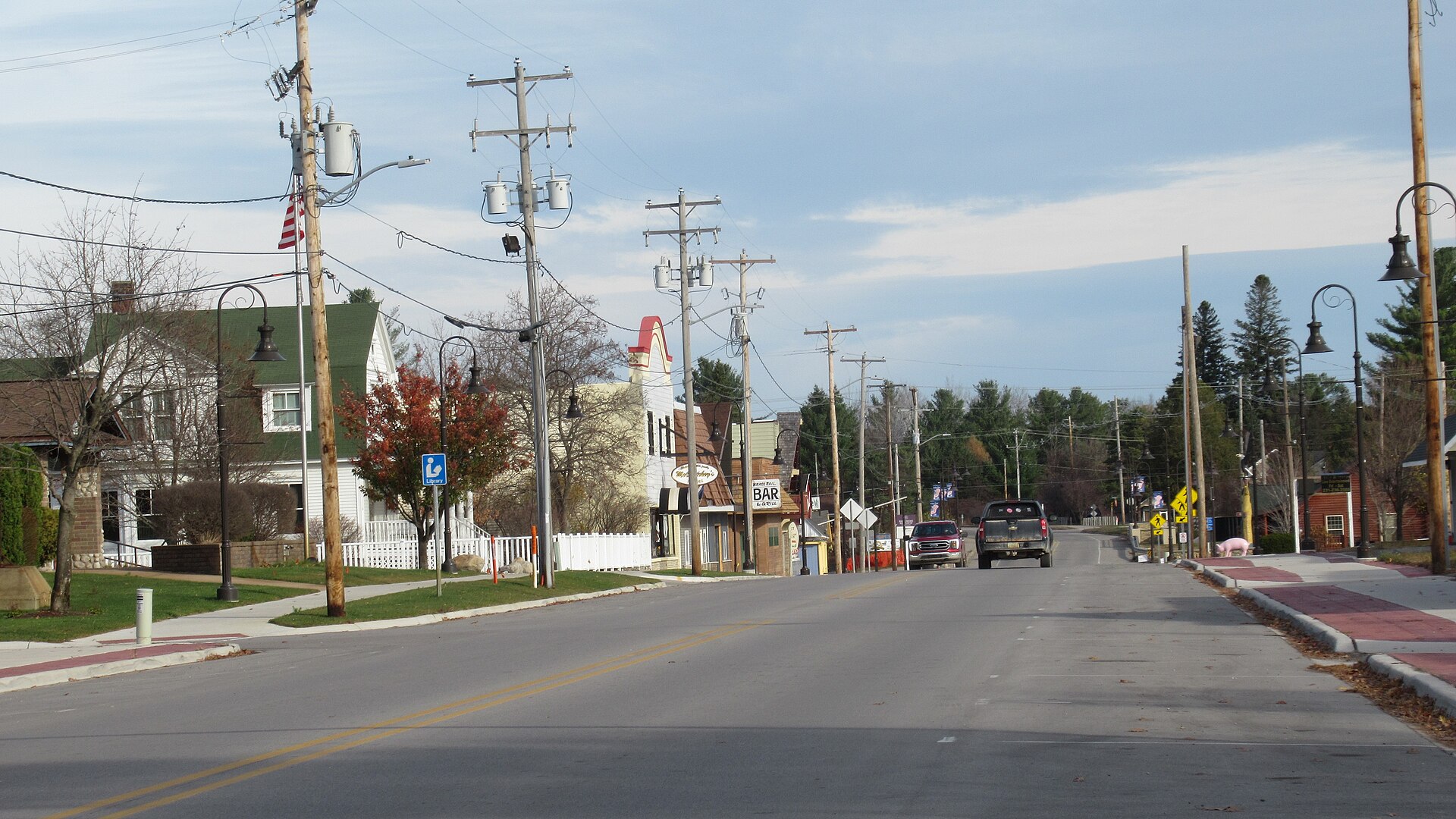
Where the Inland Waterway Crosses M-68
Beyond the shrine, Indian River's location at the crossing point of Michigan's Inland Waterway gives the town a natural role as a boating and fishing hub for the nearly forty-mile chain of lakes and rivers that runs from Cheboygan on Lake Huron nearly to Little Traverse Bay on Lake Michigan without ever touching open Great Lakes water. Marinas, tackle shops, and lakeside cottages line the waterway on both sides of town, giving Indian River a genuinely dual identity: part quiet inland boating community, part major destination for religious pilgrimage, two visitor bases that rarely overlap but that together keep the town's modest hospitality economy running across most of the calendar year.