Mount Pleasant sits at the center of Isabella County, home simultaneously to a major public university, the federally recognized Saginaw Chippewa Indian Tribe of Michigan, and a twentieth-century oil boom substantial enough to earn the town, for several decades, the nickname "Oil Capital of Michigan." That layered identity, part academic, part tribal, part fossil-fuel boomtown, gives Mount Pleasant a genuinely unusual civic mixture unlike most other mid-sized Michigan communities, each strand of its history still visibly present in the town's present-day landscape.
From Oil Capital to University Town
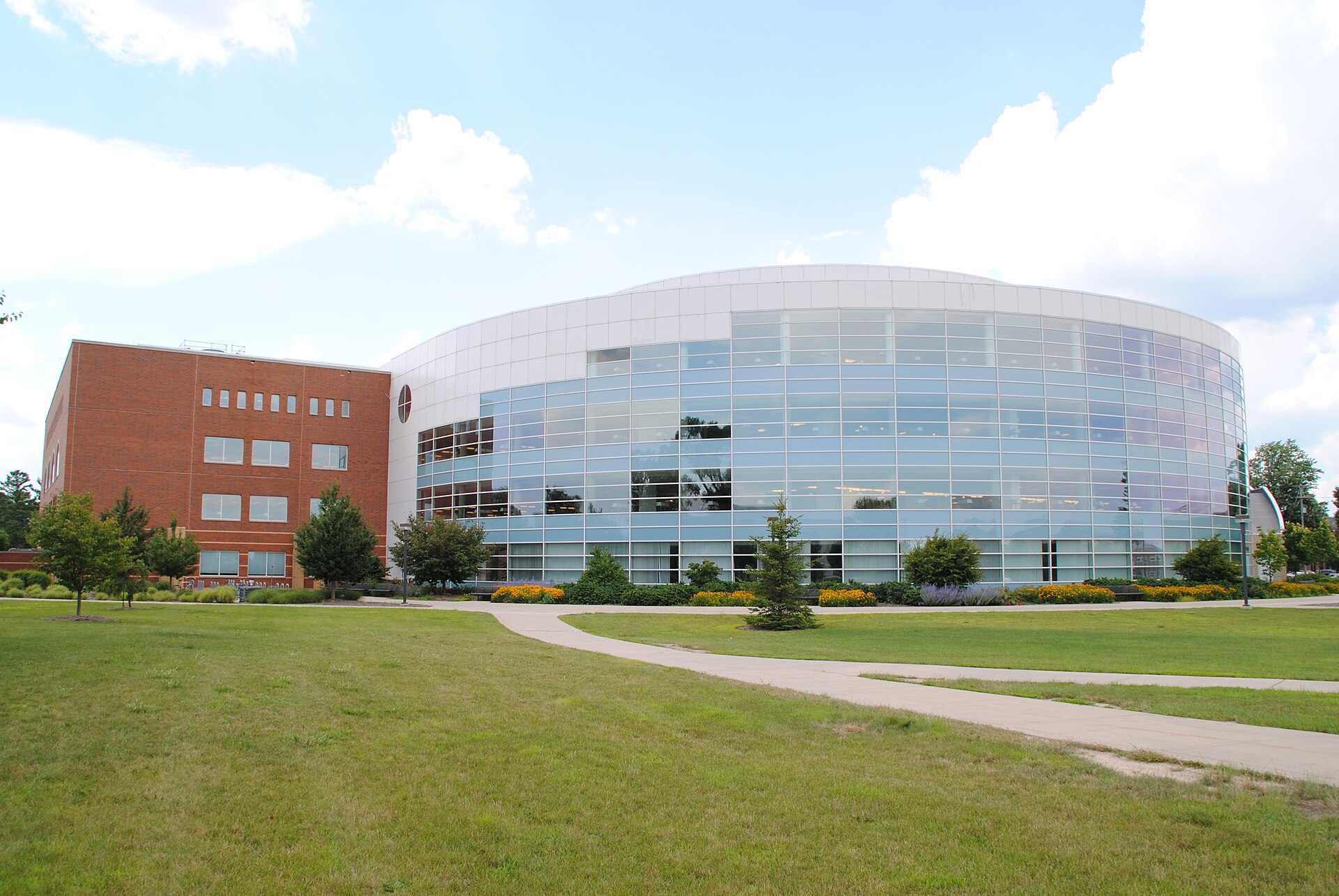
Mount Pleasant residents founded Central Michigan Normal School and Business Institute in 1892 with the specific goal of training properly qualified teachers for the region's local schools, a private normal school that became a state institution just three years later and has since passed through several subsequent name changes, becoming Central State Teachers College in 1927, Central Michigan College of Education in 1941, and finally Central Michigan University in 1959. The university has since grown into a substantial public research institution enrolling well over ten thousand students, its campus and the accompanying college-town economy now forming the single largest driver of Mount Pleasant's modern identity.
Decades before the university reached that scale, however, Mount Pleasant experienced a very different kind of economic boom when oil companies began establishing headquarters and drilling operations throughout the area beginning in the late 1920s, drilling contractors setting up shops and storage facilities throughout town and briefly earning Mount Pleasant genuine standing as the self-proclaimed "Oil Capital of Michigan." That oil-era prosperity has faded considerably since its mid-twentieth-century peak, but its architectural and economic fingerprints remain woven into the town's development alongside the university's steadily expanding footprint.
The Saginaw Chippewa Tribal Nation
The Saginaw Chippewa Indian Tribe of Michigan, a federally recognized tribal nation headquartered just outside downtown Mount Pleasant, operates the Soaring Eagle Casino and Resort, a substantial gaming, hotel, and entertainment complex that opened in 1998 and has since grown into one of the largest such facilities in the state, its more than two hundred thousand square feet of gaming space anchoring a broader resort operation that includes hotel accommodations and live entertainment programming. The tribe's continued civic and economic presence gives Mount Pleasant a genuinely significant Native governance and cultural dimension that many other mid-sized Michigan cities, having lost or never developed comparable tribal institutions, simply do not share.
The tribe operates a second gaming facility, Saganing Eagles Landing Casino, in nearby Standish, and gaming revenue has funded substantial community investment and revenue-sharing arrangements benefiting the broader region beyond the reservation's own boundaries. Between the university, the tribal nation, and the fading but still visible imprint of the old oil economy, Mount Pleasant offers visitors a considerably more layered civic story than its modest size and central-Michigan location might initially suggest.