In This Guide
River Raisin National Battlefield Park The Heritage Trail William C. Sterling State Park The Oldest Wooden House in Michigan Custer Marshes and Birds Dundee and the Western Side How to Structure ItMichigan touches four of the five Great Lakes, and Lake Erie is the one nobody plans a trip around. That is a mistake worth correcting for a weekend. Monroe sits between the Ohio line and the mouth of the Detroit River, holding the only Michigan state park on Lake Erie, the only National Park Service site in the country devoted to the War of 1812, and the oldest wooden house still standing in the state. The marshes on either side of town are among the best bird habitat in the Great Lakes.
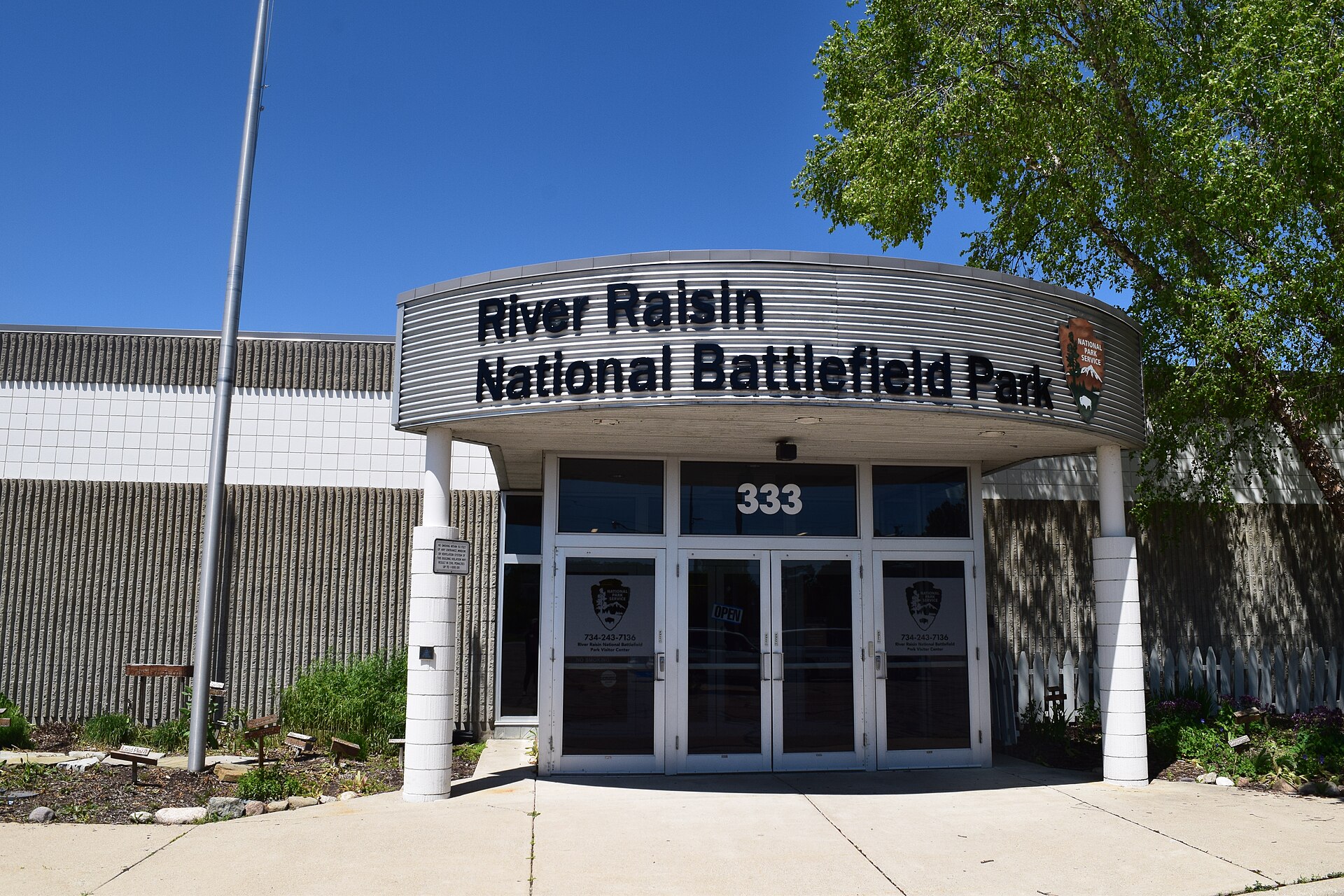
River Raisin National Battlefield Park
On January 18 and January 22, 1813, American forces under Brigadier General James Winchester fought British troops under Colonel Henry Procter and Indigenous warriors led by Roundhead at Frenchtown, on the River Raisin. It went catastrophically for the Americans: 397 killed and 547 taken prisoner. The day after the second engagement, wounded American captives were killed, and the phrase that came out of it, Remember the Raisin, carried through the rest of the war.
Congress authorized the site as a national battlefield park in the Omnibus Public Land Management Act signed on March 30, 2009, and it began operating as a unit of the National Park Service on October 22, 2010. It covers 42.18 acres. It is not the largest park in the system and it does not need to be; it is the only NPS unit commemorating the War of 1812.
There is no entrance fee and no pass required. The visitor center holds dioramas, full-size figures of British, Indigenous, and American combatants, orientation maps, and the park film. The grounds are open year-round from sunrise to sunset. Visitor center hours vary by season, so call ahead or check the park's operating schedule before you drive.
The Heritage Trail
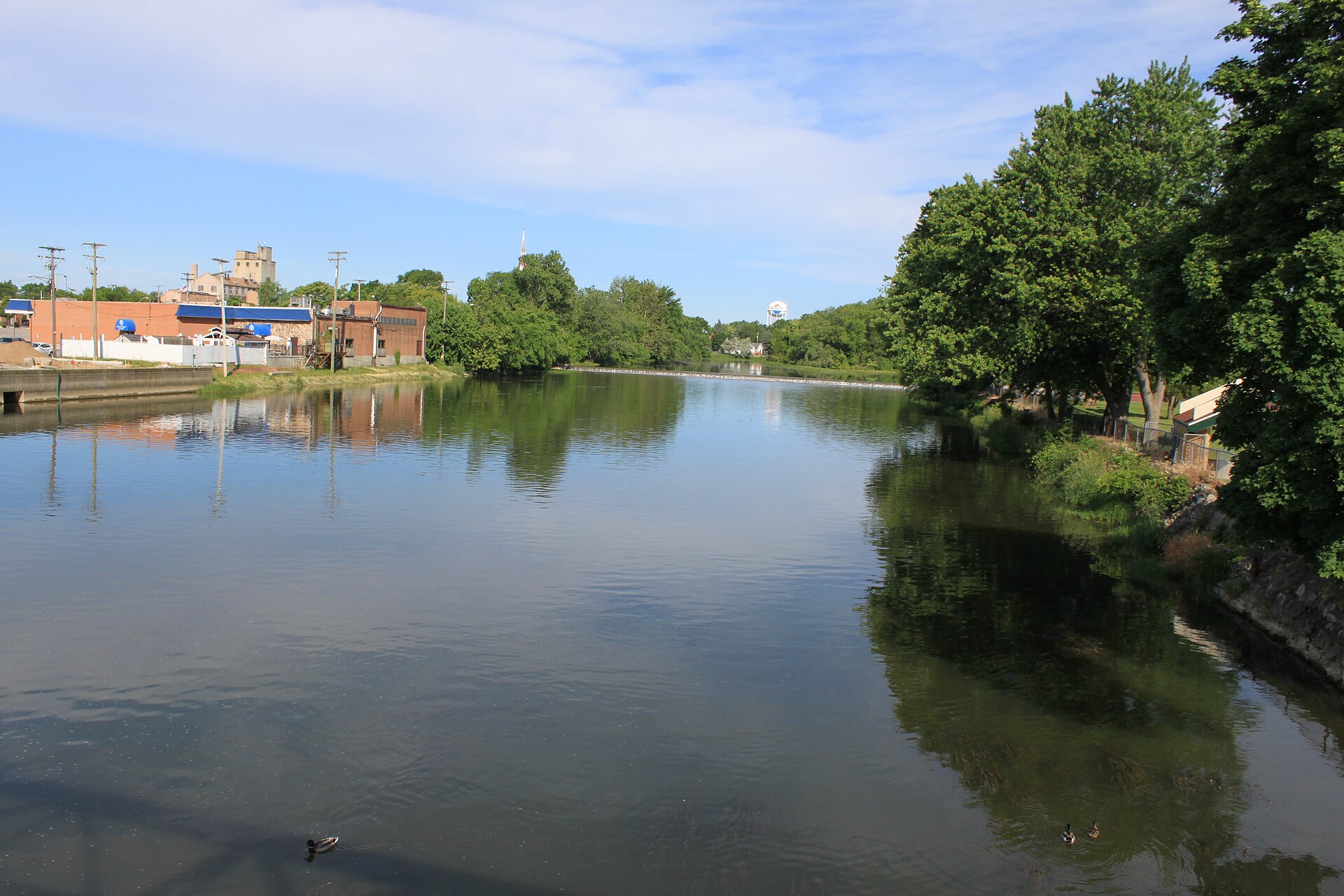
The River Raisin Heritage Trail runs along the river and links the pieces of Monroe that would otherwise require separate parking lots: the battlefield and its education center, downtown, St. Mary's Park, Veterans Park, the Elm Avenue bike path, and Munson Park. At its ends it connects Sterling State Park to Munson Park.
This is the single best way to understand the town's shape. Monroe grew along the river, not along a highway, and walking or riding the trail makes the sequence of settlement legible in a way that driving does not.
William C. Sterling State Park
Sterling is the only Michigan state park on Lake Erie, which makes it a genuinely unusual thing to visit rather than just a pleasant one. It was founded in 1935 and covers 1,300 acres of beach, lagoons, and restored marsh near the mouth of Sandy Creek.
The park has a 256-site modern campground, a sand beach, a boating access site, shore fishing on the lagoons, and over seven miles of hiking and biking trails. More than 500 acres of it is protected Great Lakes marsh and restored lakeplain prairie, which is why the birding is as good as it is.
It is named for William C. Sterling, a Monroe businessman and outdoorsman who lived from 1849 to 1924, bought marshland at the mouth of the Detroit River, and was among the first people in the state to argue that a swamp was worth keeping. Walleye and perch are the fisheries people come for.
The Oldest Wooden House in Michigan
The Navarre-Anderson Trading Post was built in 1789 by Utreau Navarre and is the oldest wooden residence still standing in Michigan. It is also the most complete surviving example of French-Canadian piece-sur-piece construction in the old Northwest, which means the walls are horizontal timbers slotted into grooved uprights rather than notched at the corners like a log cabin.
Navarre used it as a depot for his fur trade before converting it to a family residence in 1798. He sold it in 1802; later owners included the fur trader and militia colonel John Anderson and Joseph Dazet, a physician who had fled the French Revolution. The Ilgenfritz family moved the building off Elm Avenue in 1894 to save it, and the Monroe County Historical Society moved it to its present site in 1972 and restored it to its 1797 appearance.
The complex also includes the 1810 Navarre-Morris cookhouse and a replica French-Canadian barn. Check the Monroe County Museum's schedule; the site is open on a program calendar rather than continuously.
Custer
George Armstrong Custer grew up partly in Monroe and married Elizabeth Bacon here, and the town has never been shy about it. The equestrian monument, titled Sighting the Enemy, is a fourteen-foot bronze by Edward Clark Potter, who was chosen for his reputation with equestrian work and at Libbie Custer's urging. It shows Custer young, at about the age he was when he met Confederate cavalry at Gettysburg on July 3, 1863.
It was dedicated on June 4, 1910 by President William Howard Taft, Governor Fred M. Warner, and Libbie Custer. It was designated a Michigan Historic Site on June 15, 1992 and listed on the National Register of Historic Places on December 9, 1994.
The Monroe County Museum downtown holds the local Custer collections along with the rest of the county's history, and is the right place to put the monument in context.
Marshes and Birds
The stretch of shoreline from Monroe north to the Detroit River is the reason serious birders come to this corner of the state. The Detroit River International Wildlife Refuge is the first international wildlife refuge in North America, established by an act signed on December 21, 2001 and managed jointly by the U.S. Fish and Wildlife Service and the Canadian Wildlife Service. It takes in islands, coastal wetlands, marshes, shoals, and waterfront along 48 miles of the Detroit River and western Lake Erie in Monroe and Wayne counties.
Its habitats support around 300 bird species, including roughly 30 waterfowl species, 23 raptor species, and 31 shorebird species. This is a corner of a major metropolitan area, which makes the numbers more remarkable rather than less.
Pointe Mouillee State Game Area sits at the north end of this stretch and is one of the largest freshwater marsh restorations in the country. Fall raptor migration along this shoreline is a legitimate spectacle, and September and October are when to see it.
Dundee and the Western Side
Twenty minutes west of Monroe on M-50, Dundee is worth the detour for two unrelated reasons. The Old Mill Museum occupies a restored mill on the River Raisin and interprets local industrial history. And the enormous Cabela's store on US-23 has become, for better or worse, one of the most-visited buildings in the county, with aquariums and taxidermy dioramas that function as a free indoor attraction on a cold day.
This also puts you back on the US-23 corridor, which runs north toward Ann Arbor and eventually becomes the Sunrise Coast route along Lake Huron.
How to Structure It
Two nights covers it comfortably. Monroe has ordinary chain lodging along I-75 and the state park has that 256-site campground, which is the better choice from late spring through early fall if you camp.
A workable shape: give the first afternoon to the battlefield park and the heritage trail, because the battlefield deserves to be the first thing you do rather than the last. Give the next morning to Sterling State Park, and the afternoon to the trading post, the Custer monument, and the county museum. If you are here in migration season, spend the second morning on the marshes instead.
Everything above is inside forty-five minutes of downtown Monroe. Toledo is half an hour south and Detroit is under an hour north, so this works equally well as a weekend base or as a deliberate stop on the way to somewhere else.