In This Guide
The Western Shore The Straits and Old Mission The Lake Huron Coast The Thumb and the Southern End The Upper Peninsula ExtensionMichigan has more lighthouses than any other state, a consequence of having more Great Lakes coastline than any other state — and of that coastline having killed a great many ships. They range from the sparkplug towers built to take direct wave impact to house-style lights that look like farmhouses with a lantern on top, and a substantial number can be climbed. What follows is a route linking the most rewarding of them around the Lower Peninsula and into the Upper, arranged so that a traveler can take any single leg as a weekend or the whole thing as a long tour.
The Western Shore
Begin at South Haven, where the south pier light stands at the harbor mouth, and work north along the Lake Michigan coast. Grand Haven's pier lights sit beside a state park beach within walking distance of downtown, and Manistee's north pierhead light marks a harbor town with a preserved Victorian commercial district behind it.
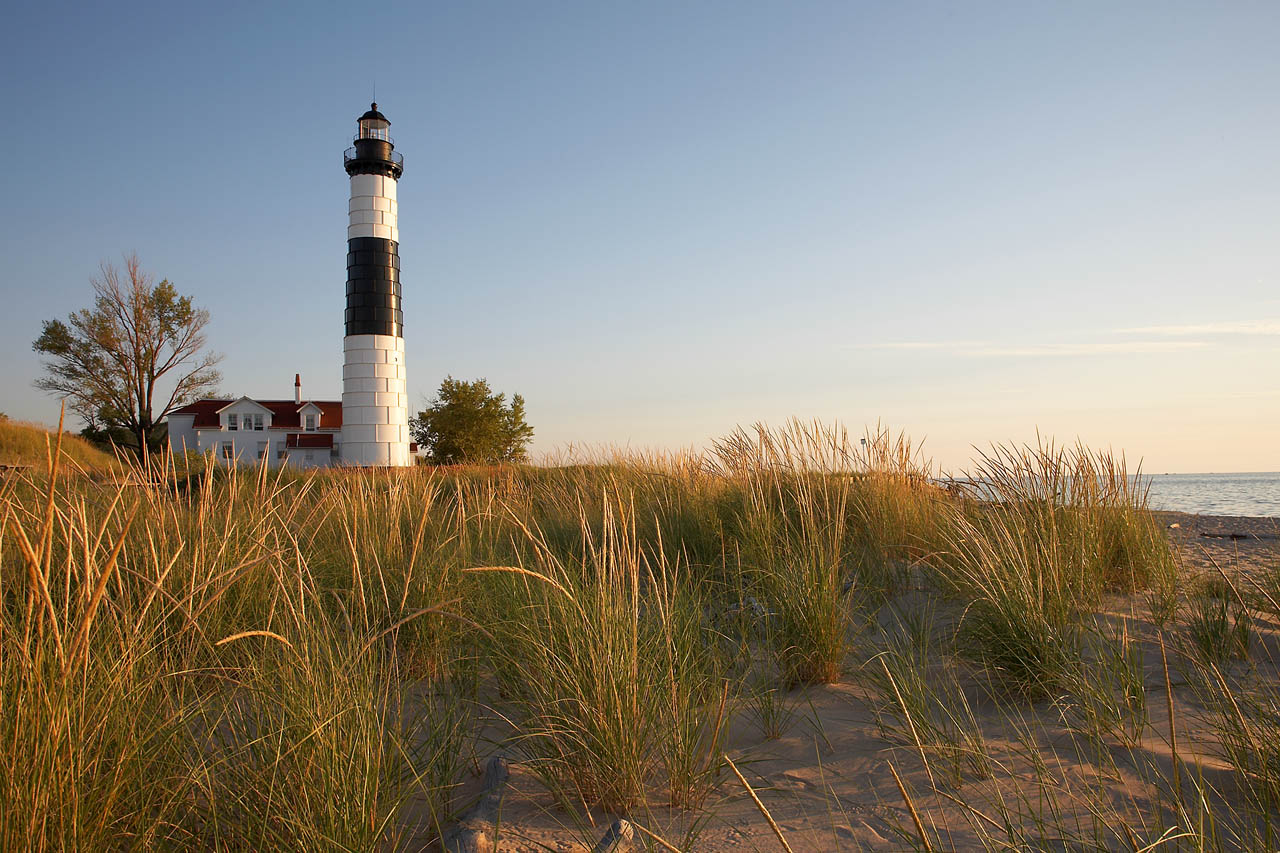
The western shore's finest is Big Sable Point, north of Ludington. The circa-1867 tower rises more than a hundred feet in black-and-white bands, and it cannot be driven to: access is on foot or by bicycle along a sand-and-gravel path running 1.8 miles each way. Tours run daily from ten to five, May through October, and visitors can climb the 130 steps to the top. Carry water — the path is fully exposed.
The Straits and Old Mission
At the top of Grand Traverse Bay, Mission Point Lighthouse stands at the tip of the Old Mission Peninsula, built in 1870 and overlooking both arms of the bay. It is a modest wooden house-style light rather than a monumental tower, and it opens most days May through October with self-guided tours including tower access for a small fee.
North at the Straits, Mackinac Island holds the region's densest concentration of maritime history, and the Copper Harbor and Keweenaw lights lie further west for travelers extending into the Upper Peninsula. The Mackinac Bridge itself makes the natural pivot between the Lower Peninsula and Upper Peninsula legs of any lighthouse tour.
The Lake Huron Coast
Coming down the eastern shore, Tawas Point Light sits within a state park on the point that shelters Tawas Bay. Further north, Presque Isle holds both an old and a new light, and Forty Mile Point stands on the shore between Rogers City and Cheboygan.
Alpena is the anchor of this coast. Alpena Light — also called the Thunder Bay River Lighthouse — stands on the harbor's north breakwater, the current 1914 structure replacing wooden predecessors from 1877 and 1888. Offshore, Thunder Bay Island Light occupies its island's southeast tip and ranks among the oldest operating lighthouses in Michigan, with a light first established in 1831 and the current tower dating to 1857. Both sit within Thunder Bay National Marine Sanctuary, which protects roughly a hundred shipwrecks — the reason all these lights exist.
The Thumb and the Southern End
Around the Thumb, Harbor Beach Light was completed in 1885 at the end of the north breakwall, marking the entrance to what is described as the largest man-made freshwater harbor in the world — an artificial refuge built in the 1880s because this stretch of Lake Huron offered vessels nowhere else to shelter. It belongs to the sparkplug family: squat, cylindrical, cast-iron, built to survive direct wave impact rather than to look picturesque.
The southern terminus is Fort Gratiot Light at Port Huron, among the oldest on the Great Lakes, standing where Lake Huron narrows into the St. Clair River. Freighter traffic passes close to shore here, which makes it a satisfying place to end — the lighthouse and the ships it was built for in the same frame.
The Upper Peninsula Extension
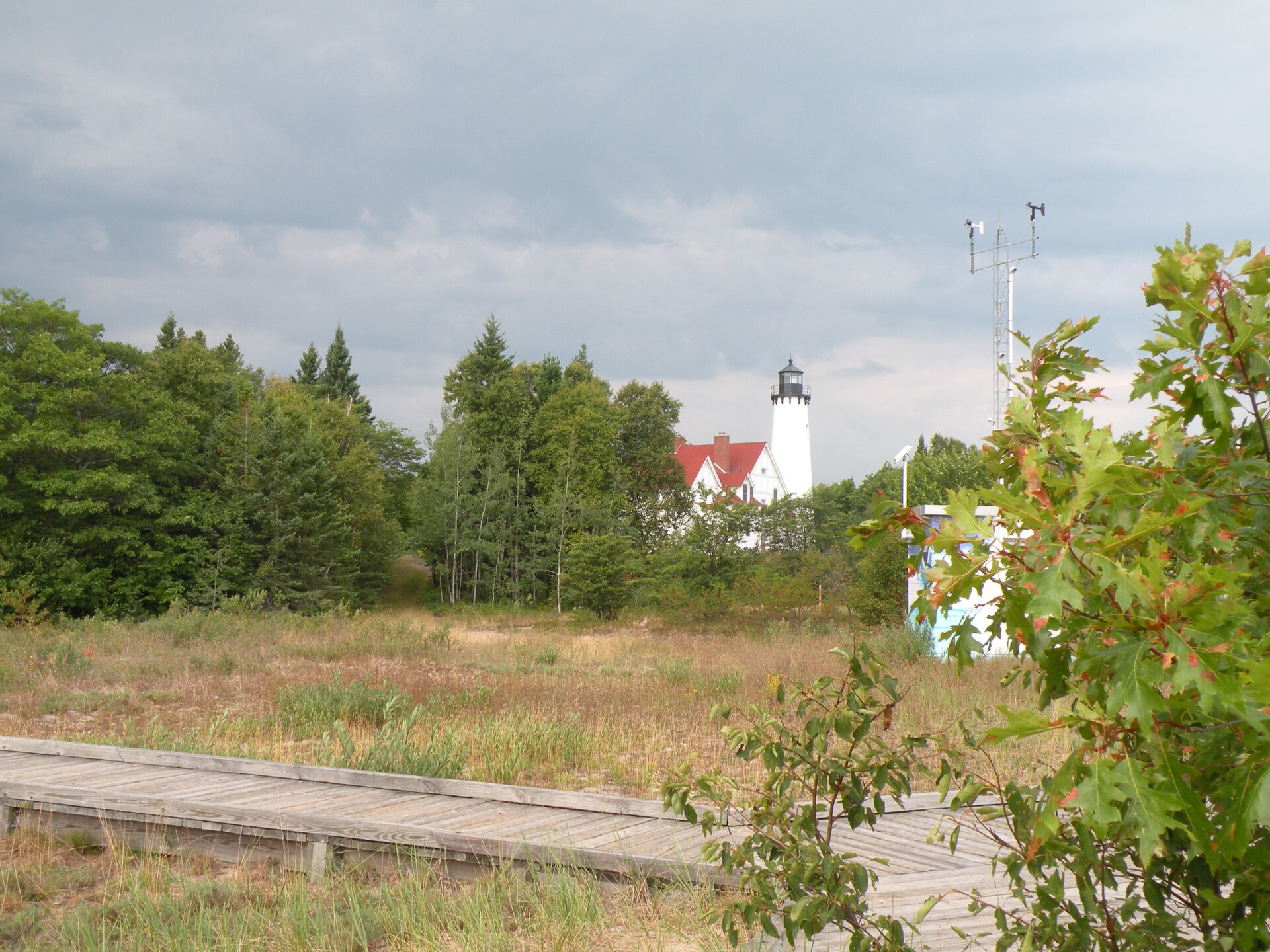
Travelers continuing north find the most dramatic lights of all. Point Iroquois, west of Brimley on the Whitefish Bay Scenic Byway, dates to 1870, stands 65 feet, is free to enter, and allows a climb of 72 steps. Whitefish Point holds one of the oldest active lights on Lake Superior alongside the Great Lakes Shipwreck Museum, interpreting the deadliest water on the lake.
In the Keweenaw, Eagle Harbor's brick light dates to 1871 and is the only lighthouse on the peninsula offering interior tours and a tower climb. Copper Harbor's 1866 light with its restored 1848 keeper's dwelling can be reached only by boat, since the road is closed to the public. And off DeTour Village, the 1931 DeTour Reef Light stands 83 feet above its reef, with tours and overnight Weekend Keeper programs running mid-June through August — the most immersive lighthouse experience available in the state.