Harbor Beach makes two claims that seem outsized for a small city on the Thumb's eastern shore, and both hold up. The first is engineering: the breakwater enclosing its harbor of refuge, completed in the 1880s, created what is described as the largest man-made freshwater harbor in the world — a genuinely enormous piece of nineteenth-century public works built because this stretch of Lake Huron offered vessels nowhere to hide from a northeaster. The second is biographical: Frank Murphy, who would serve as Governor of Michigan and then as a Justice of the United States Supreme Court, was born here in 1890, and the house he was born in is preserved as a museum operated by the city.
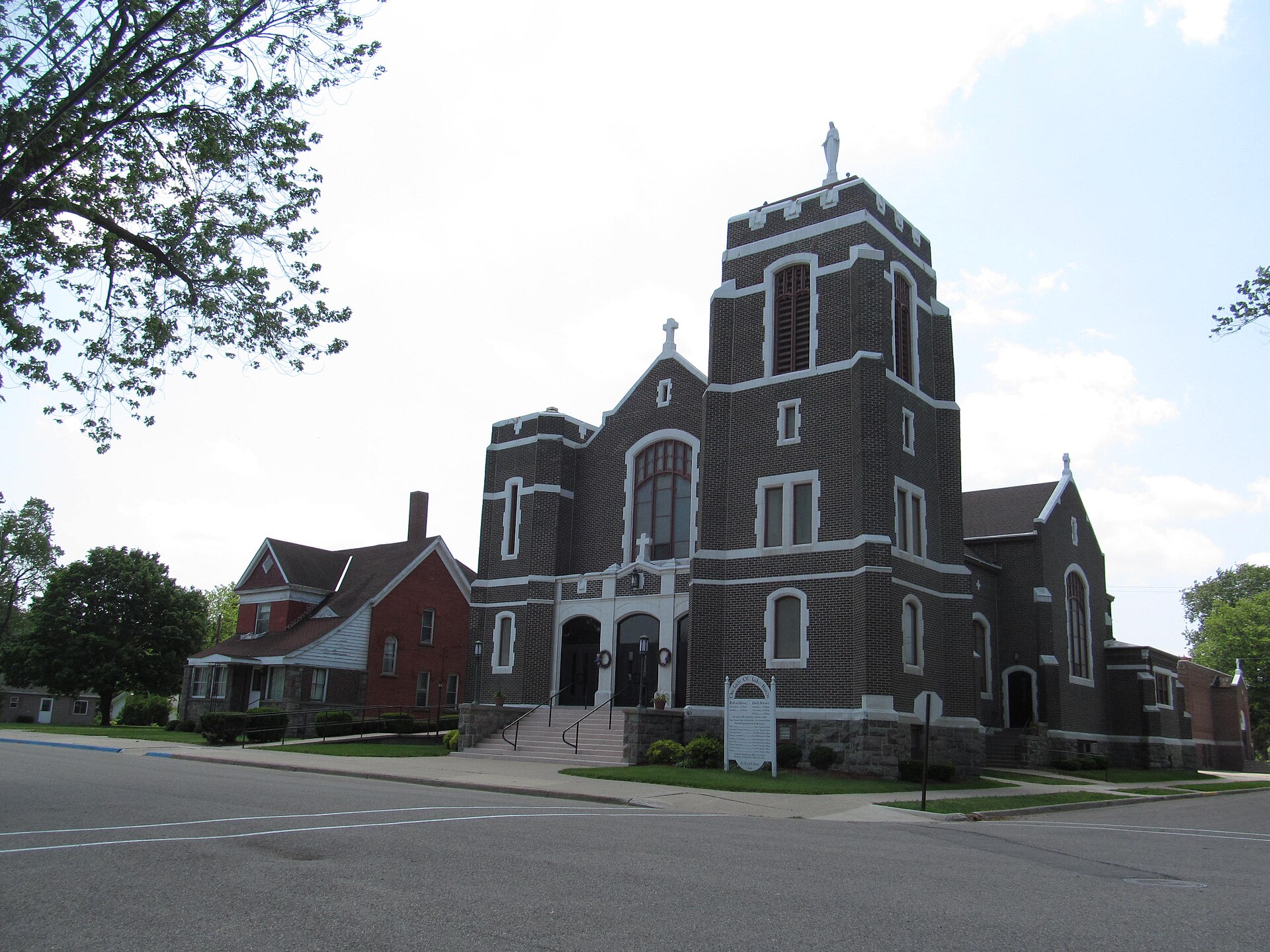
The Harbor of Refuge
The Lake Huron shoreline between Port Huron and the tip of the Thumb runs long, straight, and almost entirely without natural shelter, a configuration that made it lethal for sailing vessels caught out in a blow. The federal response was to build shelter where nature had provided none, and the breakwater completed at Harbor Beach in the 1880s enclosed an artificial harbor of a scale that still impresses — commonly cited as the largest man-made freshwater harbor in the world. It was infrastructure in the most literal sense: not a port serving local commerce so much as a refuge serving everyone else's shipping.
The Harbor Beach Light was completed in 1885 and stands at the end of the north breakwall marking the harbor entrance. It belongs to the architectural family known as sparkplug lighthouses — squat, cylindrical, cast-iron structures built to withstand direct wave impact rather than to look picturesque from shore, and named for the obvious resemblance. Viewed from the breakwall or from the water, it reads as purely functional, which is precisely the point. Ships running for shelter in deteriorating weather needed to find the gap, and the light existed to make that possible in conditions where anything less robust would not have survived.
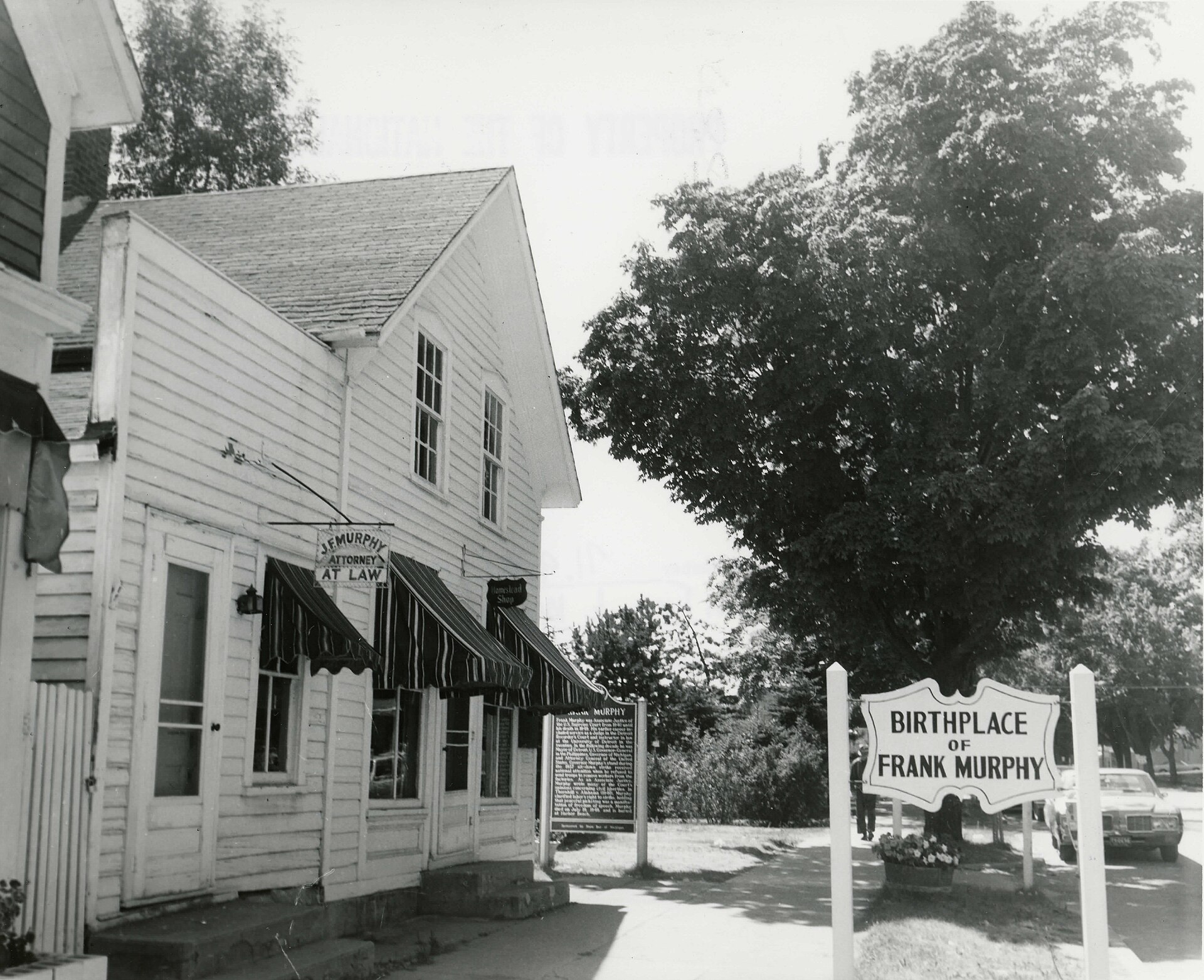
The Frank Murphy Birthplace
Frank Murphy was born in a modest Harbor Beach house on April 13, 1890, and went on to a career of genuinely national consequence: Mayor of Detroit, Governor-General of the Philippines, Governor of Michigan, U.S. Attorney General, and finally Associate Justice of the United States Supreme Court from 1939 until his death in 1949. The house is preserved as the Frank Murphy Memorial Museum, operated by the City of Harbor Beach, and it is a rare thing — a Supreme Court justice's actual birthplace, in a small town, open to the public.
Murphy's judicial reputation rests substantially on his dissents, and on a willingness to stake out positions that were unpopular at the time and vindicated later. He is remembered particularly for his opposition to the wartime treatment of Japanese Americans, a stance that placed him against the prevailing consensus of his own court and his own government. Visitors expecting a routine small-town historical house will find instead the origin point of a genuinely consequential American legal career, and the museum's interpretation does not shy from the substance of what Murphy argued.
The Eastern Thumb Shoreline
Harbor Beach anchors a stretch of Lake Huron coast that sees a fraction of the traffic drawn by Michigan's western shoreline, and the difference in character is immediate. The beaches are quieter, the towns smaller and more residential, and the summer economy correspondingly less developed — which is either the appeal or the drawback depending entirely on what a visitor is after. The harbor itself remains in use, and watching boats work in and out of an artificial basin built for vessels that no longer exist is a peculiar and rewarding way to spend an hour.
The city makes a sensible waypoint on a full circuit of the Thumb, pairing naturally with Port Austin at the tip to the north and with Port Sanilac and Lexington to the south. M-25 traces the shoreline for essentially the entire loop, which makes the Thumb one of the more straightforward multi-day drives in Michigan to plan — there is effectively one road, it stays near the water, and the towns arrive at convenient intervals. Travelers with a weekend can complete the circuit comfortably while still allowing time to stop and swim.