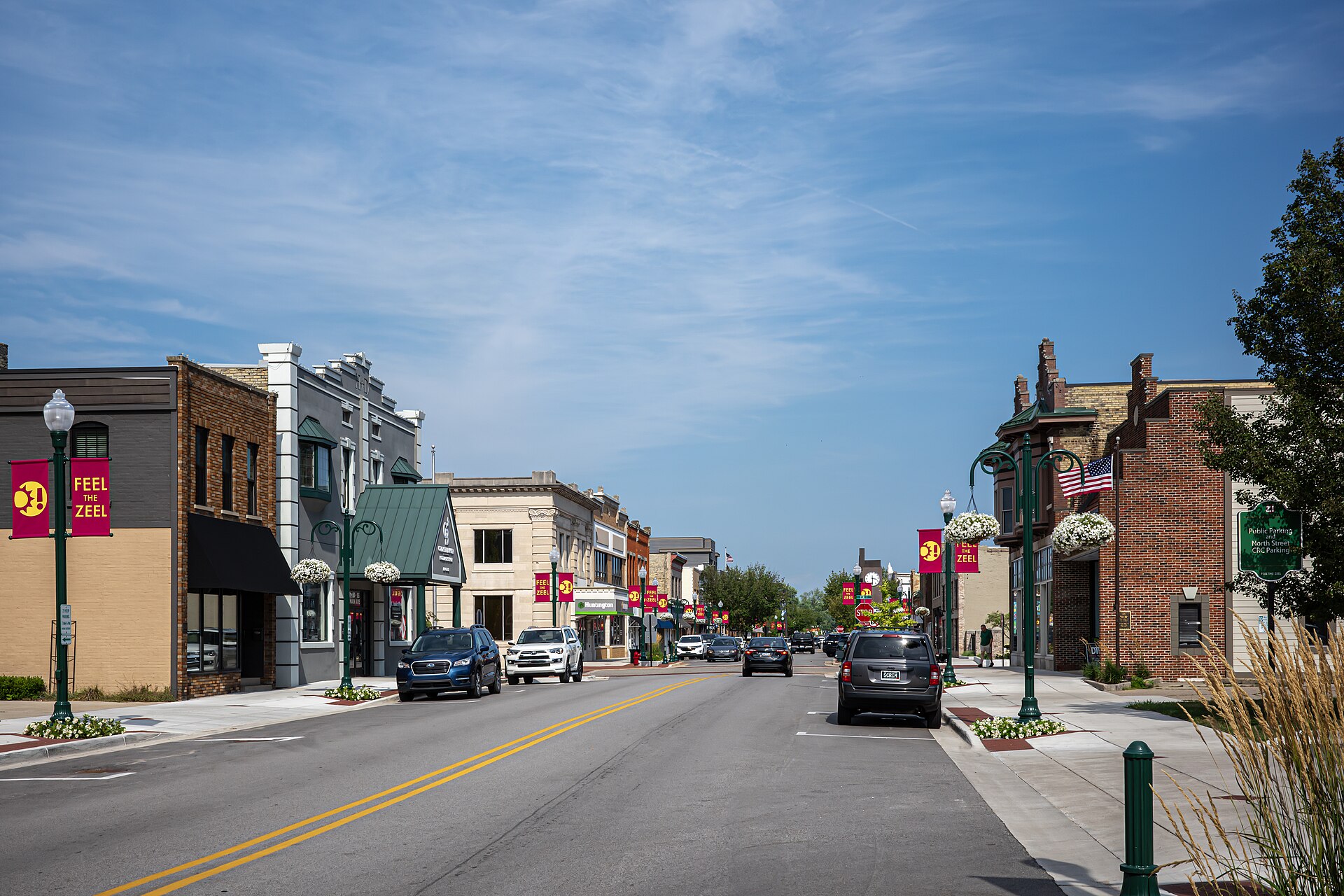
Zeeland takes its name directly from the Dutch province its founders left behind, and unlike many Michigan towns whose European heritage has faded into architectural detail and the occasional festival, Zeeland's Dutch identity remains genuinely load-bearing, visible in its churches, its civic institutions, and the deliberate, communal manner in which the town was founded in the first place. What arrived in 1847 as a single organized congregation seeking religious and economic freedom eventually grew into a furniture manufacturing center whose best-known company still occupies the same ground it settled on more than a century ago.
457 Settlers Seeking Religious Freedom
Jannes Vande Luyster, a farmer of considerable means, and the Reverend Cornelius Vander Meulen organized a group of four hundred fifty-seven emigrants from the Dutch province of Zeeland in 1847, Vande Luyster financing the considerable expense of transatlantic passage while Vander Meulen provided the group's spiritual leadership, and the emigrants left the Netherlands driven by both difficult economic conditions at home and religious objections to the increasingly liberal theological currents reshaping the established Dutch Reformed church. Their congregation had already organized as a Separatist body back in the Netherlands during the 1840s, a movement historians consider one of the very few instances, alongside the Pilgrims two centuries earlier, of an entire organized church congregation emigrating to America as a unified body rather than as scattered individual families.
The settlers named their new Michigan community Zeeland in direct honor of the province they had left, and the town was formally platted in 1849, with a school district organized the following year, establishing the deliberate, institution-first settlement pattern that would come to define Zeeland's civic character for generations afterward.
From Farmland to Furniture Empire
Herman Miller, now one of the most recognized names in American office and home furniture design, has been headquartered in Zeeland since the company's 1905 founding, its main campus eventually growing to nearly seven hundred fifty thousand square feet spread across more than a hundred acres of what was originally farmland on the edge of town. The company's distinctive low-slung red brick headquarters buildings, along with the employee courtyards and ponds woven throughout the campus, reflect a mid-century design philosophy the company applied to its own workplace with the same rigor it brought to its influential furniture lines, giving Zeeland a genuinely significant piece of American design history hiding in plain sight just off Main Avenue.
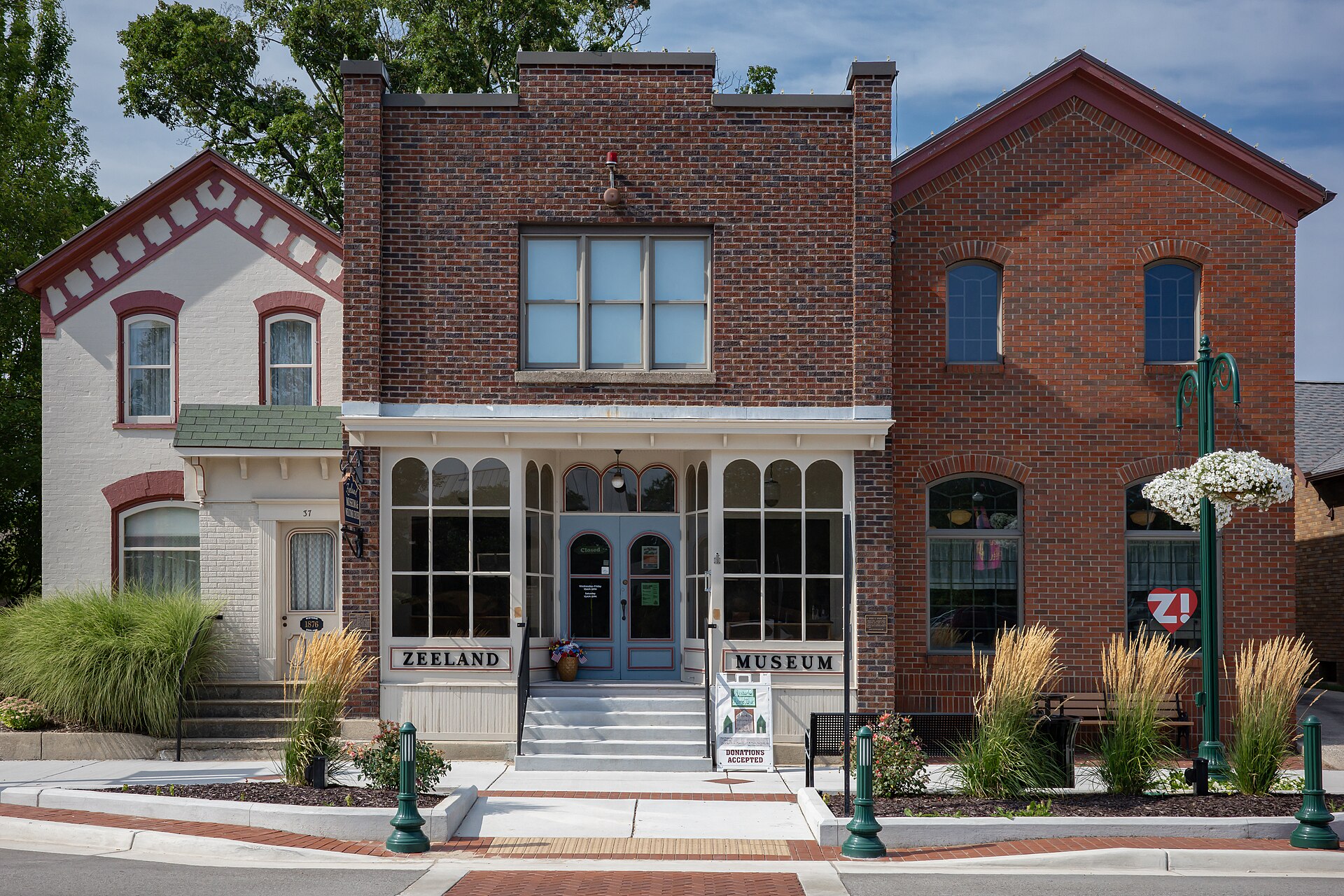
The Dutch heritage and the furniture-industry prosperity have reinforced each other for well over a century, with the same civic discipline that organized the original 1847 migration later channeled into building museums, preserving historic architecture at sites like the Dekker Huis, and maintaining a downtown that wears its Dutch roots with considerably more sincerity than the more performative tulip-festival tourism found in some other West Michigan towns with similar heritage. Zeeland's Dutch identity, in short, never really became a tourist product, because the community that built it never actually stopped being Dutch in any meaningful civic sense.