In This Guide
Ludington State Park Big Sable Point Lighthouse Hamlin Lake The SS Badger Making It Work in SeasonLudington sits at a spot where a great deal of Michigan converges within a few miles: Lake Michigan on one side, Hamlin Lake on the other, a five-thousand-acre state park occupying the ground between them, a hundred-foot lighthouse at the end of it, and a working car ferry that still crosses to Wisconsin twice a day. The result is one of the most efficiently packed vacation areas on the western shoreline — a visitor can swim in a Great Lake in the morning, paddle a warm inland lake in the afternoon, climb a lighthouse tower in between, and never drive more than twenty minutes. It is popular for exactly these reasons, and planning around that popularity is the main skill required.
Ludington State Park
Ludington State Park spreads across more than five thousand acres between Lake Michigan and Hamlin Lake and consistently ranks among the most visited state parks in Michigan, which is both a recommendation and a warning. The land it occupies is genuinely varied — dune, forest, marsh, and two entirely different shorelines — and the park has been developed to make that variety usable: twenty-one miles of trails, four campgrounds totalling 355 sites, two distinct swimming beaches, and canoe and kayak rentals on site.
The two beaches are the key to using the park well, because they face different water. The Lake Michigan side delivers open-horizon Great Lake swimming with the cold and the wave action that implies; the Hamlin Lake side is warmer, calmer, and considerably more suitable for small children. Families frequently discover this by accident after a bracing morning on the big lake. The trail network connects the two and threads the marshes between them, and one of the more rewarding easy walks starts at Hamlin Lake Beach and winds through wildlife-rich marsh and shoreline before returning.
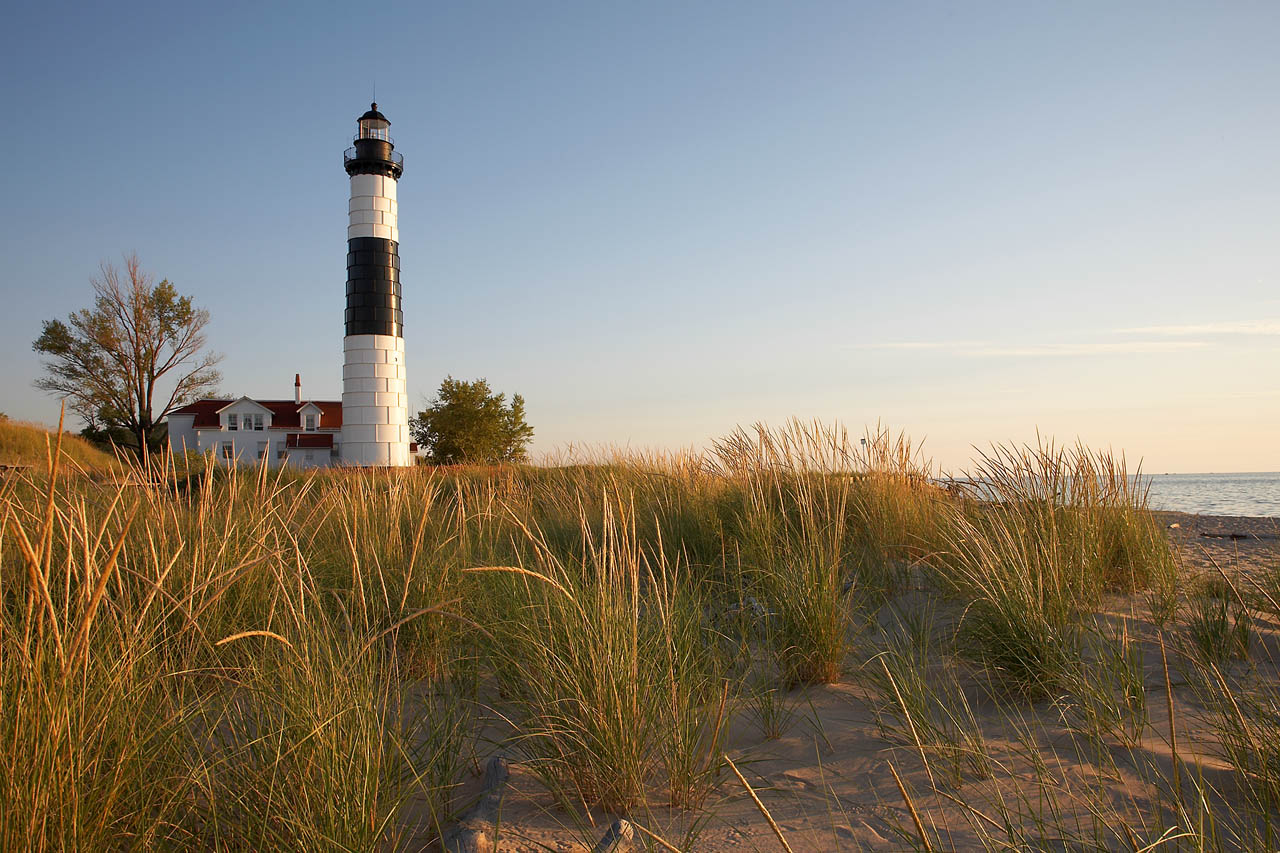
Big Sable Point Lighthouse
The Big Sable Point Lighthouse dates to about 1867 and rises more than a hundred feet in a black-and-white banded tower that has become the visual shorthand for the entire Ludington area. It stands within the state park, and there is no driving to it: access is on foot or by bicycle along a sand-and-gravel pathway running 1.8 miles each way from the nearest parking. That is a real walk rather than a stroll, and it keeps the crowds at the base thinner than they would otherwise be while making the arrival feel earned.
The lighthouse is open for tours daily from ten in the morning until five in the afternoon, May 1 through October 31. Visitors can climb the 130 steps to the top, and the view from the gallery takes in the dunes, the park, and an unbroken Lake Michigan horizon. The original Keeper's Quarters at the base houses a gift shop staffed by the volunteers who maintain the structure. Carry water and a hat in summer — the pathway is exposed and offers essentially no shade in either direction, and the 3.6-mile round trip catches out visitors who assumed the lighthouse was a drive-up.
Hamlin Lake
Hamlin Lake is the largest inland lake in the area and functions as the region's warm-water counterweight to Lake Michigan. Anglers work it for northern pike, bass, perch, and bluegill, and the variety of structure across a lake of this size supports genuinely different fishing depending on where and how a visitor approaches it. For families, the appeal is simpler: the water is warm enough to stay in, calm enough to paddle, and shallow enough along the beaches to let small children swim without constant supervision against surf.
Canoe and kayak rentals within the state park mean no equipment is required to get on the water, and the marshy northern reaches reward slow paddling with wildlife that the busier southern end does not offer. The lake's size means conditions vary considerably across it — a breezy day that makes the open water uncomfortable often leaves the sheltered arms perfectly usable, so a paddler willing to relocate can generally find calm water somewhere.
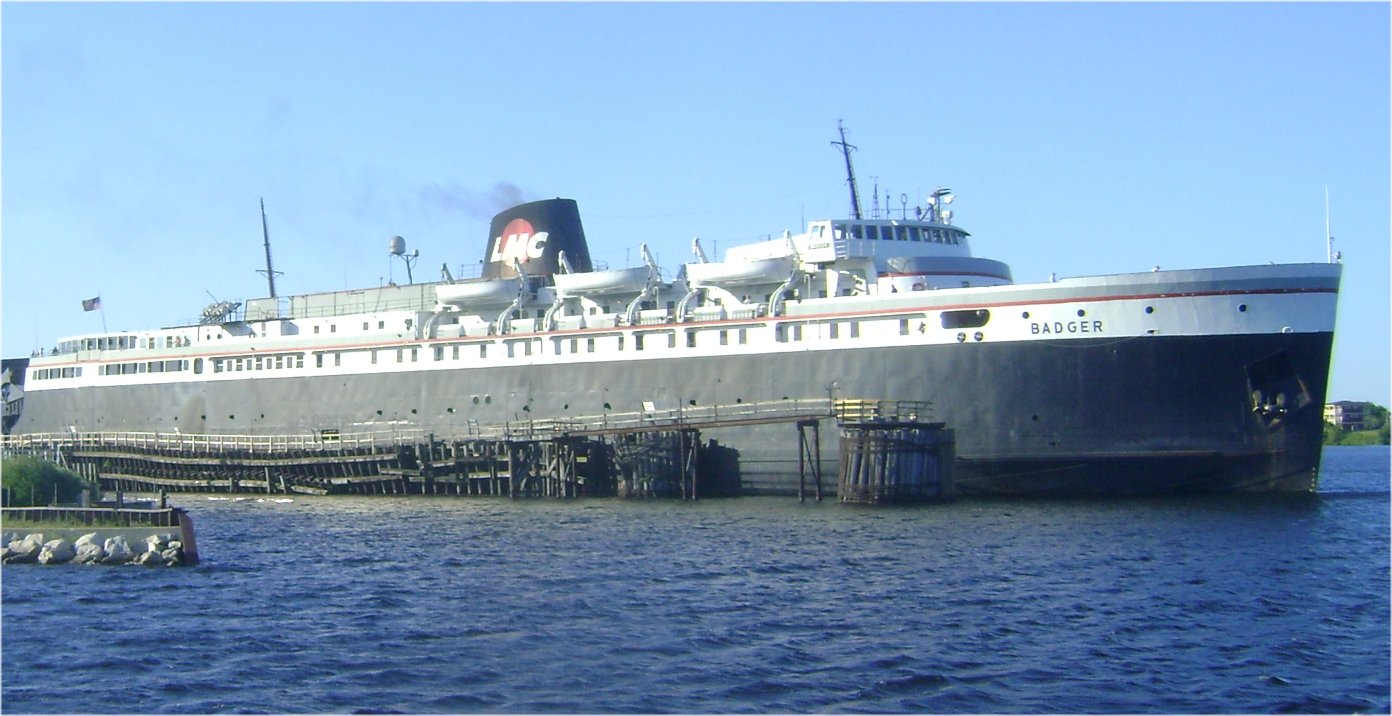
The SS Badger
The SS Badger is not merely a boat ride. Launched in 1952 and designated a National Historic Landmark by the Department of the Interior, it is the last coal-fired steamship operating in the United States, the last surviving example of the Great Lakes rail-and-car ferry design that shaped such vessels worldwide, and the last Great Lakes car ferry still in service. The 410-foot ship crosses Lake Michigan between Ludington and Manitowoc, Wisconsin, twice daily on a four-hour passage, carrying up to 620 passengers and 180 vehicles. It functions as actual transportation — travelers headed for Wisconsin can skip the drive around the bottom of the lake through Chicago traffic entirely — and as an experience in its own right for people with no particular need to reach Manitowoc.
Onboard the crossing is treated as a voyage rather than a shuttle. There are two restaurants, a movie, shopping, Badger Bingo, a video arcade, a children's playroom, and coloring contests, which collectively make the four hours pass considerably faster than the number suggests. For visitors who want the ship without the round trip to Wisconsin, the Badger also runs special two-hour cruises on themes including pirates, fireworks, and the rockin' fifties. Booking ahead is essential in summer for anyone bringing a vehicle.
Making It Work in Season
The central planning challenge in Ludington is that everything described above is well known. State park campground sites go quickly, and reservations for peak summer weekends should be made as far ahead as the system allows; lodging in town follows the same pattern. Day visitors should arrive early, particularly for the Lake Michigan beach parking, which fills by late morning on warm weekends and does not free up again until evening.
The compensating advantage is that this area works outside peak season better than most Michigan destinations. The lighthouse is open through October, the trails are at their best in autumn once the crowds thin, the Badger runs a season that extends past Labor Day, and the dune landscape is arguably more striking under low autumn light than under July haze. A visitor with schedule flexibility should treat September as the target month rather than settling for a contested week in midsummer.