In This Guide
The Riverwalk and Downtown Orchard Beach State Park The City Beaches The Forest Inland Season and ValueManistee made its money on white pine, lost the industry, and kept the buildings. What survives is one of the better-preserved Victorian downtowns on the Lake Michigan shore, sitting where the Manistee River meets the lake, with a mile-and-a-half riverwalk running behind the commercial district and a bluff-top state park two miles north. Add the Manistee National Forest spreading inland and several distinct public beaches within the city, and the result is a shoreline town that has managed to stay a working community rather than becoming purely a summer resort — quieter and considerably less expensive than the towns an hour north.
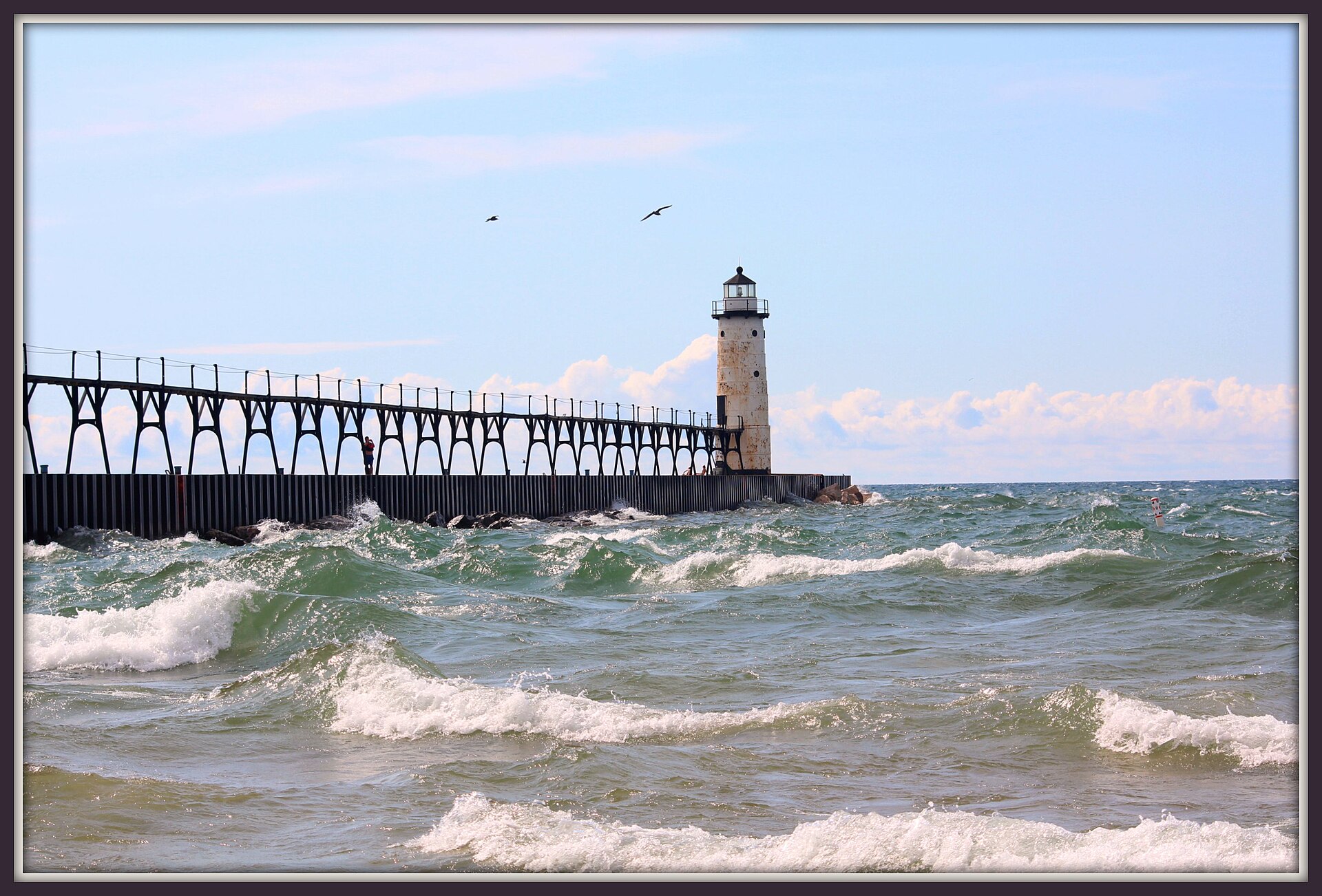
The Riverwalk and Downtown
The Manistee Riverwalk runs about a mile and a half along the river directly behind the downtown district, with mileage markers set every tenth of a mile and ramps at both ends making it fully accessible. It is the spine of the town's public space and the best introduction to how Manistee is put together — the river, the working waterfront, and the back of the commercial buildings all visible from one continuous path.
The downtown itself is the reason to linger. Manistee's lumber-era wealth produced a substantial Victorian commercial district, and enough of it survives intact to give the streets a coherence that partially-redeveloped downtowns lack. Shops and restaurants occupy the storefronts, and the town supports a live theater, a movie theater, and a casino — an unusual density of indoor options for a community this size, and a genuine advantage on a rainy Lake Michigan afternoon.
Orchard Beach State Park
Two miles north of downtown, Orchard Beach State Park sits on a bluff above Lake Michigan and delivers the panoramic water views that a shoreline-level park cannot. Hiking trails run along and down from the bluff, picnic areas take advantage of the elevation, and the campground makes it the obvious base for visitors who want to stay on the lake rather than in town.
The bluff-top siting is the park's defining characteristic and worth understanding before arriving. The views are exceptional; reaching the water itself requires a descent and a corresponding climb back. Visitors primarily interested in a beach day may prefer the city beaches, while those who want the vista, the trails, and a quieter campground will find the park the better choice. Many trips use both.
The City Beaches
Manistee maintains several distinct public beaches within the city, with First Street Beach and Fifth Avenue Beach the best known. Having more than one matters more than it sounds: parking and crowding concentrate at whichever beach is most convenient, and a visitor willing to drive a few extra blocks can generally find a quieter stretch of the same sand on a busy weekend.
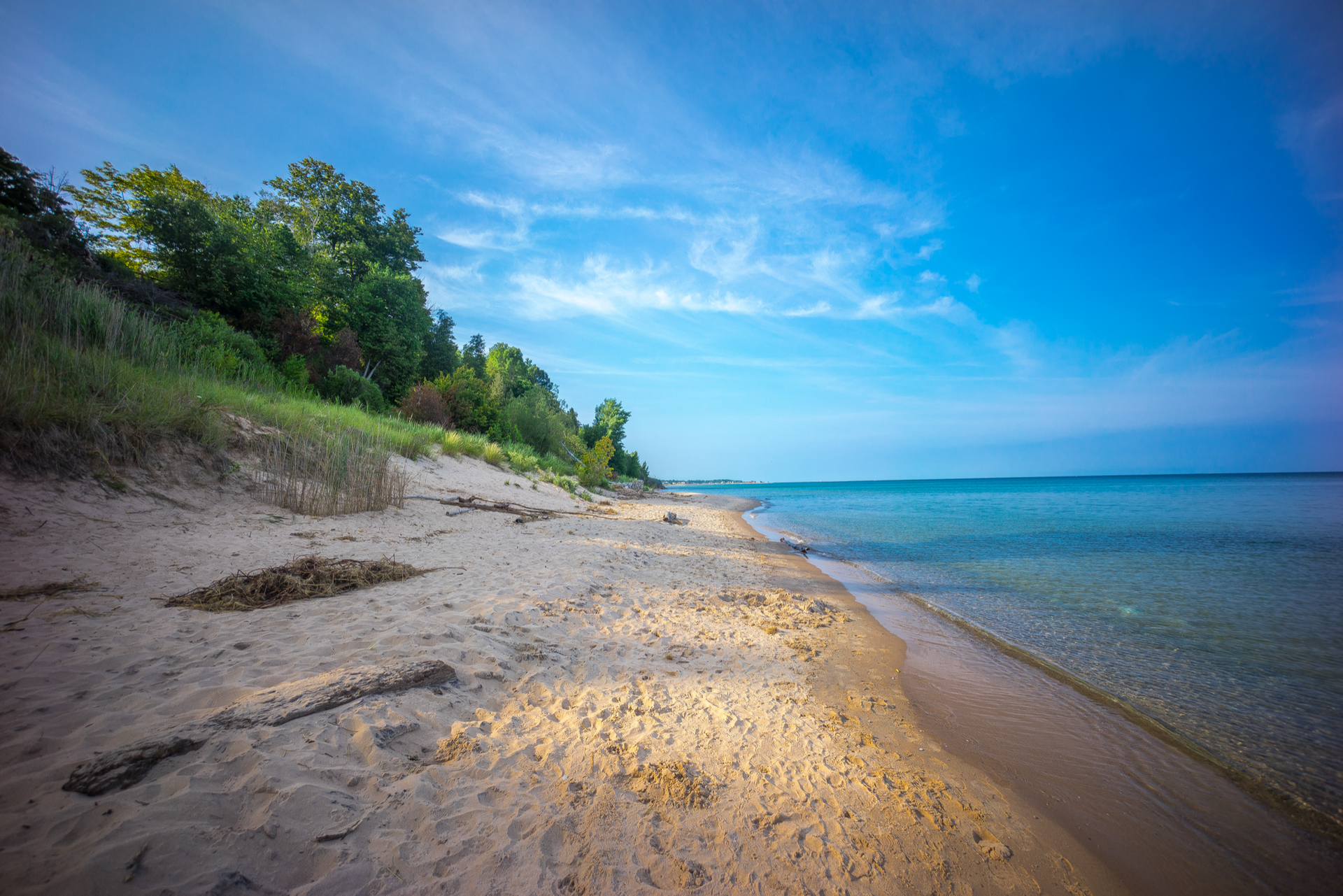
The water here is classic Lake Michigan — cold into early summer, genuinely swimmable by August, and prone to the wind shifts that make one afternoon flat and the next one rough. The beaches face west, which makes them sunset beaches, and that is when they are at their best. Anyone building an evening around it should check the forecast for clear western sky rather than simply for warmth.
The Forest Inland
East of town, the Manistee National Forest spreads across a large expanse of the western Lower Peninsula and supplies the trip's inland half — camping, hiking, and biking through country that sees a small fraction of the shoreline's visitation. For travelers who find beach towns limiting, this is the release valve, and the contrast between a Victorian downtown and genuine forest within a short drive is the area's strongest argument.
The forest also connects Manistee to the broader region. M-22 runs north from here along the shoreline toward Frankfort, Sleeping Bear, and the Leelanau Peninsula, which means Manistee functions as the southern gateway to one of Michigan's most celebrated scenic drives. Visitors basing here can take the northern route as a day trip and return to lodging that costs meaningfully less than anything in Leelanau.
Season and Value
Summer brings the beaches into full use and the town into its busiest weeks, though Manistee never reaches the congestion of the Leelanau towns to the north. Autumn is excellent here — hardwood color through the national forest, a downtown that stays open, and the shoreline at its emptiest. Winter quiets things considerably but leaves the indoor options running, which is more than many northern shoreline towns can say.
The consistent theme is value. Manistee offers a preserved Victorian downtown, a state park, multiple beaches, a national forest, and access to M-22 at prices well below the towns an hour north, and lodging is generally available without booking months out. For travelers who want the western shoreline without the resort economy attached to it, this is among the best remaining options in the Lower Peninsula.