In This Guide
The Sanctuary and Its Wrecks Seeing the Wrecks Without Diving The Great Lakes Maritime Heritage Center Rockport, Besser, and the Quarry Country Lighthouses, the River, and TownThe waters off Alpena hold one of the most significant collections of shipwrecks in the United States, and unlike most such places, they are genuinely accessible to people who do not dive. Thunder Bay earned the nickname Shipwreck Alley honestly — more than two hundred vessels have gone down in and around it, and nearly a hundred historic wrecks are protected within Thunder Bay National Marine Sanctuary. Lake Huron's cold fresh water has preserved them to a degree that saltwater never permits, and the sanctuary's shallow wrecks are visible from glass-bottom boats and from kayaks directly overhead. Add a 4,237-acre state recreation area with a quarry, sinkholes, and virgin pine just north of town, and Alpena supports a full week without a visitor ever driving more than forty-five minutes.
The Sanctuary and Its Wrecks
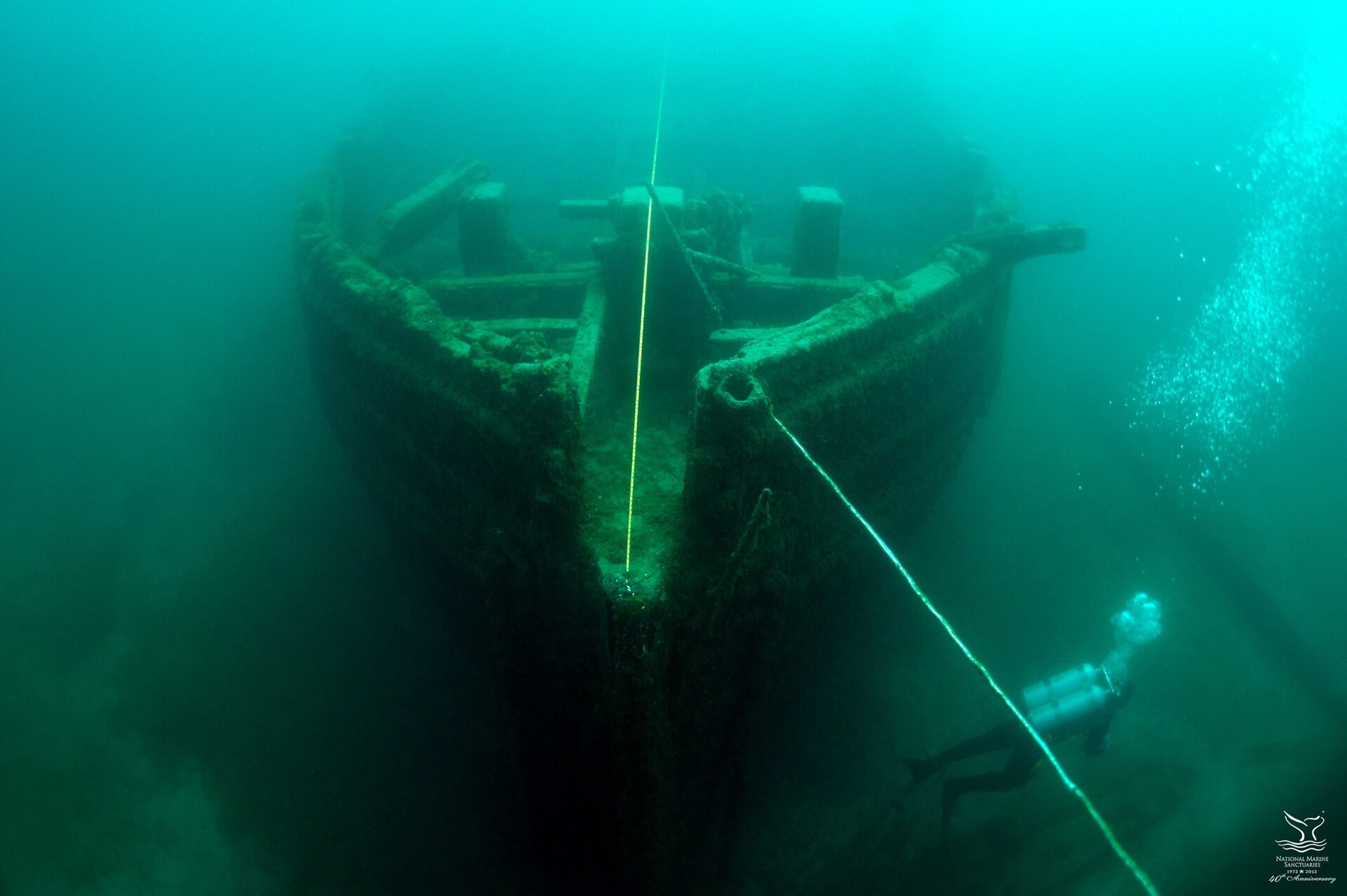
Thunder Bay National Marine Sanctuary protects a nationally significant collection of shipwrecks off the northeastern Michigan coast, and its growth tells the story of how seriously the resource has come to be taken. Michigan created a 290-square-mile underwater preserve here in 1981; that state preserve became a 448-square-mile national marine sanctuary in 2000; and a 2014 expansion enlarged it to 4,300 square miles, encompassing essentially all the water from the northeastern Michigan shore out to the international boundary with Canada. It remains one of the few national marine sanctuaries in fresh water.
What makes the collection nationally significant is not merely the number of wrecks but their range. The known vessels date from 1849 to 1966 and constitute a physical timeline of Great Lakes shipbuilding — wooden schooners, early steamboats, and modern steel-hulled freighters lying within the same body of water. Cold fresh water preserves wood and iron in ways that warm salt water simply does not, which means these are not eroded outlines in sand but recognizable ships, some with masts, rigging, and deck fittings still in place after a century and a half.
Seeing the Wrecks Without Diving
The sanctuary's defining feature for ordinary visitors is that a substantial number of its wrecks lie in water shallow enough to see from the surface. Glass-bottom boat tours run out of Alpena and use large viewing wells to put passengers effectively on top of the wrecks, and the clarity of the water does the rest — the phrase local operators use, diving the wrecks without getting wet, is close to literal on a calm bright day. For visitors who would never consider certification, this is the only realistic way to see a shipwreck in situ anywhere in the country.
Kayaking over the shallow wrecks is the other option, and it is a very different experience: slower, quieter, and closer to the water, with the wreck resolving underneath the hull as a paddler drifts across it. Certified divers, meanwhile, have access to the deeper portion of the collection, and the sanctuary is a genuine destination for Great Lakes wreck diving. All three modes depend heavily on weather — Lake Huron chop kills visibility and cancels tours — so building flexibility into which day the boat trip happens is the single most useful piece of planning advice for this trip.
The Great Lakes Maritime Heritage Center
The sanctuary's visitor center and shipwreck museum sits in downtown Alpena, and it is the right first stop for anyone who wants the boat tour to mean something. The Great Lakes Maritime Heritage Center houses exhibits on the local wrecks and Great Lakes maritime history generally, an auditorium, education areas, and — unusually for a museum open to the public — a working archaeological conservation laboratory, where material recovered from the lake is stabilized and studied.
The center is free to enter and easily absorbs a couple of hours. What it does best is supply the context that turns a shape underwater into a specific ship with a specific crew and a specific bad night, which is the difference between a boat ride and an experience. Visitors traveling with children will find it unusually well suited to them; the subject matter is inherently dramatic and the exhibits lean into that rather than apologizing for it.
Rockport, Besser, and the Quarry Country
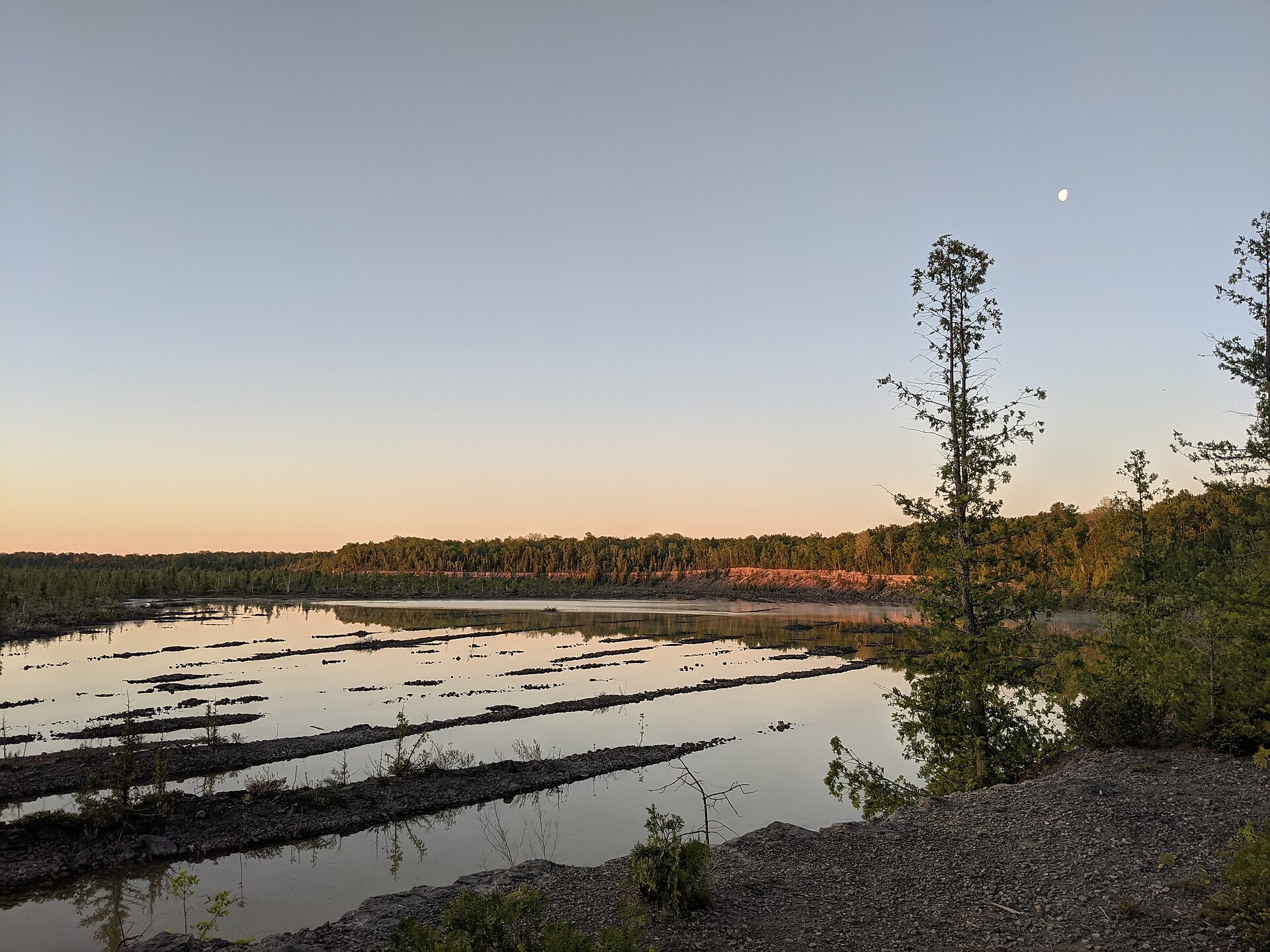
Just north of town, Rockport State Recreation Area spreads across 4,237 acres of Lake Huron shoreline in Alpena and Presque Isle counties, and it is one of the more genuinely unusual state properties in Michigan. The park contains a deep-water protected harbor, an abandoned limestone quarry of roughly three hundred acres, and a series of sinkholes formed where the underlying karst has collapsed. The quarry is the headline for many visitors: the exposed limestone is fossil-bearing, and collecting fossils there is a permitted and popular activity, which makes this one of the few places a family can go home with something they dug up themselves.
Beyond fossil hunting, Rockport supports hiking, mountain biking, horseback riding, and — thanks to distance from any significant light source — genuinely excellent stargazing. Paddlers can kayak out to the Portland shipwreck, which is marked with a floating buoy visible from the beach, putting a wreck within reach of anyone with a boat and calm conditions. The Besser Natural Area forms the park's northern section, reachable by trail or its own parking area, and protects one of Michigan's last remaining stands of virgin pine along with more than four thousand feet of Lake Huron shoreline, a ghost town, another shipwreck, and the Besser Bell Pathway running through it.
Lighthouses, the River, and Town
Alpena's maritime character extends well beyond the sanctuary. Alpena Light — also known as the Thunder Bay River Lighthouse — stands on the north breakwater at the harbor entrance, marking where the Thunder Bay River meets the bay; the current 1914 structure replaced wooden predecessors dating to 1877 and 1888. Offshore, Thunder Bay Island Light occupies the southeast tip of its island and ranks among the oldest operating lighthouses in Michigan, with a light first established in 1831 and the current tower dating to 1857. Together they bracket the harbor the wrecks were trying to reach.
Inland, the Thunder Bay River runs through town and offers paddling well upstream toward Hillman and the Montmorency County lake country, and the Second Avenue bascule bridge of 1939 spans it downtown. Within the city limits, at US-23 and Long Rapids Road, Island Park and Duck Park sit on part of Alpena's roughly 500-acre wildlife sanctuary — an unusually large protected area to find inside a small city, and an easy morning for visitors who want birds rather than boats. Alpena supports full services, which combined with everything above makes it one of the more self-sufficient bases in northern Michigan.