Rogers City sits on Lake Huron in Presque Isle County, a small city whose entire economic identity has revolved for more than a century around a single, almost incomprehensibly large industrial feature buried just outside town: a limestone quarry that has operated continuously since 1912 and still ranks, by most measures, as the largest of its kind anywhere on Earth. That quarry has brought the town both genuine, sustained prosperity and, on one catastrophic night in November 1958, a maritime tragedy so devastating to the local population that its memory remains woven into the community's identity nearly seven decades later.
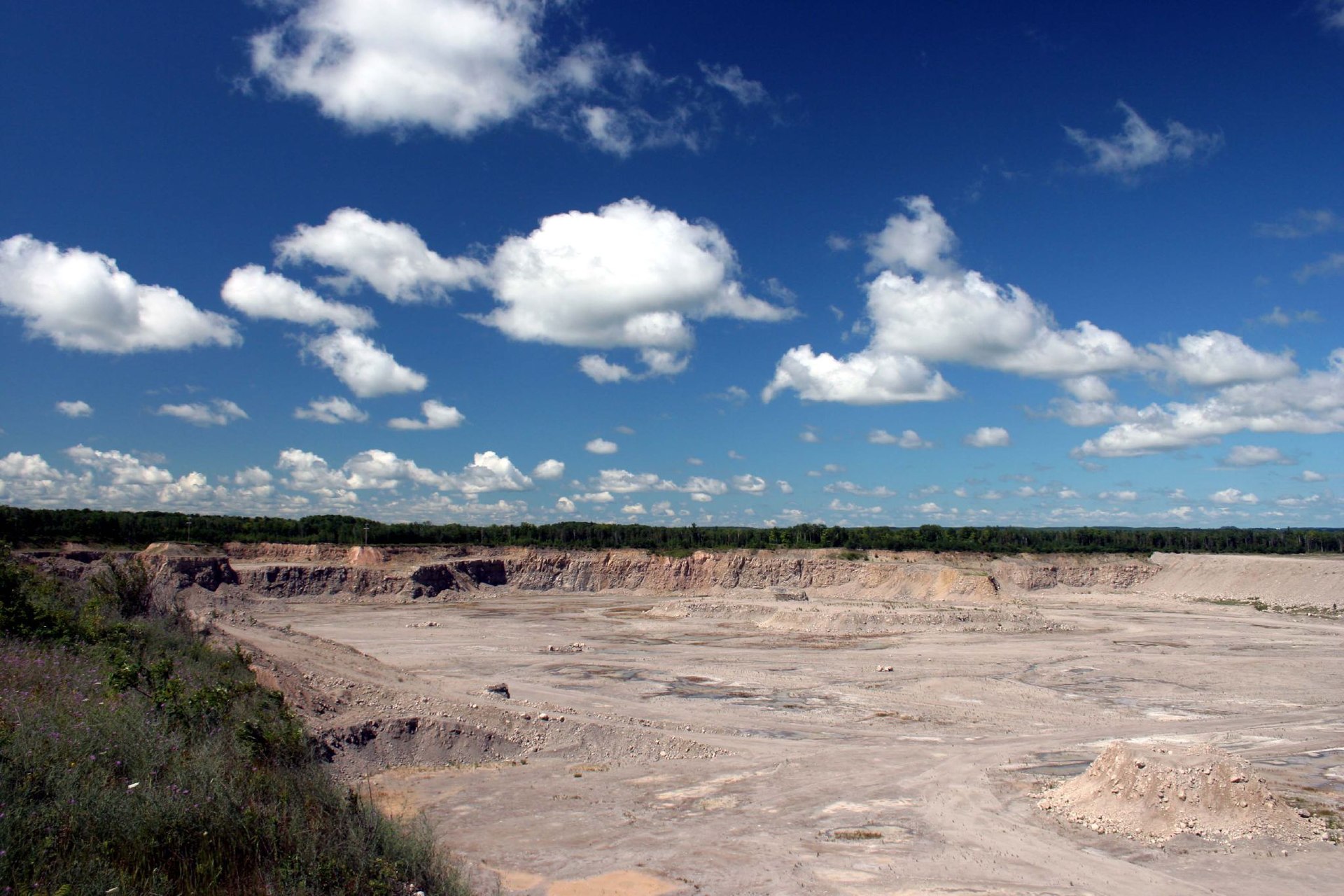
The World's Largest Limestone Quarry
Commercial evaluation of the limestone deposits around Rogers City began as early as 1909, and the Michigan Limestone and Chemical Company formally organized the following year, though full production did not commence until 1912, launching an operation that would eventually grow into the largest limestone quarry in the world by total output. Industrialist Carl D. Bradley purchased the company alongside United States Steel Corporation in 1920, and U.S. Steel assumed sole ownership following Bradley's death in 1928, folding the operation into its industrial empire as a dedicated division by 1951.
The quarry, now operated by the Belgium-based Carmeuse Group, continues to produce roughly ten million tons of limestone annually, an almost unfathomable volume of raw material extracted year after year from deposits that stretch underground along the Lake Huron shoreline near Alpena and south toward Rogers City itself. That relentless production scale has sustained Rogers City's economy across more than a century of operation, making the quarry not merely a notable local landmark but the entire reason the modern city exists in anything like its current form.
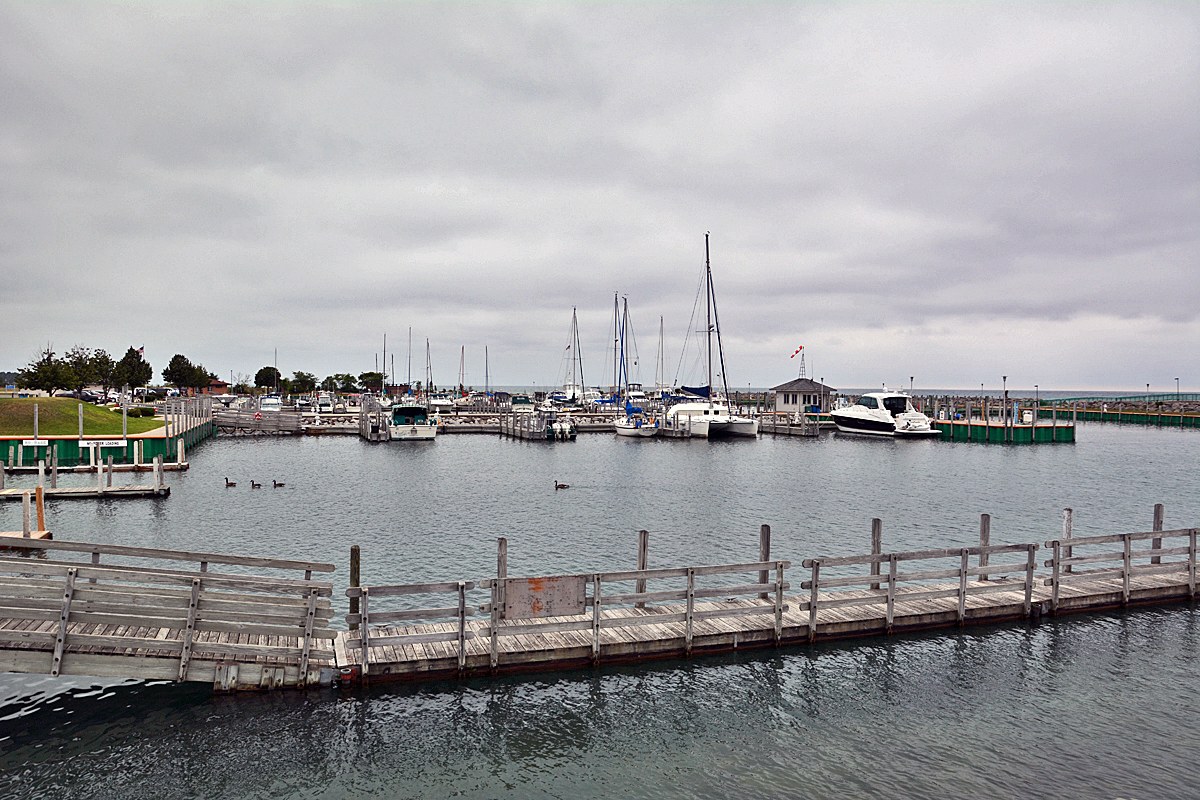
The Night the Bradley Went Down
The freighter that carried the founder's name, the SS Carl D. Bradley, spent decades hauling limestone out of Rogers City's Calcite quarry until a catastrophic November gale on the eighteenth of November, 1958, split the thirty-one-year-old vessel in half amid sixty-five mile-per-hour winds and waves reported at twenty-five feet, sending her to the bottom of Lake Michigan while she was en route home for a routine hull inspection. Thirty-three of the ship's crew died in the disaster, and because the Bradley was so thoroughly a Rogers City institution, twenty-three of those lost sailors called the town home, meaning the tragedy struck nearly every extended family and social circle in a community of Rogers City's modest size within the span of a single night.
Only two crew members survived, clinging to a life raft through sixteen hours of freezing lake water before a Coast Guard rescue finally reached them, and subsequent investigation attributed the sinking largely to structural fatigue in the ship's aging steel hull after three decades of hard service. The disaster remains one of the defining events in Rogers City's collective memory, commemorated through local museum exhibits and annual remembrance gatherings that treat the Bradley's loss not as distant maritime trivia but as a genuinely personal wound the town has carried, and honored, for generations since.