In This Guide
Elk Country: The Pigeon River Country State Forest Clear Lake State Park and the Water Around It Paddling and Fishing the Thunder Bay River Atlanta: The Elk Capital of Michigan Sno*Drift: Rally Racing on Frozen Back Roads Lewiston: Golf, Morels, and Timberfest Planning an Unhurried Long WeekendThere is a stretch of northeastern Michigan where the road signs thin out, the cell service grows unreliable, and the forest closes in on both shoulders of the highway — and that, for a certain kind of traveler, is precisely the appeal. Montmorency County occupies a quiet quarter of the northern Lower Peninsula, bounded by no Great Lake and bisected by no interstate, and its two anchor communities, Lewiston and Atlanta, sit barely twenty minutes apart along a corridor of jack pine, hardwood ridge, and glacial lake. What the county lacks in shoreline it repays in water of another kind: Lewiston alone claims twenty-two lakes within its orbit, and the Thunder Bay River gathers itself here before running east toward Lake Huron. This is also elk country — genuine, free-roaming elk country, one of the largest such herds anywhere east of the Mississippi — and the animals are the region's undisputed headline attraction. What follows is a guide to filling several unhurried days within a thirty-to-forty-five-minute radius of these two small towns, from state park shorelines and rally-car weekends to morel woods and a golf resort that would not look out of place in a far more famous zip code.
Elk Country: The Pigeon River Country State Forest
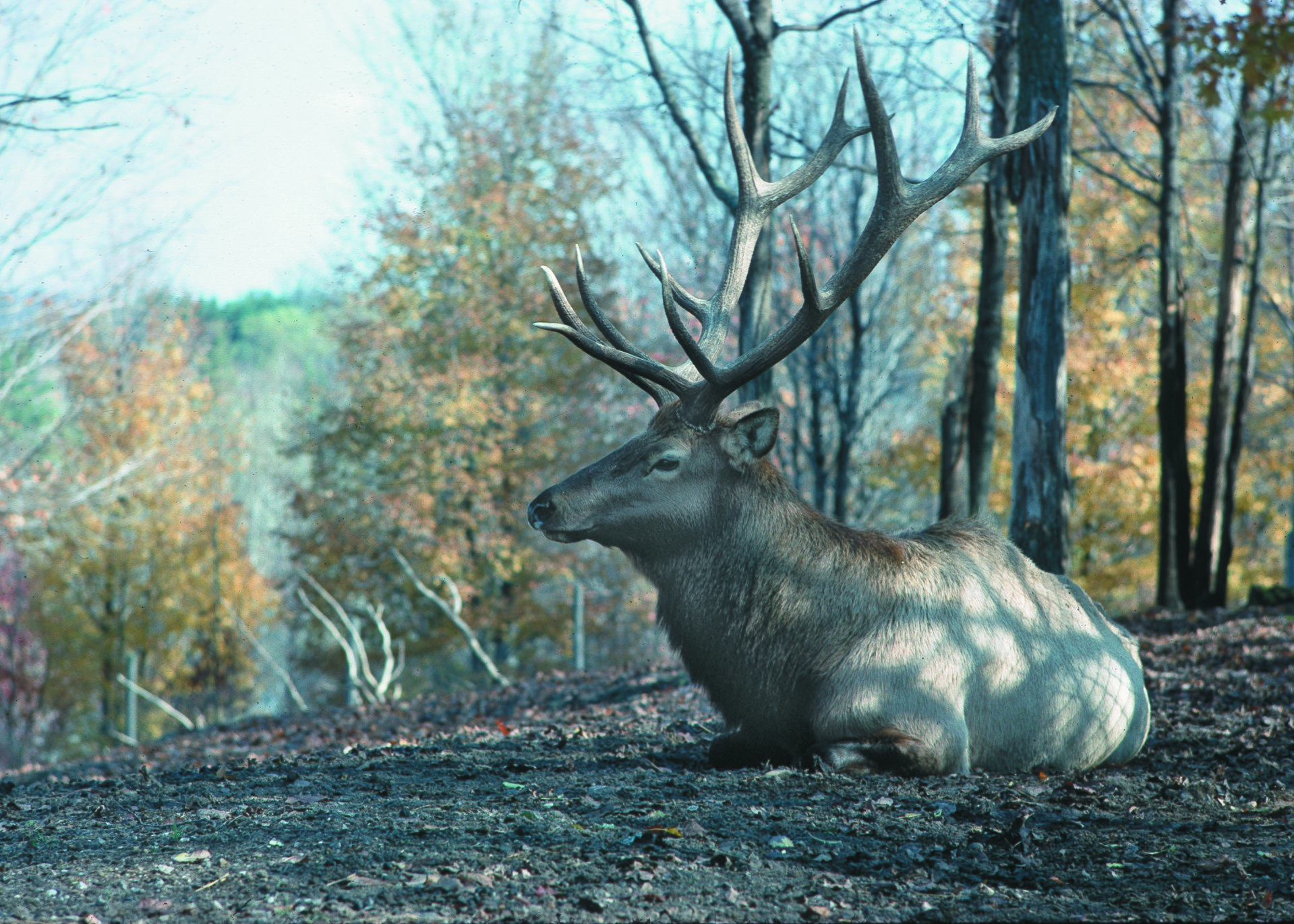
The single most compelling reason to point a car toward Montmorency County is the chance to stand in the open at dusk and hear a bull elk bugle across a meadow. Michigan's elk herd is not a fenced attraction or a game farm; it is a genuinely wild population roaming the southern reaches of Cheboygan, Otsego, and Montmorency counties, and the Michigan Department of Natural Resources estimated roughly 1,150 animals statewide as of early 2026. The heart of that range is the Pigeon River Country State Forest, a tract known affectionately and accurately as "the Big Wild," where the Department of Natural Resources maintains thirteen designated elk viewing areas expressly for visitors who want a reasonable chance of seeing the animals without trespassing or harassing them. These are not blinds or platforms so much as parking areas positioned at the edges of openings where elk are known to feed, and their effectiveness depends almost entirely on the visitor's willingness to arrive early, sit still, and wait.
Timing matters more than luck. The most reliable window is the September-to-early-October rut, when bulls are vocal, visible, and considerably less cautious than usual, and the bugling carries across the clearings in a sound that surprises first-time listeners with its strange, whistling pitch. A second and quieter window opens from late April through mid-May, when elk feed actively through daylight hours on new green growth and are far easier to spot than during the leaf-heavy midsummer. Dawn and the last hour before dark are the productive times in either season; midday visits to the same meadows tend to produce nothing but birdsong. Bring binoculars, keep well back, and resist the impulse to approach — these are large wild animals, and the bulls in particular are unpredictable during the rut.
Clear Lake State Park and the Water Around It
Clear Lake State Park covers roughly 290 acres in Montmorency County and functions as the area's most accessible base of operations for anyone who would rather paddle than drive. The park occupies a substantial share of the lake's shoreline, and the water lives up to the name — clarity here is the sort that lets a paddler track the bottom contours for a surprising distance from shore. The lake is modest enough in size that a reasonably fit paddler can trace its full perimeter in a couple of hours, which makes it an ideal introduction for families or for anyone whose kayaking experience is limited. Paddlesport rentals are available on site, covering canoes, kayaks, stand-up paddleboards, and rowboats, so there is no requirement to arrive with a roof rack and a plan.
Beyond the water, the park maintains hiking and mountain biking trails, and its campground is the most straightforward overnight option for visitors who want to stay inside the recreation area rather than commute from town. The broader Montmorency landscape offers considerably more water than one park can contain: Lewiston sits amid twenty-two lakes, with public access available on Avery Lake, Tee Lake, and East Twin among others, while East and West Twin Lake, Big Bear Lake, Little Wolf Lake, Moon Lake, and Snyder Lake round out the roster of named destinations. Twin Lakes Marina serves boaters working the Twin Lakes system and offers both indoor and outdoor storage, which is a practical consideration for anyone contemplating a longer stay or a seasonal return.
Paddling and Fishing the Thunder Bay River
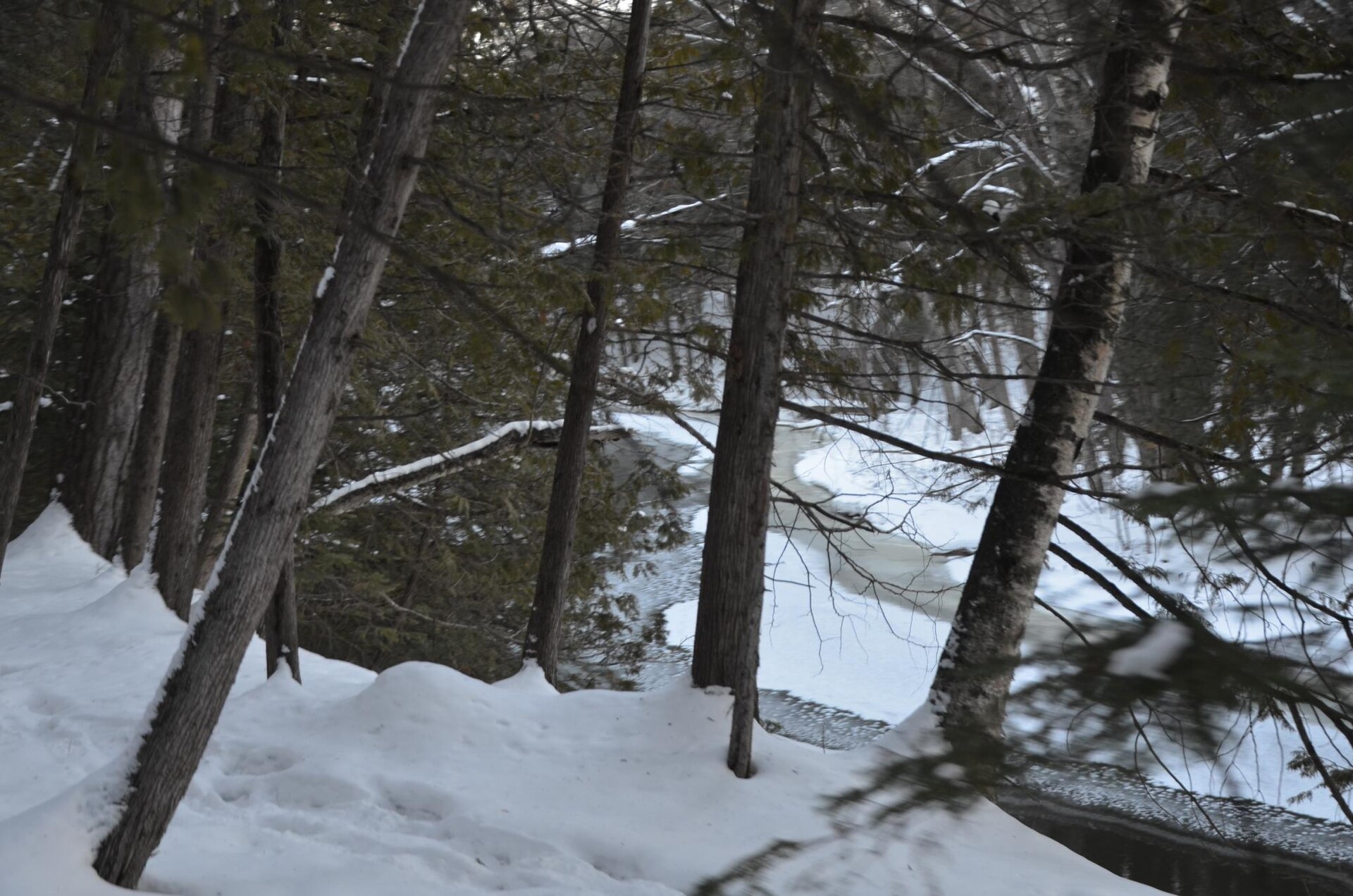
The Thunder Bay River gathers in Montmorency County and runs eastward, eventually emptying into Thunder Bay on Lake Huron near Alpena, and the upper stretches within easy reach of Atlanta and Hillman offer some of the least-crowded flatwater and light-current paddling in the northern Lower Peninsula. The Thunder Bay River State Forest Campground sits directly on the bank and provides water access from every campsite, an arrangement that makes multi-day paddling trips unusually simple to stage — there is no shuttling gear from a distant parking area to a launch. Anglers work the same water for trout and warmwater species, and the river's relative obscurity compared with Michigan's marquee trout streams is precisely what keeps it quiet on a summer weekend.
Paddlers should know the character of the water before committing to a stretch. Maps identify a set of rapids near the community of Long Rapids as Speehley Rapids, though experienced paddlers note that the descriptive name "long rapids" captures the reality more honestly — this is an extended run of moving water rather than a single dramatic drop. The Hillman Dam is another feature to plan around, as are the several impoundments along the river's branches. For a shorter leg-stretch off the water, the Wah-Wah-Tas-See Pathway runs about a mile and a half and can be picked up directly from the Thunder Bay River State Forest Campground, making it a natural companion to a morning on the river.
Atlanta: The Elk Capital of Michigan
Atlanta wears its designation openly, and it comes with genuine legislative backing: in 1986 the Michigan Legislature formally named the community the Elk Capital of Michigan, a title the town has built a considerable share of its identity around in the decades since. The village sits in Briley Township along the Thunder Bay River, on M-32 between Gaylord to the west and Alpena to the east, and it straddles the 45th parallel — the halfway point between the equator and the North Pole, a piece of geographic trivia that northern Michigan communities tend to advertise with some enthusiasm. It is a small place, and visitors expecting a resort town will need to recalibrate; Atlanta's appeal is as a base camp and a service center for a landscape that is overwhelmingly forest.
The town's calendar peaks in late September, when the Annual Elk Festival takes over the streets for the last full weekend of the month. The festival leans into small-town spectacle without apology: a parade, chainsaw carvers working blocks of pine into bears and eagles, a pet parade, a bed race, a karaoke contest, and a long roster of vendors. For visitors who want to pair elk viewing with the town's celebration of the animal, the timing is fortuitous — the festival lands squarely inside the rut, which is also the best viewing window of the year. Wine enthusiasts will find the area connected to the broader Sunrise Side Wine and Hops Trail, which links tasting rooms across Michigan's northeastern counties.
Sno*Drift: Rally Racing on Frozen Back Roads
Montmorency County's most unexpected claim to fame arrives in the depths of winter, when purpose-built rally cars come sideways through the snow on the county's gravel back roads at speeds that seem frankly implausible given the conditions. Sno*Drift is a two-day national stage rally headquartered in Atlanta, run each year in late January or early February, and it draws competitors and spectators from well beyond Michigan. The event was first run in 1973, went dormant for a stretch of years, and was restarted in its current national format in Montmorency County in 1997, since which point it has become a fixture of the American rally calendar and one of the few genuine winter motorsport spectacles in the eastern United States.
What distinguishes Sno*Drift from comparable winter rallies elsewhere in the world is a quirk of Michigan law: studded tires are prohibited, which strips away the grip that competitors at Scandinavian and Canadian winter events take for granted. The result is a rally run on snow and ice with conventional rubber, demanding a delicacy of throttle and steering input that makes the event notoriously difficult and correspondingly compelling to watch. Spectators should dress for genuine northern Michigan cold, arrive at designated viewing areas rather than improvising a roadside spot, and plan lodging well in advance — the county's limited room inventory fills quickly on rally weekend.
Lewiston: Golf, Morels, and Timberfest
Lewiston presents a different face than Atlanta does. Where Atlanta is a crossroads service town, Lewiston has grown up around its lakes and around Garland Lodge and Resort, an unexpectedly ambitious property whose four championship golf courses, dining, and lodging would not seem out of place in a far more heavily marketed part of the state. For golfers, the resort alone justifies the drive north, and the surrounding terrain — rolling, wooded, glacially sculpted — gives the courses considerably more character than the flat parkland layouts common further south. The town's paved roads, wide shoulders, and famously light traffic also make the loop routes around the lakes a genuine pleasure on a road bike, an activity that goes underappreciated in a region better known for motorized recreation.
The community's calendar brackets the warm season with two events worth planning around. Each spring, Lewiston hosts a Morel Mushroom Festival, timed to the brief and much-anticipated window when morels emerge in the surrounding hardwoods — a pursuit that draws serious foragers north every May and generates a secrecy about productive ground that borders on the comic. In August, Lewiston Timberfest fills the town with live entertainment, a food court, chainsaw carvers, crafters, and a three-on-three basketball tournament, a combination that captures the unpretentious character of northern Michigan summer festivals about as well as anything in the region.
Planning an Unhurried Long Weekend
The practical case for Montmorency County is that everything described above sits within a thirty-to-forty-five-minute drive of either Lewiston or Atlanta, which means a visitor can establish a single base and never face a punishing daily commute. A well-shaped long weekend might open with an evening elk-viewing run into the Pigeon River Country, devote a full day to Clear Lake State Park and the surrounding water, spend a third on the Thunder Bay River with the Wah-Wah-Tas-See Pathway as an afternoon stretch, and reserve the balance for golf at Garland or a slow circuit of the Lewiston lakes by bicycle. Lodging runs to cabins, small motels, resort rooms, and state forest campgrounds rather than chain hotels, and reservations matter far more during festival and rally weekends than they do in an ordinary July week.
Visitors should arrive prepared for the county's defining characteristic, which is genuine remoteness. Cell coverage is patchy across much of the forest, services thin out quickly once the pavement ends, and the two-track roads that thread the state forest can deteriorate rapidly in wet weather or drift shut in winter. Carry a paper map or downloaded offline navigation, fuel up before heading into the Pigeon River Country rather than after, and check current conditions with the Department of Natural Resources before committing to a remote campground in shoulder season. Handled with a little forethought, that remoteness stops being an obstacle and becomes the entire point of the trip.