In This Guide
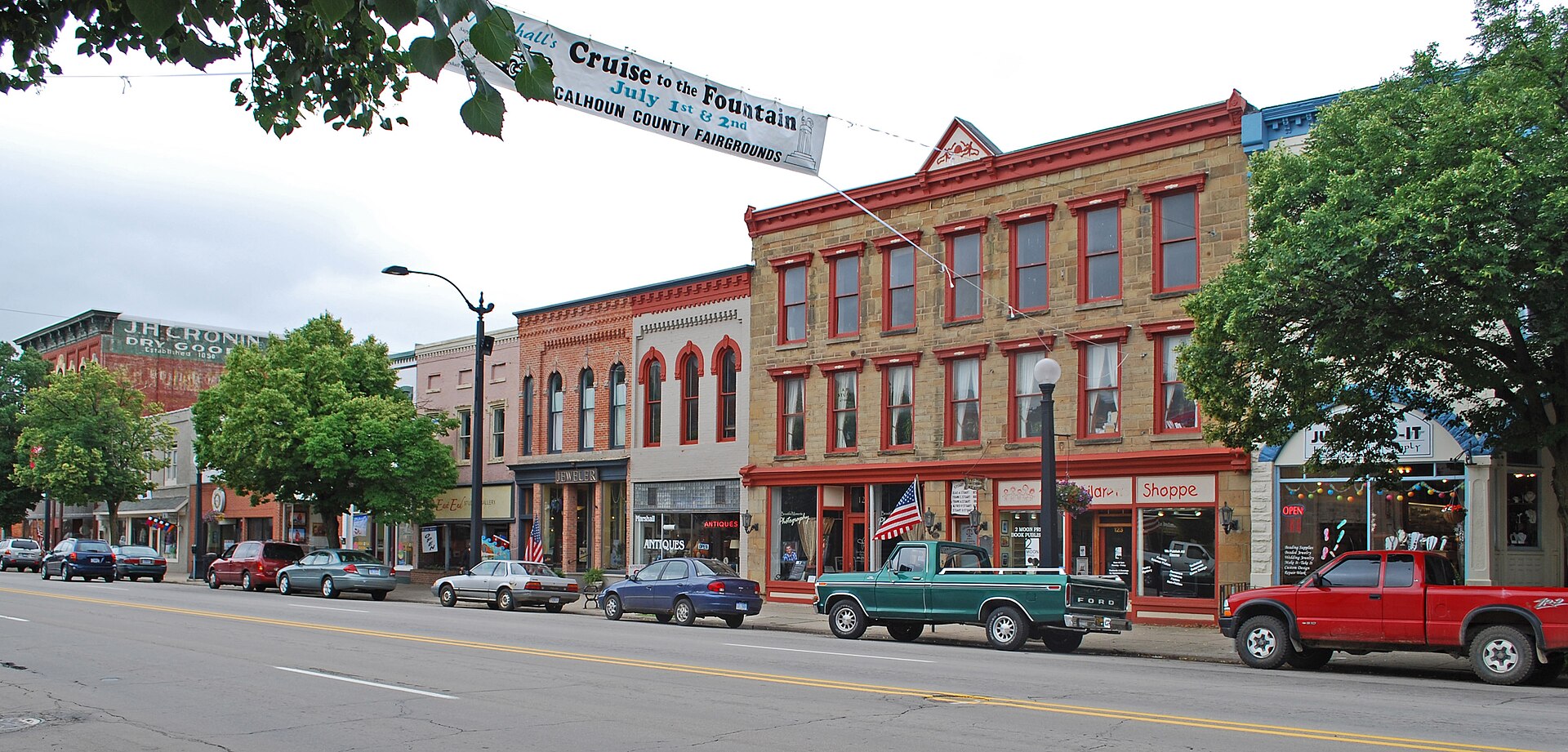
A Historic District on a National Scale The Honolulu House The American Museum of MagicMarshall came within a single legislative vote of becoming the capital of Michigan in 1847, and the town's founders were confident enough in that outcome that they had already built a Governor's Mansion in anticipation, a building that still stands today as a slightly wistful monument to the political near-miss that instead sent the capital to the small settlement of Lansing. What Marshall got instead of the capital was time, and lots of it: spared the kind of aggressive redevelopment that state capitals tend to attract, the town's downtown and residential streets have survived into the present as one of the most completely intact collections of nineteenth-century architecture anywhere in the country, a distinction formal enough that the National Trust for Historic Preservation has recognized Marshall's historic district as one of the largest of its kind in the state.
A Historic District on a National Scale
Marshall's historic district encompasses several hundred structures spanning the full range of nineteenth-century American architectural styles, from Greek Revival to Gothic Revival to Italianate, an unusually complete architectural timeline preserved almost entirely by the accident of the town's economy stalling out at a comfortable, unhurried pace rather than booming into the kind of growth that tends to demolish old buildings to make way for new ones. Walking the residential streets surrounding downtown feels less like visiting a museum exhibit and more like stumbling into a town that time simply never got around to modernizing, since these remain genuinely occupied private homes rather than static period displays, giving the whole district a lived-in authenticity that more curated historic recreations elsewhere often struggle to match.
The scale of preservation here is significant enough that Marshall's historic district ranks among the largest such districts in Michigan, and architectural historians and preservation groups regularly cite the town as a case study in how a mid-sized Midwestern community can retain its nineteenth-century character largely by virtue of not having grown quickly enough to need to tear any of it down.
The Honolulu House
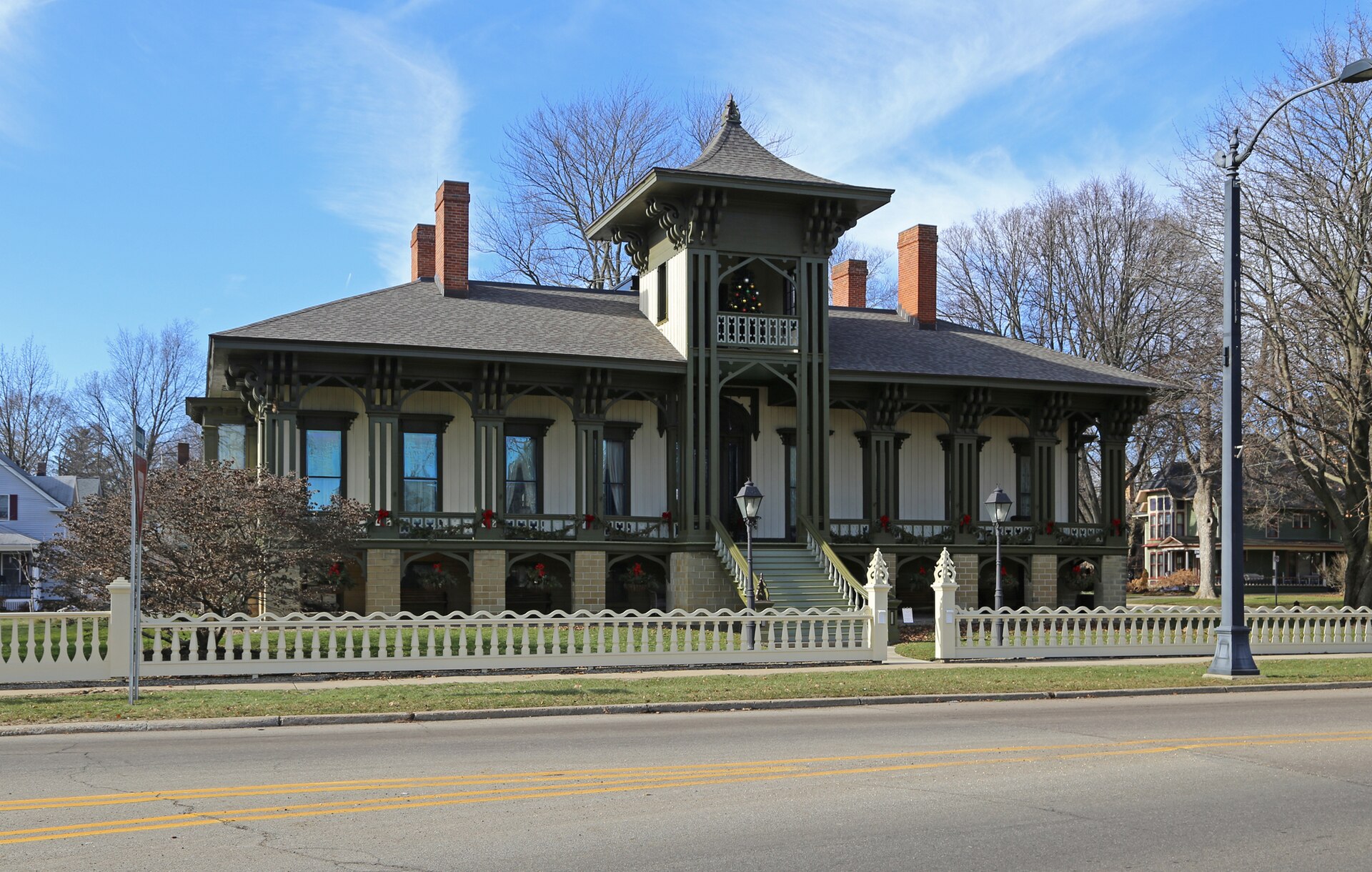
The single strangest building in a town full of noteworthy architecture is unquestionably the Honolulu House, an 1860 mansion built by a Michigan judge who had previously served as United States consul to the Kingdom of Hawaii, and who returned home apparently so enamored with Polynesian architectural style that he built himself a home featuring a broad wraparound veranda, a steeply pitched roof reminiscent of Hawaiian design, and interior murals depicting tropical scenes entirely unlike anything else found in nineteenth-century southern Michigan. The house now operates as a museum run by the local historical society, and its sheer incongruity, a genuine attempt at tropical island architecture dropped into a Michigan winter climate, makes it one of the more purely surprising small-museum visits available anywhere in the state.
The interior murals, restored over the decades since the home's construction, remain the house's most talked-about feature, their depictions of palm trees and island scenery creating a genuinely disorienting contrast with the snow piled outside the windows during a typical Michigan winter visit.
The American Museum of Magic
Marshall is also, somewhat improbably, home to the American Museum of Magic, a collection of magic and stage-illusion memorabilia assembled by a local collector over decades and housed in a downtown storefront, its holdings ranging from vintage playbills to actual illusion props once used by some of the twentieth century's most significant stage magicians. The museum operates on a considerably more limited schedule than Marshall's larger historic attractions, but for visitors with any interest in the history of stage magic, it represents one of the more substantial collections of its kind open to the public anywhere in the country, a genuinely unexpected specialty museum to find tucked into a small Michigan town otherwise defined by its nineteenth-century residential architecture.