In This Guide
Why Grapes Grow Here At All The Old Mission Peninsula The Leelanau Peninsula Tasting Practicalities When to ComeBest Time to Go
June – September, with harvest in late September/October
Tasting rooms on both the Old Mission and Leelanau peninsulas are open year-round, but the growing-season views and outdoor seating make June through September the most pleasant window. Visit in late September or October to catch the actual grape harvest.
Two long fingers of land reach north into Lake Michigan on either side of Traverse City, and between them they grow the majority of Michigan's wine grapes. The Old Mission Peninsula and the Leelanau Peninsula are each a designated American Viticultural Area, and together they support more than forty wineries within a short drive of a single base — a concentration that puts northern Michigan in genuinely unexpected company. The reason is the water. Both peninsulas are narrow enough that Lake Michigan and Grand Traverse Bay moderate temperatures on all sides, delaying spring budding and extending autumn ripening in a way that makes cool-climate viticulture possible at a latitude that should not really allow it.
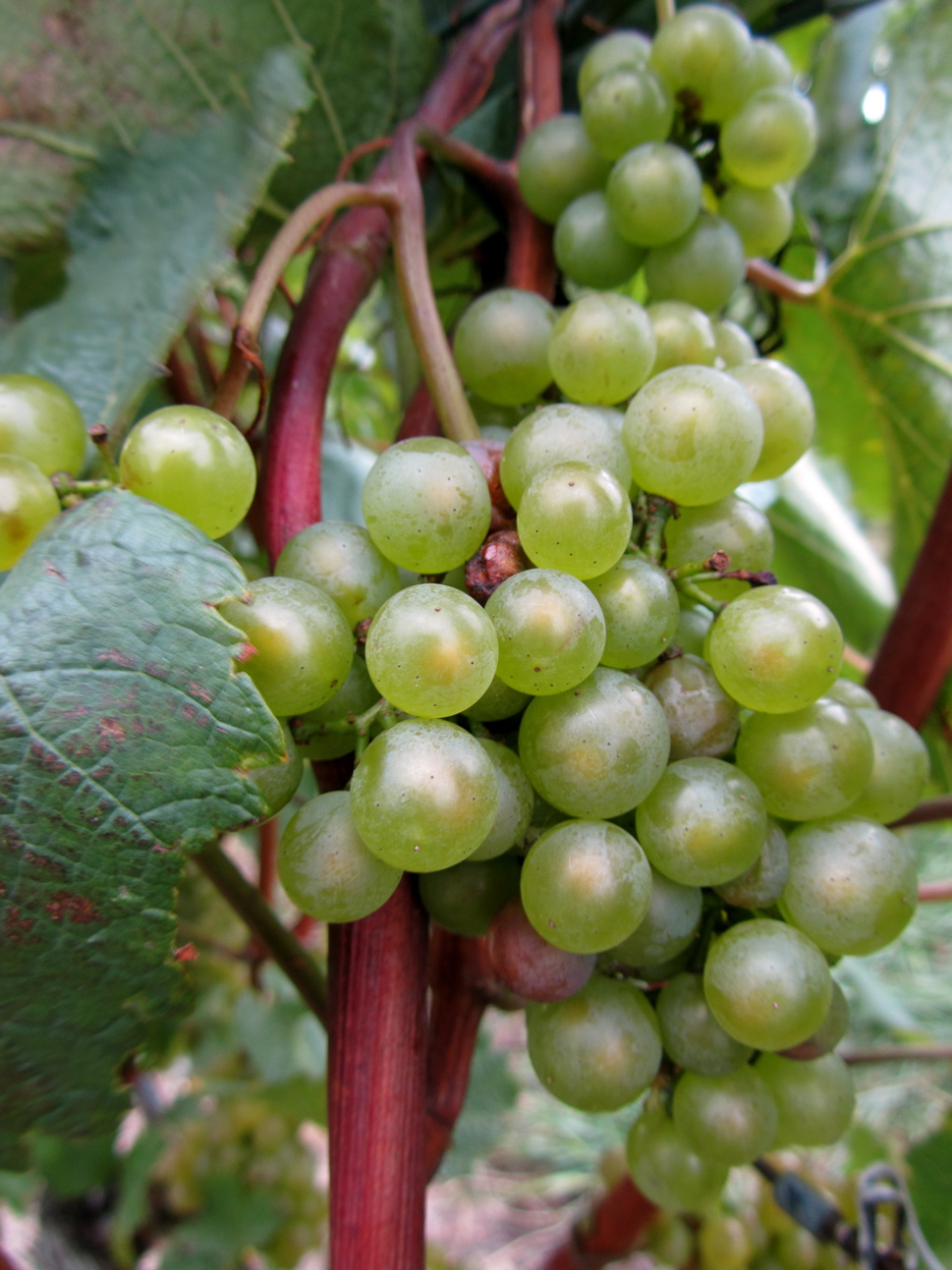
Why Grapes Grow Here At All
The 45th parallel runs through this country, and northern Michigan shares that latitude with several of Europe's great cool-climate wine regions — a fact local marketing has never been shy about. Latitude alone would not be enough, though. What actually makes the two peninsulas viable is their shape: narrow strips of land almost surrounded by deep water that holds its temperature far more stubbornly than air does. In spring that mass of cold water delays budbreak past the worst of the frost risk, and in autumn it holds warmth into October, stretching the ripening season on the far end.
The result is a region built on cool-climate varieties rather than the heavy reds that dominate warmer growing areas. Riesling in particular has become the signature grape, along with other aromatic whites and lighter reds suited to a short season. Visitors arriving expecting California-style bottles will find something quite different and considerably better matched to the local food — and the two peninsulas together now grow the bulk of the state's wine grapes, which makes this the center of the Michigan industry rather than a curiosity on its edge.
The Old Mission Peninsula
Old Mission is the smaller and more concentrated of the two, running about nineteen miles north from Traverse City with roughly ten wineries strung along it. That compactness is its great advantage: a visitor can work the whole peninsula in a day without significant driving between stops, and the road runs high enough in places to give water views on both sides at once — Grand Traverse Bay's east and west arms visible simultaneously from the ridge.
The scale makes Old Mission the right choice for a first visit or a short one. Ten wineries is a manageable number to comprehend rather than an overwhelming catalog, the distances are short enough that a designated driver has an easy job, and the peninsula's cherry orchards and farmland fill the gaps between tasting rooms with the agricultural landscape that gave the region its identity long before wine did. For visitors with one afternoon, this is the peninsula to spend it on.
The Leelanau Peninsula
Leelanau is the larger proposition — more than twenty wineries spread across a peninsula substantially bigger than Old Mission, which means more choice and more driving between stops. It cannot be exhausted in a day and should not be attempted that way. The compensation is variety: the wineries here range from small operations to substantial estates, and the surrounding countryside includes the villages of Suttons Bay, Leland, and Northport along with the northern reach of Sleeping Bear Dunes National Lakeshore.
That combination is what makes Leelanau a full vacation rather than a wine tour. A visitor can spend a morning at Fishtown in Leland, an afternoon on the wine trail, and an evening watching the sunset from a Lake Michigan beach — all within the same peninsula. The M-22 highway loops around the whole thing, which means the wine trail and one of Michigan's most celebrated scenic drives are the same road for much of their length.
Tasting Practicalities
Every tasting room in the region welcomes walk-ins, which makes spontaneous touring entirely feasible — a significant contrast with regions where appointments are mandatory. Larger groups are a different matter, and several wineries recommend reservations for parties of any size; calling ahead when traveling with more than a few people avoids an awkward arrival. Peak summer weekends and the autumn harvest period are the busiest, and tasting rooms that feel relaxed on a Tuesday in June can be genuinely crowded on a Saturday in September.
The transportation question deserves real thought rather than optimism. Multiple tour and shuttle companies operate in the area precisely because the alternative — driving between tasting rooms all afternoon — puts visitors in an obvious bind. Hiring a shuttle, designating a driver, or basing somewhere within walking distance of a cluster are all sensible; improvising is not. Traverse City itself sits at the base of both peninsulas and makes the natural home base, with lodging, restaurants, and the services that neither peninsula supplies in quantity.
When to Come
Late summer and early autumn are the obvious window. Harvest brings the vineyards to life, the weather is reliable, and the surrounding orchards and farm stands are at their peak — but this is also when the region is busiest and most expensive, and reservations for lodging should be made well ahead. Spring and early summer offer quieter tasting rooms and lower prices at the cost of less activity in the vineyards themselves.
Winter is the region's genuine secret. A number of tasting rooms stay open through the cold months, the crowds vanish entirely, and the experience shifts from touring to lingering — which is arguably what tasting rooms are better suited to anyway. Snow on the vine rows and the bay is a legitimately beautiful thing, and visitors willing to accept that some businesses keep reduced winter hours will have the peninsulas very nearly to themselves. Anyone who has only seen this country in August should try it in February once.