In This Guide
The Man and the Road The Lake Michigan Overlook The Other Eleven Stops Access and SeasonBest Time to Go
April – November, 9am to 30 minutes past sunset
The drive closes to cars for winter (it becomes a ski trail instead) and reopens each spring. Fall color along the route, especially from the Lake Michigan Overlook at Stop 9, typically peaks in the same late-September-to-mid-October window as the rest of Northern Michigan.
A lumberman named Pierce Stocking spent his working life in the woods of northwest Michigan and became convinced that other people ought to be able to see what he saw from the top of the dunes. So he built a road to the view. The drive he laid out opened in the 1960s, has been maintained by the National Park Service since 1967, and now runs 7.4 miles through Sleeping Bear Dunes National Lakeshore with twelve numbered stops — including an overlook standing 450 feet directly above Lake Michigan. It is the shortest route on any list of Michigan's great drives and, mile for mile, unquestionably the most spectacular.
The Man and the Road
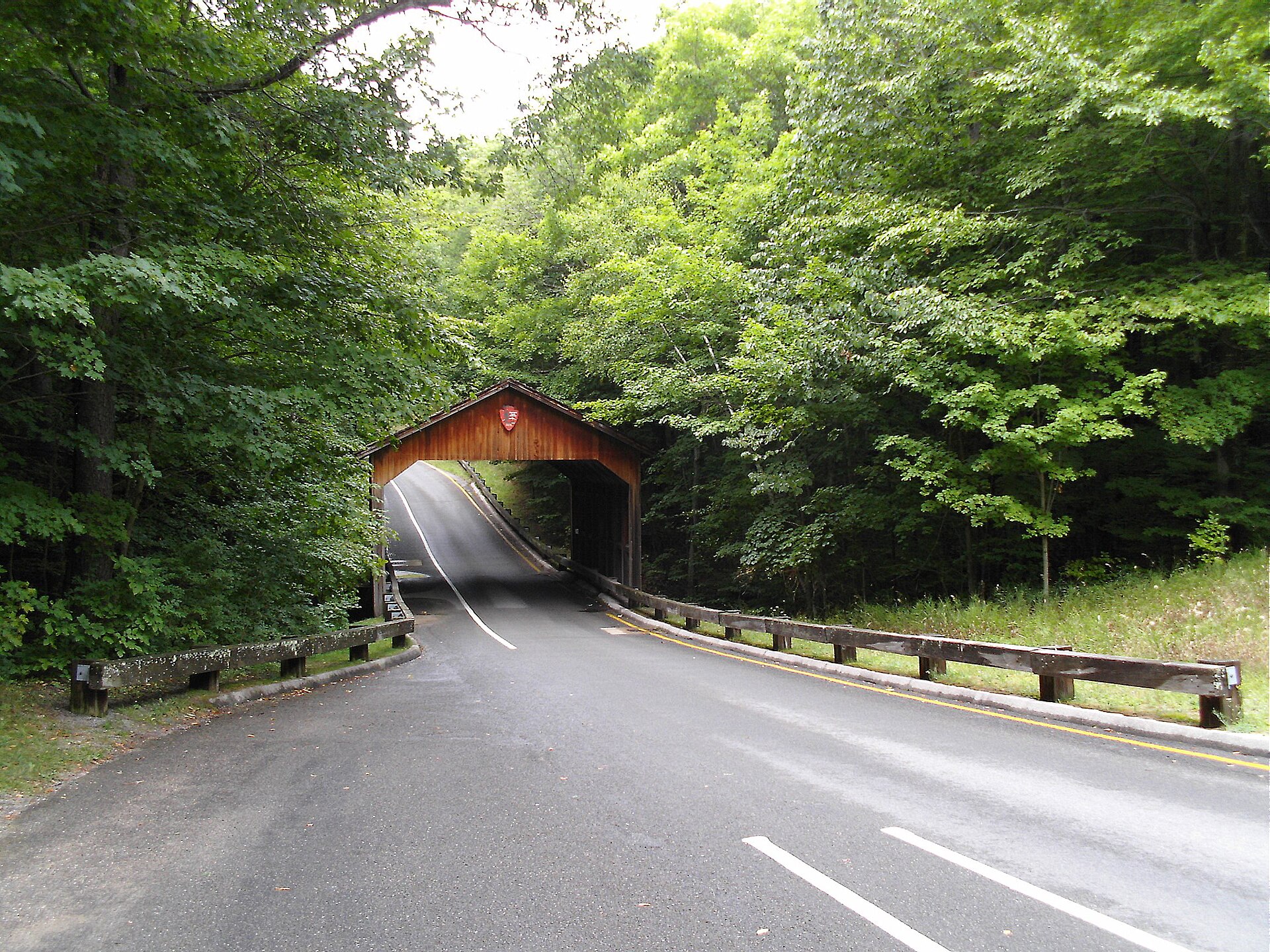
Pierce Stocking was a local lumberman with an unusual relationship to the country he worked in — he wanted it seen rather than simply cut. He planned and built the drive himself, opening it to the public in the 1960s, and among the details he specified was a covered bridge of thirteen feet six inches at what is now Stop 1, part of the original 1967 route. The National Park Service has maintained the drive since that year, and it retains the shape of a road designed by someone who knew exactly which views he wanted to deliver and in what order.
That authorship is what separates this from a park road built to connect facilities. The sequence of the twelve stops is deliberate: the drive builds through forest and dune terrain before opening onto the overlooks, so the payoff arrives at the point Stocking chose rather than at the entrance. Driving it in the intended direction, stopping at the numbered pullouts in order, is not a formality — it is the design working as intended.
The Lake Michigan Overlook
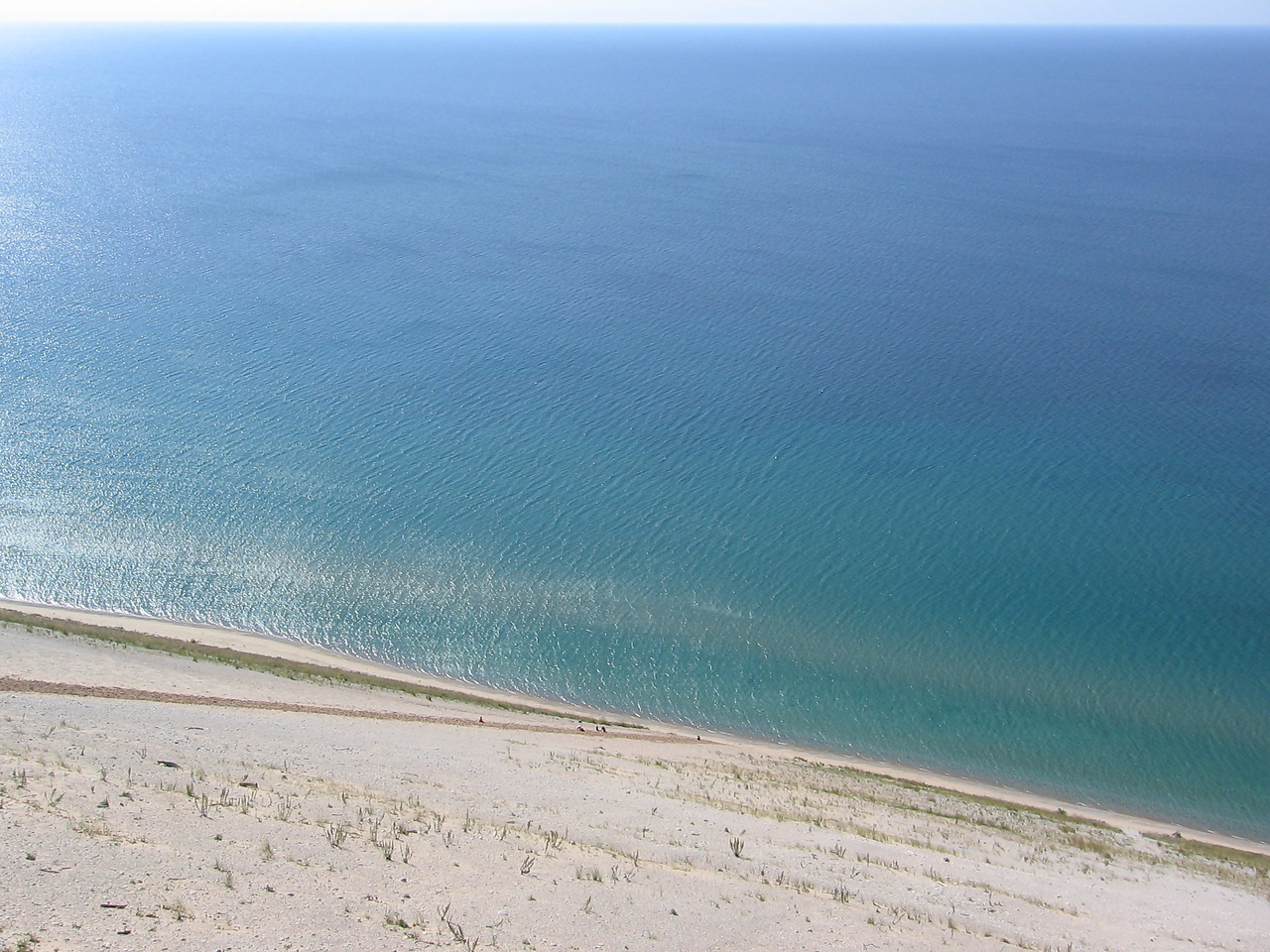
Stop 9 is the reason the drive exists. The overlook stands on the bluff 450 feet directly above Lake Michigan, and the drop from the platform to the water is close to vertical — a genuinely startling thing to walk up to, and the source of the images that sell Sleeping Bear Dunes to the world. From here a visitor can see North and South Manitou islands offshore, Pyramid Point up the coast, and Sleeping Bear Bay, with Platte Bay visible some nine miles south on a clear day.
This is also where the park's most-repeated warning applies. The slope below the overlook looks descendable and is not: going down takes minutes, climbing back up through 450 feet of loose sand routinely takes well over an hour and defeats a substantial number of people who attempt it every year, occasionally requiring rescue. The signage is blunt about this and it is not exaggerating. Look, photograph, and stay on the platform.
The Other Eleven Stops
The drive's supporting stops are more varied than the headline overlook suggests. The covered bridge at Stop 1 sets the tone as Stocking's own flourish. Further along, the Dune Overlook gives the inland view across the dune field rather than out to the lake — a different and in some ways stranger landscape, all open sand and grass with no water in frame. Forest sections between stops run through beech and maple that turn spectacularly in autumn.
The whole circuit can be driven in well under an hour with brief stops, or stretched across most of an afternoon with walking at each pullout. Short interpretive trails leave from several of the numbered stops, and taking even a couple of them changes the experience from a scenic drive into an actual visit. Cyclists use the drive as well, though the grades are real and summer vehicle traffic is heavy.
Access and Season
The drive is open to vehicles from April through November, running from 9:00 in the morning until thirty minutes after sunset. It closes to cars in winter, when the route becomes available for skiing and snowshoeing — a genuinely rewarding way to see it, with the overlooks entirely empty. A national lakeshore entrance pass is required, and buying it in advance saves time at the booth.
Timing within the day and season matters more here than on longer routes. Midday in July fills the pullouts and the overlook platform; early morning and the hour before sunset deliver both better light and far fewer people. Late September and early October bring hardwood color through the forest sections with thinner crowds. Given how short the drive is, there is no reason not to time it well — and a visitor who arrives at the Lake Michigan Overlook at the right hour will understand immediately why a lumberman decided the world needed a road to this spot.